Showing posts with label culture. Show all posts

Tuesday, October 12, 2021

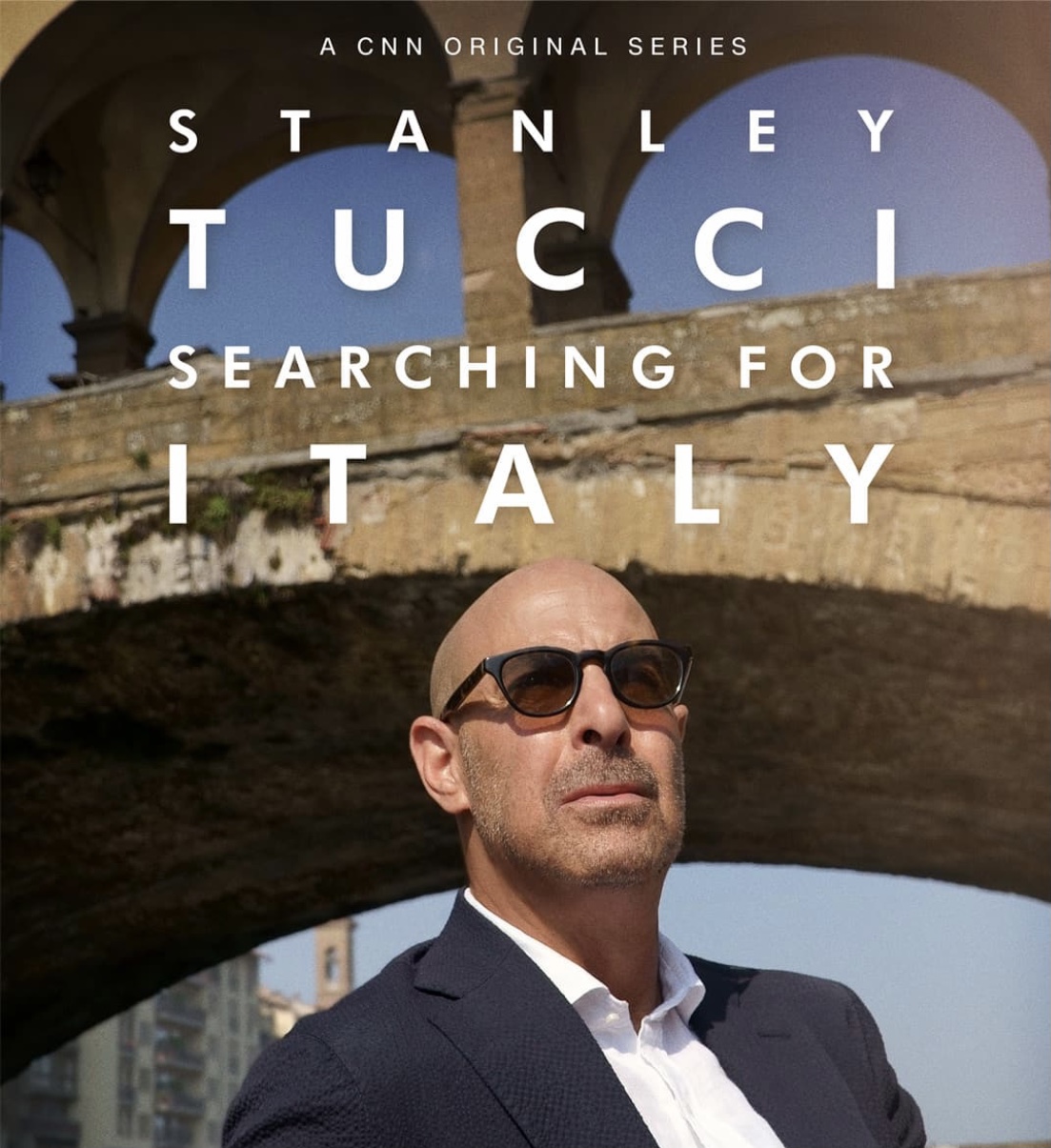
Stanley Tucci: Searching For Italy

I’ll admit I’m a little bit late to discovering Stanley Tucci: Searching For Italy, a six-part CNN Original Series focusing on travel and food, which had its premiere last February. Recently, it’s come to HBO Max and I immediately got hooked.

Stanley Tucci: Searching For Italy follows the Academy Award-nominated actor, who travels around Italy to explore the regional culture, cuisine and history of this boot-shaped southern European country with its lengthy Mediterranean Sea coastline that has left its powerful mark on Western culture and food. The series received two Primetime Emmy Award nominations, including one for Outstanding Hosted Nonfiction Series, and has been renewed for a second season.

In the first season, filmed both in 2019 and during the Covid-19 pandemic that hit Italy in 2020, Tucci explores Naples and the Amalfi Coast, Rome, Bologna, Milan, Tuscany, and Sicily. Each has a particular theme and all of them are well-written and produced as well as nicely paced. Tucci is stylish and entertaining, both as a storyteller and as a conversationalist – and we learn he’s quite comfortable performing in the kitchen, too. His parents are both of Italian descent, and had roots in Calabria. He spent part of his youth living in Florence, so it’s not surprising that the episode about Tuscany feels like a big family homecoming.


After watching all six episodes of Stanley Tucci: Searching For Italy over the past week, it’s easy to make comparisons to Anthony Bourdain’s Parts Unknown, which set the standard for fusing food and travel. However, as Tucci admitted in an interview with The Hollywood Reporter, “The show that we are doing is distinctly different than his: I am not nearly as adventurous as Tony was, not nearly. Or as brave. But what he did is open the doors to all of us who were interested in food, and travel, to explore in our own ways. … He was an extraordinary writer, a nice person, and a great explorer of the human condition through food.”

While not all of the culinary discoveries Tucci introduces us to are new – and many of them come back to traditional Italian cuisine that focuses on pasta and cheese – the way in which he presents them, filled with his warmth and charisma lighting up the screen, makes this series an enjoyable experience. In Naples, it’s the search for the freshest mozzarella and the best San Marzano tomatoes. In Bologna, in the Emilia-Romagna region of the country, it’s about exploring prosciutto de Parma. In Rome, it’s all about enjoying the creamy carbonara. In Sicily, it’s learning about the hospitality.

Each episode is peppered with equal parts cuisine and culture and how Italy’s colorful history ties them all together – and it’s all captured in living color. It’s what I found very charming and entertaining. Of course, what’s not to love about Italian cuisine as well as hearing the Italian language spoken so eloquently and passionately?

Stanley Tucci: Searching For Italy is a smart and endearing series that is revealing about the universal human condition – and how good food and conversation can unite us – and it made me yearn for more after watching each of the six episodes with great interest. May it whet your appetite, too.

Photos: Stanley Tucci: Searching For Italy CNN and HBO Max websites.


Tuesday, December 22, 2020

Barack Obama: Let’s do this!

Barack Obama
Since September, I’ve been getting text messages from former president Barack Obama. 

“Hey! It’s Barack. Click on the link to sign up so I can respond directly to you,” the first text read. “I won’t be able to get to everything, but I’ll be in touch to share what’s on my mind and I want to hear from you, too. Let’s do this.”

After texting in the run-up to the November elections to make sure I had a plan for voting, last week, Mr. Obama checked back. “Hi there. As 2020 comes to a close, I wanted to share my annual lists of favorites I’ll start by sharing my favorite books this year. I hope you enjoy reading these as much as I did. What are you reading?”

Then, the other day, “Hi there. As 2020 comes to a close, I wanted to share my annual list of favorites. I hope you enjoy.” And he proceeded to list his favorite music and films.

I seem to recall that the former president started to compile his cultural lists while still in office. Imagine if we had a president now who made time for reading and kept up with music and film. Instead, for Donald Trump, it’s all about keeping up with appearances and about TV ratings and wild conspiracy theories.

Somehow, I would like to think that President-elect Joe Biden, while maybe not quite as hip as his former boss, will restore a sense of curiosity and interest to books – and, perhaps, music and film, too – during his days ahead in the White House.

In the meantime, as we count down the days until President-elect Biden’s inauguration on January 20, here’s the impressive list of Barack Obama’s favorite books of 2020: 

• Homeland Elegies by Ayad Akhtar

• Jack by Marilynne Robinson

• Caste by Isabel Wilkerson

• The Splendid and the Vile by Erik Larson

• Luster by Raven Leilani

• How Much of These Hills is Gold by C. Pam Zhang

• Long Bright River by Liz Moore

• Memorial Drive by Natasha Trethewey

• Twilight of Democracy by Anne Applebaum

• Deacon King Kong by James McBride

• The Undocumented Americans by Karla Cornejo Villavicencio 

• The Vanishing Half by Britt Bennett

• The Glass Hotel by Emily St. John Mandel

• Hidden Valley Road by Robert Kolker

• The Ministry for the Future by Kim Stanley Robinson

• Sharks in the Time of Saviors by Kawai Strong Washburn

• Missionaries by Phil Klay


Tuesday, April 7, 2020

What day is it today?

Looking out my front door on Saturday morning.

What a difference a month makes. Indeed, as someone recently wrote, “Time looks different than it did a month ago.” No more commutes, allowing an extra hour of sleep on weekday mornings, no more Saturday morning grocery shopping – Thursday mornings at my local Trader Joe’s seem less crowded and hectic – and no baseball or any live sports of any kind to distract the rhythm of hurried lives. Instead, watching sports means watching classic replays of NCAA Final Fours or World Series.

By the way, what day is it today? I woke up this morning swearing it was Wednesday. It wasn’t, it was just Tuesday in Mount Rainier, Md.

Now, social distancing is likely to recognized as the buzz phrase of the year – and it’s only the beginning of April. Suddenly, my Google calendar is full of cancelled entries – from my Friday docents tours at the Library of Congress to hosting our Seattle friends last week to our own weekend mid-month theater trip we looked forward to in New York City. Lots of plans and hopes dashed – cancelled – because of the global coronavirus pandemic that’s spreading across the country like nothing I’ve ever experienced. No sense in buying concert, theater or baseball tickets or planning any travel until we know when our lives return to normal and it’s safe to do things that until last month we took for granted. By the way, what will the new normal be like anyway?

The past month has been filled with strange and scary times. Our narcissistic president has shown his incompetence, greed and his lack of empathy. He and his inept administration are in way over their heads. Decorum is not one of this president’s strong suits. Speaking of suits, would it pain this president to button his suit coat when he’s in front of the cameras, which lately seems to be every day since he can’t hold one of his “campaign rallies”?

Now, no matter how busy – or panicked – we might become, day by day, worrying about our health, our finances, our future, we look for diversions. Anything to avoid thinking about the coronavirus crisis and how POTUS wants to get us all killed. Fortunately, there are ways to break the monotony and find daily solace in our discretionary time while we stay at home “flattening the curve” in quarantine. For me, these simple pleasures include:

• Watching live or on demand Steve Nieve’s daily improvisation. Steve who? Steve Nieve. For those in the music know, The British-born Nieve, 62, is a longtime keyboard maestro who for more than 40 years has anchored Elvis Costello’s Attractions and Imposters bands. He’s an accomplished classical and jazz pianist, and each evening, he turns the naturally-lit living room of his and wife Muriel’s simple-but-colorful French home into a music salon for about half-an-hour on his Facebook page, Steve Nieve Page. Nieve plays, Muriel operates the smartphone camera (and sometimes shows images of their colorful backyard while she hums and sings along in her delightful French accent). They are joined by young singer Ajuq. Chances are good you’ll hear Nieve break out into some Costello faves like “Alison,” “Shipbuilding,” “The Long Honeymoon,” and “Useless Beauty.” These sessions will definitely make you smile.

• Watching live or on demand NPR Weekend Edition Saturday host Scott Simon’s nightly “Open Book” family get-together that he broadcasts via his Twitter page @nprscottsimon. Each evening, from his home in Washington, D.C., Simon talks about and reads from books and also FaceTimes with special guests. The art of conversation about literature and music lives on.

• Also on Twitter, former longtime ESPN SportsCenter anchor Keith Olbermann joins us from his New York City residence, sitting alone in his comfortable reading chair – sometimes joined by one of his dogs – and reads to us in his wonderful and distinctive voice. His nightly “Thurbercast” is both delightful and enjoyable. Like the others, you can catch the “Thurbercast” live or on demand on Olbermann’s Twitter page @KeithOlbermann.

• Finally, NPR Music has an abundance of Tiny Desk Concerts which you can link to through their website. Thanks to the pandemic, it’s be re-branded for now as Tiny Desk (Home) Concerts. One of the newest ones features Death Cab For Cutie’s frontman Ben Gibbard singing a newly-penned tune, “Life in Quarantine,” as well as “Me & Magdalena,” a tune Ben wrote for The Monkees’ Good Times album, and finally  “She’s Got a Problem,” an homage to songwriter and musician Adam Schlesinger of the band Fountains of Wayne, who passed away on April 1 from complications due to COVID-19.

There’s no right or wrong way to spent your hours and days and nights and weekends and weeks. Many different cultural organizations from coast-to-coast such as the Kennedy Center, Jazz at Lincoln Center and San Francisco’s de Young Museum of Fine Arts are offering music and conversations and virtual exhibition tours.

And, of course, what better time than now to binge-watch something you’ve been wanting to binge-watch? There’s lots to find perusing through streaming channels like Netflix and Acorn TV. I’m currently enjoying Ugly Delicious, New York chef David Chang’s original series for Netflix, in which he combines travel, cooking and history – three things I’m very fond of. Each episode highlights a single dish or concept, and he explores how it is made in different regions and how it evolves. Pretty cool, eh?

In the meantime, “Let people know you love them and wash your hands everybody. We’ll see you on the other side,” says Gibbard at the conclusion of his NPR Music Tiny Desk (Home) Concert.

 It kind of says it all, doesn’t it?

Tuesday, March 17, 2020

The way it is: Find your joy whatever it may be


On the grounds of the Library of Congress,
Washington, D.C.

What a difference two weeks makes.

Two weeks ago, my wife and I attended a book signing event at Politics & Prose Bookstore in Washington, D.C., featuring Washington Post sports columnist John Feinstein talking about college basketball – telling some wonderful and funny stories – and signing copies of his new book The Back Roads to March, and also scored tickets to two outstanding concerts. One feted Garth Brooks, who was awarded the 2020 Gershwin Prize for Popular Song by the Library of Congress at DAR Constitution Hall and the other featured Bruce Hornsby and yMusic at the Strathmore Music Center in Bethesda, Md., a beautifully constructed, small hall with breathtaking architecture and sight lines and awesome acoustic qualities.

How could I know then that soon after, the coronavirus would shake up our lives and shut down the country? No longer would it be arts and sports as usual. Within a matter of hours and days, professional and college sports were sidelined in the nation’s interest to combat the spreading of the coronavirus. Soon, the arts and entertainment world followed. This is a time of year when we’re used to having basketball, ice hockey, baseball, soccer, tennis, golf, and March Madness with the NCAA basketball tournament all going on at the same time and fighting for our attention and interest. There’s also plenty of great Broadway theater this time of year in New York City and we recently had bought tickets for a Broadway musical and an off-Broadway play at the Brooklyn Academy of Music scheduled over Easter weekend. Now, nothing. Broadway is dark for the foreseeable future and our trip effectively scrubbed. We hope to trek to New York City when times are safer and our health isn’t in danger.

Bruce Hornsby and yMusic
Many of us are asking this simple question: How can we get by when arts and sports – so much of our civic life and pastime – are shut down? After all, each in its own way fosters human connection and a sense of community. Just about all of us are suffering, whether it be mentally, physically or emotionally.

There’s plenty of anxiety for everyone to handle and no one knows just when we can expect a sense of normalcy, again. Will it come in June, July? Maybe. Will it come by September or October? I hope so. Nobody really knows for sure.

As we practice social distancing as a means of overcoming the coronavirus pandemic, through working at home and going out only when necessary to buy groceries, visit pharmacies or pickup a take-away meal – self quarantining – it becomes more important to have family and friends to stay in contact with, through picking up the telephone, through FaceTime and Skype, through texting and email. Thank goodness for modern technology while we are all sequestered and following the rules.

Take breaks to find your joy whatever it may be. Each day, turn off the news for a little while and turn on to your favorite kind of music. Mine includes everything from Elvis Costello to Pink Martini to Wynton Marsalis to Emmylou Harris. I’ve got plenty of great CDs to enjoy – and Spotify to fill in the gaps. Washington, D.C., has an outstanding classical music station, WETA-FM, which my car radio is always tuned to, and it’s accessible via the NPR app as well as online via the station’s website. There’s no better time than now to appreciate listening to music.

For those who can, going for a good solitary walk or a run through the park is seen as essential for our health and wellbeing. For half an hour yesterday afternoon, my wife and I went for a walk through our neighborhood and explored some streets we weren’t familiar with. Our journey was maybe a mile in duration but it felt so good. Perhaps, planting a garden or watering early-season flowers is a possibility as spring begins soon. Anything that allows us to escape the mundane, anything to get away from cable news or Twitter overload is a plus in my book.

A glimpse of my Roger Angell books
Speaking of books, it’s a great time to make time to read. I’ve got plenty of books on my bookshelves ready for me to turn their pages. With baseball usually in the spring air this time of year, I’m always eager to read one of Roger Angell’s excellent books on baseball like The Summer Game.

Remember, we are all in this together and however we can, each of us must help one another – whether through simple politeness while we queue for our groceries at the local market or by stepping up to the plate and showing responsibility in matters of importance. Don’t do anything daring or stupid. Indeed, the coronavirus makes no sense and how dare it take over our lives – but it has, and we hope our federal government finally shows some of the same leadership that many in the private sector have been showing for over a week.

One of these days, things will start to come back around. We just don’t know when – and that’s a pretty scary thought. In the meantime, do take care of yourself and those whom are nearest and dearest to you, too.

Tuesday, March 3, 2020

A Tuesday Night Memo at 10: Getting to know me ...

My blog, “A Tuesday Night Memo,” recent turned 10. Yes, I’ve been writing a blog for a decade!

People who know me well know that I’ve been interested in writing, reporting and storytelling for much of my life. So, it’s only natural that I turned to blog writing because it gave me an opportunity to hone my writing skills and provided a forum for writing about things that truly interested me that I wanted to share with others.

Here’s a little touch of history about my blog:

I started writing “A Tuesday Night Memo” on January 26, 2010, as a means for sharing musings about my life filled with music, sport and urban travel, and to foster community with my friends, family and Facebook acquaintances. More recently, I added a Twitter profile, which has allowed me to reach a wider audience across the country and the world. Finally, I jumped onto the Instagram bandwagon earlier this year in order to share and comment on some of my favorite photographs and subjects.

Folks who read my blog know that I’m passionate about music, sport and urban travel Additionally, I have used “A Tuesday Night Memo” as a vehicle for writing from time to time about art, food, fashion, gardening and religion – and in the age of Trump about politics. Before we moved to the east coast nearly three years ago, sharing news about our former Oakland, Calif., flower gardens at home always seemed to generate great interest and enthusiasm. Maybe, it was the pretty shapes and colors of our flowers that others found appealing, especially since we could maintain a garden all year long. Here in Maryland, thanks to having four distinct seasons of the year, our gardening and gardens are limited to certain times of the year.

The feedback I’ve received from the 482 “blogged” entries for “A Tuesday Night Memo,” which collectively have received more than 179,000 page views, not only is very much appreciated but also very useful. Among the many subjects I have written about, some of my favorites have been: my appreciation of tennis champion Roger Federer; how the city of Seattle fosters community through international cinema; a history of the world as seen through 100 objects; classical music conductor Gustavo Dudamel; Golden State Warriors head coach Steve Kerr; my music love affairs with Elvis Costello and Pink Martini; validating our travel experiences through the photographs we take; and Jerry Seinfeld’s internet comedy Comedians in Cars Getting Coffee.

Among my recent posts, I have written about: An appreciation of women’s tennis grand slam champion Ashleigh Barty; a look at what makes makes a good city great; figuring out adulthood through the web series “The Female Gaze”; a profile of Rhiannon Giddens and a look at her global voice that resonates with curiosity and purpose in these troubled times; and “Getting Lost at the Smithsonian,” a podcast crafted by comedian Aasif Mandvi.

In the meantime, I thoroughly enjoy sharing my writing week in and week out, and I look forward to contributing more of my words and thoughts in what is shaping up to be another exciting year awaiting all of us. With a shoutout to Monocle, the London-based global briefing magazine that covers international affairs, business, culture and design, here’s a Q & A so you can learn a little more about me:

Where do we find you this week?
On Sunday, I was at The Cinema Club in northwest Washington, D.C., discussing the best new American and foreign independent films. This week, we saw Saint Frances, written by Kelly O’Sullivan, which is filled with plenty of empathy, humor and grace. It’s definitely worth seeing. On Monday evening, I was at Politics & Prose listening to a lively discussion about college basketball with John Feinstein, whose new book, The Back Roads to March is a must read for NCAA March Madness.

What’s the ideal start to your Sunday?
I’m an early riser, so I like to pull out one of my three French presses and make a pot of coffee to enjoy while perusing the Sunday “fat papers” – The Washington Post and The New York Times. Also, it’s a chance to update my status on Facebook and check Instagram.

Soundtrack of choice?
Lately, I’ve been enjoying the music of George Gershwin, from Gershwin Plays Gershwin: The Piano Rolls and other light classical fare based on my choice via Spotify. I always have dreamed of being a pianist giving recitals in small concert halls or playing in sporty jazz clubs. Gershwin’s music always puts me in or leaves me in a good mood.

What’s for breakfast?
I love a good bowl of granola cereal with maple yogurt and, perhaps, a slice of toast with peanut butter. On weekends, when I’ve got more time, I enjoy springing for a cinnamon raisin bagel with cream cheese. Coupled with a small glass of orange juice and coffee, my breakfast puts me in a good mood for the remainder of the day.

News or not?
Always in the morning. I tune in to listen to “Morning Edition” on NPR and peruse the online editions of  The Washington Post and The New York Times. I often use my Twitter feed as a means of tapping in to NPR and other media like The San Francisco Chronicle (from living in the San Francisco Bay Area for 20+ years) and The Guardian. I also try to keep up with a variety of long-form articles from The New Yorker and my favorite magazine is Monocle, the London-based monthly that focuses on world affairs, art and architecture, and cultural arts.

Some exercise?
I enjoy riding an exercise bicycle every chance I get – which isn’t often enough – but I’ve always been an avid walker and the flatness of the National Mall in Washington, D.C., makes walking very inviting. 

Cultural musts?
Living five miles from Capitol Hill in Washington, D.C., as well as being a docent at the Library of Congress, I’ve learned there’s so much culture to tap into – if you’ve got the time and interest. The National Gallery of Art has become a favorite destination and, of course, I never tire of exploring the Jefferson Building at the Library of Congress.

A glass of something you’d recommend?
I enjoy a glass of wine with dinner. During the winter months, I drink mostly reds and quite often it’s Pinot Noir. During summertime, when the weather is warm and I’m often grilling on our patio deck, I enjoy drinking a Pinot Grigio from Oregon or a California Sauvignon Blanc.

Ideal dinner venue?
I’m fond of many of the Chef José Andrés concepts in Washington, D.C., including Jaleo and China Chilcano. Closer to home, about five minutes by car, is Franklins – our go-to place for ourselves and when we’re hosting out-of-town friends. I love their shrimp and grits and Carolina pulled pork.

Favorite look?
This time of the year, I enjoy wearing Lands End traditional fit blue jeans, a Navy blue or black turtleneck shirt with a Uniqlo down vest, knitted socks crafted by my wife, and either a pair of Navy blue Cole Haan or charcoal black Adidas sneakers. I like to coordinate my colors!

Stay tuned!
Thursday, August 8, 2019

What makes a good city great?


Dining out in Zürich

No matter where in the world, our cities are designed for living, working, cultural entertainment and late nights. Some times, they are even designed for fresh starts.

While some cities have it figured out, some don’t. From transportation and green spaces to retail possibilities and residential settlements, what makes a good city a great place to live?

Every summer, Monocle, the London-based global magazine that’s always been a must-read for me for its coverage of international affairs, business, culture and design, presents a special quality of life rankings with a top of the world list of the 25 best global cities. Most years, the list is heavy in cities located in Europe and the Asia Pacific. Not surprisingly, North American cities – especially in the United States – rank low or out of the running. (This year is no different as the only city to rank in the Top 25 was Vancouver, B.C., Canada.)

As the magazine suggests, “places grow and change and so do our ideas of how we want our cities to be.”

In his editor’s letter in the July/August issue, Monocle’s editor-in-chief Tyler Brûlé wrote: “When we look at a city we’re constantly asking if the infrastructure is in place to allow residents and visitors to be as productive as possible while also having a pleasant experience navigating the place.”

While I’ve written about Monocle’s Quality of Life rankings before, it’s always an interesting subject to study and dissect. In looking over this year’s list of the Top 25 cities in the world, it makes me pine for world travel.

Here’s Monocle’s Top 25 places in the world to live:

1. Zürich
2. Tokyo
3. Munich
4. Copenhagen
5. Vienna
6. Helsinki
7. Hamburg
8. Madrid
9. Berlin
10. Lisbon
11. Melbourne
12. Stockholm
13. Sydney
14. Amsterdam
15. Vancouver
16. Hong Kong
17. Kyoto
18. Barcelona
19. Paris
20. Düsseldorf
21. Auckland 
22. Fukuoka
23. Brisbane
24. Oslo
25. Singapore

In describing Zurich, the magazine writes: “Zürich is a city that gives you the feeling that all is right with the world. It starts at the airport, where you’ll encounter few queues at customs and a punctual train that delivers you from arrivals to the city Centre in minutes. You’ll step out onto nearly swept streets lined with well-appointed shops – and in the distance catch a glimpse of the snow-capped Alps beyond the turquoise blue of Lake Zürich. 

In commenting about this year’s No. 1 city, Zürich, Brûlé wrote, “Zurich has become something of a global master at making travel a joy. Add global connectivity to the mix via its airport and railway stations, high-quality housing and an ever-improving restaurant-and-retail scene and you'll know why we often refer to it as Berlin for people over 40 (or who know better.).

“While Zürich still has many areas that could be improved (more-daring architecture, more relaxed retail trading hours, more mature trees planted by developers and more incentives to make balconies greener) it’s got most things right. And it’s for this reason that it’s vaulted a few positions this year to take the top spot – yet again. Indeed, this is the second time that Zürich has clinched the highest position on the winners’ podium.”

Photos: Courtesy of Monocle.com.

Tuesday, June 18, 2019

Thoughts on TV: ‘Chef’ has been turned into a TV show


Looking for something fun and enjoyable to watch on TV one recent evening, my wife and I came upon The Chef Show, which reunites multi-talented producer/actor/director Jon Favreau with Los Angeles chef Roy Choi. It’s the latest foodie offering from Netflix, which in recent months has very nicely taken over food TV with Chef’s Table, which explores the discipline and culinary talent of world-renowned chefs such as Mashama Bailey and Dario Cecchini; Salt, Fat, Acid, Heat, based upon Samin Nosrat’s book of the same name in which she travels the world to explore how these principles fuel good food; David Chang’s Ugly Delicious, in which the James Beard Award-winning chef uses food to break down cultural barriers; and the Great British Baking Show.

The Chef Show is all about bonding over the joy of cooking – in a kitchen – with friends. Each episode takes place around a place to eat or cook without being like a travelogue. Favreau described it for Grub Street as a “dinner party in the back of the house” kind of atmosphere. The series took its name from the 2014 film, Chef, which starred Favreau as Carl Casper, a chef who opens a Cuban food truck with his son in Miami. Choi, of Kogi Korean BBQ food truck fame, was the film’s food consultant and created all of the dishes that were featured – including the deliciously mouth-watering Cubano and grilled cheese sandwiches.


After watching the first three episodes of The Chef Show – there are eight in all and it’s quite easy to binge watch – it becomes evident from the beginning that Favreau and Choi have developed a deep and wonderful rapport in the kitchen – built upon mutual respect for one another – and they share a similar taste in food. Each episode always welcomes banter between hosts – taking with each other without looking directly at the camera – and celebrity guests such as actress Gwyneth Paltrow, Avengers actor Tom Holland and Sin City director Robert Rodriguez.

What viewers get to enjoy in this documentary-style series is the showcasing of Choi’s technique and enthusiasm for the craft of cooking and Favreau’s interest in absorbing this knowledge and wisdom while keeping things light and funny. Choi is the master chef and Favreau is both his student and best buddy.

One of the funniest bits that delivers a big laugh – and, thankfully, it didn’t wind up on the cutting-room floor – shows Favreau attempting to make New Orleans-style beignets made famous at Cafe Du Monde. After making the dough by just adding water, then cutting it into individual squares, deep frying them, and showering them with powdered sugar, Choi bites into one of them. He throws the rest into the garbage. Favreau deadpans, “It’s not quite like there.” Looking for the right response, Choi pauses for a moment, then with a serious look on his face that turns into a big grin, he looks at Favreau and says, “I can tell they were a year old.” Both burst out laughing. Choi adds: “I didn’t want to say it on camera, but f••k it, this whole thing isn’t about lying.”


In a recent story about The Chef Show, Eater’s Greg Morabito wrote: “This new series allows the chef to showcase his obsession with technique and enthusiasm for the craft of cooking in ways that we’ve never seen on TV before. In every kitchen sequence, he drops culinary knowledge like an older brother handing you a mixtape of his favorite jams. Favreau, meanwhile, manages to keep the spirit light, even as he tackles new culinary challenges at the encouragement of his friend. Part of the fun is watching (Favreau) gradually increase his skill level and build more confidence in the kitchen.”

As Favreau told Grubstreet.com in a recent interview, “I’ve watched all these episodes a dozen times in the process of making and defining the show. Every little thing, a lot of care went into it. The animation, the way we talk, there’s recipes in it, the way the food is filmed. It’s just incredibly personal and something we both like a lot. It’s just really nice to share.

“It’s like you cooked a meal you want to eat, and now you’ve invited people. It’s mind-boggling to me that there’ll be someone sitting on the opposite end of the world watching the most personal, specific story. I’m really interested to see who connects to it because if they do, there’s nothing else like it that they’ll find about people in L.A. cooking and talking about Korean food. It’s such a specific thing about what Roy and I geek out about.

“Hopefully, there’s some humanity and personalness. And then people who like to cook and want to just go and show people who cook for real, and not try to present it any other way. And what it’s like to be there by the side of someone who is really great at what they do and learning from them. I wanted to show what that was like.”

Adds Choi: “It’s really honest and tender. It’s really funny, too.”

Indeed, it’s funny – an absolute delight.

Note: The Chef Show (eight episodes) debuted via Netflix on June 7.

Saturday, February 23, 2019

Here are 25 cities you may wish to call home

Some random thoughts while drinking coffee and enjoying a snow dayat home ...


Our cities are designed for living, working, cultural entertainment and late nights. Even fresh starts, like I experienced when I moved to Washington, D.C. in 2017, after spending 21-plus years living in the San Francisco Bay Area.

Some cities have it figured out, some don’t.

From transportation to green space, retail possibilities and residential settlements, it’s always interesting to find out what makes a good city a great place to live.

Every summer, Monocle, the London-based global magazine that’s always been a must-read for me, for its coverage of international affairs, business, culture and design, presents a special quality of life rankings with a top of the world list of the 25 best global cities.

Although I’ve written about Monocle’s Quality of Life rankings before, it’s been a few years – and, somehow, I haven’t visited the subject since 2016. So, as snow begins to blanket the Beltway, I’ve decided to take a look back at what Monocle had to say about last year’s quality of life rankings.

Here’s Monocle’s Top 25 cities in the world:

 1. Munich
 2. Tokyo
 3. Vienna
 4. Zurich
 5. Copenhagen
 6. Berlin
 7. Madrid
 8. Hamburg
 9. Melbourne
10. Helsinki
11. Stockholm
12. Lisbon
13. Sydney
14. Hong Kong
15. Vancouver
16. Amsterdam
17. Kyoto
18. Düsseldorf
19. Barcelona
20. Paris
21. Singapore
22. Fukuoka
23. Auckland
24. Brisbane
25. Oslo

“Cities are the future,” writes Monocle in discussing its 12th annual Quality of Life survey about the Top 25 global cities. You’ll notice the list is heavy on European and Pacific Asian cities, but it doesn’t include London, Paris or Rome. Only one North American city – Vancouver – made this year’s list. “You want a city that’s well run, delivers on life’s essentials and is fun, too.”

According to Monocle, “By 2030 urban areas are projected to house 60 percent of the global population. But while city halls need to prepare for that future – think grand infrastructure projects and investments in housing – they need to offer their residents a decent quality of life in the present. The best cities manage to find a healthy balance between planning for tomorrow and managing today.”

It makes us ask: What’s my city doing to change? Is it reviving former industrial neighborhoods for more housing stock and new cultures space? Is it expanding its airport or adding new routes to its train network? How well does my city do in putting on a welcoming face to outside businesses, newcomers and tourists?

Monocle suggests that getting it all right is “a challenge but some cities are getting it right.

“Take for instance, our winning city this year, which returned to the top spot: Munich. Safe and efficient with plenty of green space and good restaurants, the German city is thriving and more cosmopolitan than ever. Not only is Munich drawing an increasing number of students (it’s home to 18 universities) and entrepreneurs (its mobility, tech and IT sectors are booming), it’s been managing an influx of refugees and their integration.”

Looking ahead, as cities continue to expand, it seems that maintaining a great quality of life that gets recognized will be a challenge – even for the most forward thinking of cities. Monocle concludes, “Those that will prosper will be open and secure, ambitious and practical, with an eye on the future and a respect for the past.”

Photos and illustrations courtesy of Monocle/Monocle.com.


Saturday, December 1, 2018

No Passport Required: Still connecting with food and having a conversation about it with Marcus Samuelsson


Earlier this year, chef Marcus Samuelsson of Food Network Chopped fame took an inspiring journey across the United States in which he explored – and celebrated – the wide-ranging diversity of immigrant traditions and cuisine woven into American food and culture.

On “No Passport Required,” a six-episode PBS/Eater series which first aired across the U.S. during the summer months, Samuelsson visited Detroit, New Orleans, Chicago, New York City, Miami and Washington, D.C. An immigrant himself, who was born in Ethiopia and raised in Sweden, Samuelsson discovered dynamic and creative ways in which a particular community thrives – making its mark, so to speak. He spoke to poets and musicians, business owners and community leaders, as well as artists and home cooks – each who have contributed to enhancing our nation’s culture and its cuisine.


In Detroit, Samuelsson gathered with Middle Eastern immigrants who call the Motor City home and in New Orleans, he learned how the culinary traditions of the Vietnamese have been fully integrated into the fabric of the Big Easy, which has its long-established French and Creole influences. Samuelsson gathered with Ethiopians in Washington, D.C., and with the Indo-Guyanese in Queens, New York. He discovered how Chicago’s Mexican neighborhoods have impacted that area’s food and culture, and in Miami, he was welcomed by the city’s proud Haitian community.


The bottom line in Samuelsson’s adventures – and what I learned from watching – is this: there are many wondrous global food traditions that are waiting to be discovered throughout the United States. Sometimes, we just need a little bit of encouragement. After all, as the title of Samuelsson’s show reinforces, there’s No Passport Required.

 • • •


There’s a great back story about chef Samuelsson I blogged about six years ago that's worth sharing, again. Back in July 2012, he wrote a memoir, Yes, Chef – an incomparable story – about what it means to be an American. Through his cooking, he told a story that in the words of former President Bill Clinton, “reached past racial and national divides to the foundations of family, hope and downright good food.” Gabrielle Hamilton, the bestselling author of Blood, Bones & Butter said that Samuelsson exudes “a quiet bravery, and a lyrical and discreetly glittering style – in the kitchen and on the page.”

Thus, an opportunity to meet chef Samuelsson in person, hear him wax poetically on his life’s passion and get a signed copy of his memoir was too good an opportunity to pass up.

“It begins with a simple ritual: Every Saturday afternoon, a boy who loves to cook walks to his grandmother’s house and helps her prepare a roast chicken for dinner. The grandmother is Swedish, a retired domestic. The boy is Ethiopian and adopted, and he will grow up to become the world-renowned chef Marcus Samuelsson.” His memoir, Yes, Chef, became his love letter to food and family in all its manifestations.

As Samuelsson shared his fascinating life’s story at Book Passage’s intimate San Francisco Ferry Building store, he said, “Sometimes, the worst situation can become the best situation.”

In a chapter of Yes, Chef devoted to his grandmother, Helga, Samuelsson wrote: “Mormor (the Swedish word for mother’s mother) treated her house like it was her own little food factory. She made everything herself: jams, pickles, and breads. She bought large cuts of meat or whole chickens and game animals from the butcher and then broke them down into chops and roasts at home. It’s so funny to me how, today, we celebrate braising as some refined, elegant approach, when it’s the same slow cooking method Mormor used. Her menus followed a simple logic:

“You have bread today because it’s fresh. You have toast tomorrow because the bread has gone stale. You make croutons the next day, and whatever bread is left after that gets ground into crumbs that you’ll use to batter fish.

“I don’t think I saw a rib-eye steak until my late teens when I started working in restaurants. At home, we ate mostly ground meat that was rolled into balls and stretched even further by ample additions of breadcrumbs. We ate our own Swedish version of a hamburger: pan beef, a patty topped with caramel iced onions. Sometimes we ate beef Lindstrom: a hamburger patty mixed with onions, capers, and pickled beets before being seared in butter. That’s comfort food where I come from, and it’s damn good.”

• • •


At times, it’s been a struggle for Samuelsson to find his place, both in the kitchen and in the world. At least now, he has the appearance of a man who’s found peace in all the right places – and he’s always with a smile on his face.

“I am an immigrant, not a refugee,” Samuelsson reminds us. “There is a big difference. I am as a patriotic as any American. I am determined and grateful.”

As a chef, Samuelsson states that inside the kitchen or out, “it’s a matter of luck and the belief in others.

“Cooking has changed, but the core values remain the same. It’s about expressing a journey and culture. What better way than through food,” he says. And, besides, as Samuelsson playfully shared with his San Francisco audience on that summer night six years ago, “My fried chicken is better than yours!”

Tuesday, April 3, 2018

An understanding of racial justice in the shadow of statues

In the Shadow of Statues, which
was published March 20, is
on the New York Times
Bestseller List.
"These statues are not just stone and metal. They were erected purposefully to send a strong message to all who walked in their shadows about who was still in charge." 

– Mitch Landrieu, from In the Shadow of Statues

New Orleans is one of the great multicultural cities in the world. It is also a racially divided city that has dealt with its fair share of poverty and urban violence. In spite of all of its troubles, the Big Easy remains a beloved cultural treasure to everyone who visits thanks to its rich tradition of funky jazz music and the beauty and grace of its amazing food.

Enter Mitch Landrieu, the mayor of New Orleans since 2010, who has been an important catalyst in helping his city rebuild from the devastation of Hurricane Katrina. As the son of a former state legislator and mayor of New Orleans – who was a huge force in the integration of that city in the 1960s and 1970s – and the brother of a former U.S. senator from Louisiana, Landrieu grew up with a progressive education in the racially divided Crescent City among America's lingering Confederate monuments.

At a time when the issue of racism has become resurgent "with seemingly tacit approval from the highest levels of government and when too many Americans have a misplaced nostalgia for a time and place that never existed," Landrieu has written In the Shadow of Statues – a book that's a must read.

In the Shadow of Statues is equal parts memoir, history, and a "prescription for finally confronting America's most painful legacy." As a white southerner confronting his city's past history, Landrieu contributes a very strong voice to our national conversation about race in America today by taking on many difficult issues related to it, including slavery and inequality.

In praising In the Shadow of Statues, Walter Isaacson, author of Leonardo da Vinci and Steve Jobs, writes: "With a balance of humility and conviction, he recounts his path to a more profound understanding of racial justice and explains how this journey led him to remove the Confederate monuments in New Orleans. It's an important book for everyone in America to read, because it shows how intellectual honesty can lead to moral clarity."

Mitch Landrieu at Politics & Prose Bookstore
in Washington, D.C. last week.
Last week, my wife and I attended a standing room-only book event at Politics & Prose Bookstore in northwest Washington, D.C., featuring a conversation between Landrieu and Jeffrey Goldberg, editor in chief of The Atlantic, before a thoughtful and engaging audience, that was followed by a 30-minute Q & A period and a book signing.

"There's a difference between remembering and revering history," said Landrieu, who addressed the people of New Orleans in May 2017 about his decision to take down and remove four Confederate monuments, including the statue of the famous southern Confederate general Robert E. Lee. The affected statues represent a mere four-year period of U.S. history, from 1861-65, but a searing one, too. While Landrieu said that the decision to remove the monuments was a difficult one, it was a right one, too. It was about eradicating history.

"We were on the wrong side of history," Landrieu told the Politics & Prose audience very matter-of-factly. "These statues were erected to send a strong message to all who walked in their shadows about who was still in charge. For decades, these statues have cast a long shadow on society, particularly African-Americans."

Lee Circle before the Confederate monument
of Robert E. Lee was removed in 2017.
Landrieu says In the Shadow of Statues is an invitation to stand and sit in other people's shoes. He recalled for his Politics & Prose audience a conversation he once shared with his dear friend, the famous jazz musician and educator – and New Orleans native son – Wynton Marsalis, who helped him see the truth about the city's exclusionary attitudes. "'Hey, man,'" Landrieu recalled the trumpeter saying to him. "'You should take the statue of Robert E. Lee down. Do you know how it got there and who put it up?'"

In the book, Landrieu expands on his conversation with Marsalis.

"I don't like the fact that Lee Circle is named Lee Circle."

"Why is that?"

"Let me help you see it through my eyes. Who is he? What does he represent? And in that most prominent space in the city of New Orleans, does that space reflect who we are, who we want to be, or who we are?"

Suddenly, Landrieu was listening.

Later in their conversation, according to the mayor, Marsalis added, "'Did you know Louis Armstrong left the city and never came back because of that statue? He did not even want to be buried in his hometown. You ever think about what Robert E. Lee means to someone black?'"

Landrieu emphasized that there's a difference between remembrance of history and reverence of it. "I think there are a lot of people who are struggling with the notion that the South fought for a cause that was reviled," he said. When you make sense of it, monuments are usually reserved for winners not losers. The Confederate monuments celebrated the losing side of the Civil War.

New Orleans Mayor Mitch Landrieu
As Landrieu remarked back during his May 2017 speech, "For America and New Orleans, it has been a long, winding road, marked by great tragedy and great triumph. But we cannot be afraid of our truth."

And, as Landrieu writes, "Here is the essential truth: We are better together than we are apart.

"Indivisibility is our essence."

Near the end of his conversation at Politics & Prose, Landrieu said, "If we are going to move forward as a country, we must confront the issue of race head on. Our diversity is what makes this country great.

"We need to understand our history. We need to tell the whole story."

Photo credits: Book cover courtesy of Amazon.com. Politics & Prose audience courtesy of @PoliticsProse Twitter. Robert E. Lee statue courtesy of New Orleans Advocate. Mitch Landrieu courtesy of Cheryl Gerber.

Tuesday, January 9, 2018

On Oprah Winfrey: Indeed, a new day is on the horizon


It isn't often that an awards speech is so moving that it brings both men and women in the audience to their feet. Yet, in accepting the Cecil B. DeMille Award for lifetime achievement during the 75th Golden Globes in Beverly Hills, Calif., on Sunday night, media entrepreneur Oprah Winfrey did just that. She delivered such a moving, fire and brimstone speech that for many – including yours truly – it was the highlight of the nationally televised awards ceremony. It's certainly what everyone has been talking and tweeting about on social media over the past day.

Throughout the three-hour ceremony broadcast on NBC and hosted by late-night talk show personality Seth Meyers, it was encouraging to see the actors, writers, directors and others who walked the red carpet and later took the stage sharing important conversations and articulating a set of values that's been missing from our government leaders for the past year. There was plenty of talk about diversity and decency – and, of course, the #MeToo movement. If the power of women was on full display Sunday night – and it certainly was – then Oprah showed that without a doubt she was the most powerful woman in the Beverly Hilton ballroom on Sunday night.

"America is upside down and inside out," opined New York Times columnist Frank Bruni, writing about the Golden Globes ceremony. "There's meaningless make-believe in the capital of politics. There's meaningful politics in the capital of make-believe."

Thus, the appeal of what Ms. Winfrey said Sunday night – and the eloquence and immediacy of her voice in how she delivered her message – raised our collective consciousness about sexual abuse and harassment. She showed a fresh determination for all of us to rally around – something that's been sorely lacking in our current president. Bruni called Ms. Winfrey's address, "a glorious speech about how a yesterday of discrimination becomes a tomorrow of hope."

Bruni wrote: "One of the best routes, she noted, are role models. She recalled what it meant to her, when she was younger, to see Sidney Poitier receive Hollywood's highest accolades. And she wandered aloud what it might mean for little girls Sunday night to see her getting the Cecil B. DeMille Award for outstanding contributions to the world of entertainment."

Veteran newsman Dan Rather, writing on his Facebook page Monday morning, said Ms. Winfrey's speech was "a bold and passionate call for hope, a rejection of the cynicism and darkness of the present."

Her words, Rather noted, "embodied the best traditions of American oratory. They rang with a moral clarity rooted in the march toward justice. They were not blind to the distance we have traveled as a nation and the distance yet to go. They were uplifting and inspiring, while recognizing that achieving progress will take work."

Among the many highlights of Ms. Winfrey's speech – and one which resonated with me – was when she spoke out about valuing freedom of the press.

"I want to thank the Hollywood Foreign Press Association because we all know the press is under siege these days. We also know it's the insatiable dedication to uncovering the absolute truth that keeps us from turning a blind eye to corruption and to injustice. To tyrants and victims, and secrets and lies, I want to say that I value the press more than ever before as we try to navigate these complicated times, which brings me to this: what I know for sure is that speaking your truth is the most powerful tool we all have. And I'm especially proud and inspired by all the women who have felt strong enough and empowered enough to speak up and share their personal stories. Each of us in this room are celebrated because of the stories that we tell, and this year we became the story.

"But it's not just a story affecting the entertainment industry. It's one that transcends any culture, geography, race, religion, politics, or workplace. So I want tonight to express gratitude to all the women who have endured years of abuse and assault because they, like my mother, had children to feed and bills to pay and dreams to pursue. They're the women whose names we'll never know. They are domestic workers and farm workers. They are working in factories and they work in restaurants and they're in academia, engineering, medicine, and science. They're part of the world of tech and politics and business. They're our athletes in the Olympics and they're our soldiers in the military."

Finally, Ms. Winfrey brought the Golden Globes audience to its feet when she said: "I want all of the girls watching here now to know, that a new day is on the horizon. And when that new day finally dawns, it will be because of a lot of magnificent women, many of whom are right here in this room tonight, and some pretty phenomenal men, fighting hard to make sure that they become the leaders who take us to the time when nobody ever has to say 'me too' again."

On Sunday night, many of us saw Ms. Winfrey as Madame President. Not only a spiritual leader but a brilliant woman, who unlike our current president, came from nothing and built a billion-dollar empire. She is well respected and loved. Her nine-minute speech gave us hope – and, certainly, she encouraged all of us to be inspired and to stand up and be heard, and also to be inspired for social justice. 

The Washington Post quoted actress Meryl Streep afterward saying that Ms. Winfrey "launched a rocket" with her speech. "I want her to run for president," Ms. Streep told The Post. "I don't think she had any intention (of declaring). But now she doesn't have a choice."

Certainly, it will be interesting to see if the seed planted by Ms. Winfrey's hopeful and inspiring speech grows into some bigger than anything we might imagine. Don't count out an Oprah for President possibility in 2020. 


Photo: Courtesy of Google Images. Video: Courtesy of YouTube.com. 

Tuesday, June 20, 2017

Welcome to my new life


The east side of U.S. Capitol Building in Washington, D.C.

We shall not cease from exploration, and the end of all our exploring will be to arrive where we started and know the place for the first time. – T. S. Eliot

On April 22, after 21-plus years of enjoying the landscapes and rhythms of northern California, my wife, Jodi, and I waved goodbye to the San Francisco Bay Area and headed east on Interstate 80. Our final destination? None other than the greater Washington, D.C. area, our new home.

As it happened, over the next week, we drove 2,950.6 miles – covering 13 states starting from California. We crossed the finish line in Maryland on Saturday afternoon, April 29, after beginning the final day of our journey in Morgantown, West Virginia.

Our Passivhaus town home in
Mount Rainier, Maryland.
Our travel week was very busy for us, but one in which we both embraced. After all, we had purchased a brand new house, a Passivhaus town home, in funky Mount Rainier, Maryland, just a couple of short blocks across the District line from Washington and about 15 minutes by car south of the University of Maryland campus in College Park. And, on May 1, my wife began a dream job in research and development at the Library of Congress, which served as the impetus for our leaving California for the Mid-Atlantic east coast.

As we drove across our beautiful and diverse country observing – through the snow-capped Sierra Mountains of California and Nevada, across the massive and great Salt Lake of Utah, alongside the majestic Rocky Mountains of Colorado, across acres and acres of Kansas wheat fields, near the picturesque Gateway Arch of St. Louis, through the Big Ten country of Indiana University in Bloomington, beside the Great American city of Cincinnati and up and down the hilltops of Morgantown – I was reminded often of how Mother Nature often holds up a mirror to us so that we can see more clearly the ongoing processes of growth, of renewal and of transformation in our lives. Our hours and days on the road were also filled with an abundance of music CDs – Pink Martini, Paul Simon, Elvis Costello, Valerie June, Diana Reeves – a variety of NPR podcasts like "Make Me Smart," and we tried to limit our driving to daytime hours so we could rest and renew ourselves at night.

The scenic beauty of the Donner Summit as seen driving
along Interstate 80 through the California Sierra Mountains.
Fortunately, social media and the Internet enable us to stay more easily connected than ever before with family and friends and we still plan to follow and support our favorite Bay Area professional and collegiate sports teams – just from a different city and time zone. So far, we are enjoying the fine public radio offerings from WAMU in Washington, D.C. as well as reading the Washington Post and the national print edition of The New York Times. And, we've learned thanks to the University of Maryland, which won both the men's and women's national championships in lacrosse, that people in this part of the country do take their lacrosse seriously. We've got tickets to see a Washington Nationals baseball game against the San Francisco Giants, and already we've been to a WNBA women's professional basketball game, too. Yes, there's plenty of rich of history and culture that awaits us in and around the nation's capital city, through its many museums and monuments, parks and trails – and I'm sure our free summer weekends will fill up fast with things to see and do. Already, we've explored historic Annapolis (which I'll write more about in the weeks to come) – it's only about 40 minutes away by car – and I'm sure we'll be back, soon.

Our future looks bright – and it doesn't even have anything to do with the abundance of sunshine we've experienced during the past month. Indeed, as the French novelist Marcel Proust once said, "the real voyage of discovery consists not in seeking new landscapes but in having new eyes."

Tuesday, February 21, 2017

Because none of us is as smart as all of us


Podcasts are a genre of narrative audio that have taken off in recent years. There are plenty of podcasts devoted to politics, sports, fashion and music. Search long enough and you will find podcasts devoted to topics like knitting and English football, too. While some podcasts lack polish, others sound like NPR programs. One thing they definitely are is portable.

One of my new favorites is "Make Me Smart with Kai and Molly," a podcast that's about the economy, technology and culture. It's motto is: "Because none of us is as smart as all of us."

"Make Me Smart with Kai and Molly" is hosted by Marketplace's Kai Ryssdal and Molly Wood, and they use their collective expertise "to connect the dots on the topics they know best, and get help from listeners and experts about the ones they want to know better."

Prior to its launch last month, here's what Kai and Molly wrote on the podcast's website: "Here's what we think when we say 'smart.' Facts and figures? Sure, but not enough. Analysis and opinion? Absolutely, but still not quite there. Understanding, historical context, research and connecting individual stories as pieces of a larger whole? Now we're talking.

"We want to focus on analysis and understanding, not on headlines and talking points. And we each have our own expertise, but we know we're not always going to be the smartest people in the room.

"You have your own smarts. And together, we can all get just a little bit smarter."

"Make Me Smart with Kai and Molly" releases a new episode each week on Tuesday – it can be downloaded via iTunes or you can listen to it on the podcast's website – and the most recent one, "Reputation in the Age of the Protest Economy," made its debut on Feb. 21. It featured a conversation with Sallie Krawcheck, founder and CEO of Ellevest, an investment platform for women.

On the podcast's website, www.marketplace.org/topics/make-me-smart, to draw in listeners for a recent latest episode, "It's the Economy, Cupid," it teased: "Time to take a look at a big thing that's getting lost in the first four weeks of the Trump administration. Hint: It's the economy. Other highlights: a cameo by David Frum, senior writer for The Atlantic, answering the show's "Make Me Smart" question: "What's something that you thought you once knew, but turns out you were wrong about?" Later in the same episode, Kai and Molly talked with Eric Bickel and Michael Weis of the Quantify Louisville blog. What they do is to take publicly available data from the city of Louisville, Kentucky, then look for stories hidden in the data. How cool is that! Bickel and Weis spoke about specific ways in which to judge the value of any given statistic.

On earlier episodes, Kai and Molly talked with Columbia University law professor Tim Wu, author of the book The Attention Merchants, who coined the phrase network neutrality, "which is the principle that internet service providers should enable equal access to all content and applications, and not favor one source of content over another." Also, they spoke to Scott Phoenix, co-founder of Vicarious, a company that is trying to build a new kind of artificial intelligence, and to Autodesk CEO Carl Bass.

"Our ultimate goal at Marketplace is to raise the economic intelligence of the country," Ryssdal said prior to the podcast's launch. "Right now it's especially important that we work together to identify and understand what's truly newsworthy. This is exactly what 'Make Me Smart' does."

Adds Woods: "'Make Me Smart' is really a passion project for both of us. It's taking what Kai and I already do at Marketplace and putting it into a new format that allows us to go beyond what we can do on air. This podcast will let us press pause on what's newsworthy and dive even deeper into the topics that people not only want, but need to hear about."

Photo: Courtesy of Marketplace and American Public Media.

Thursday, January 26, 2017

A Tuesday Night Memo: Thoughts on turning seven

Michael Dickens / A selfie. 
I've been interested in writing, reporting and storytelling for a long time. So, it's only natural that I turned to blog writing because it gave me an opportunity to hone my writing skills and a forum for writing about things of interest and importance.

As A Tuesday Night Memo turns seven today, here's a little history about it:

I started writing A Tuesday Night Memo on January 26, 2010, as a means for sharing musings about my life filled with music, sport, and urban travel, and to foster community with my friends, family and Facebook acquaintances. People who know me well know that I'm passionate about music, sport, and urban travel. Additionally, I have used my blog as a vehicle for writing about art, food, fashion, religion and gardening – and, more recently, about politics. Sharing news and photos about our flower gardens at home always seem to generate great interest and enthusiasm. Maybe, it's the pretty shapes and colors of our flowers that others find appealing.

Up to now, I have "blogged" 358 entries for A Tuesday Night Memo, which collectively have received  nearly 108,000 page views. Among the many subjects I have written about include: my appreciation of tennis champion Roger Federer, how the city of Seattle fosters community through international cinema, a history of the world as seen through 100 objects, classical music conductor Gustavo Dudamel, Golden State Warriors head coach Steve Kerr, my love affair with Pink Martini, validating our travel through our photographs, and Jerry Seinfeld's Internet comedy Comedians in Cars Getting Coffee. My most recent post focused on the importance of the Women's March held last weekend in Washington, D.C, and across America and the world. I have shared my interest in digital photography within my blog, which has enabled me to illustrate many if not all of my posts with nice visuals to match the words I've written.

The feedback many have shared is not only very much appreciated, but I also find it very useful. Much of it has been positive, but sometimes it's also been critical. Whether good or bad, I've found the feedback you provide to be a valuable learning tool. From time to time, I like to sneak a peek at my blog's statistics, which are the key indicators that show how many total "hits" my blog has received, which stories have been read the most, and what countries comprise the blog's readership. The numbers are modest but nevertheless interesting.

Here are a few fun facts about A Tuesday Night Memo I thought you might enjoy:

Since the debut of my blog, it has been read in dozens of different countries, including the U.S., Canada, Mexico, France, Morocco, Tunisia, Turkey and Hong Kong – even Brazil, India, Vietnam, and Australia. The top five countries reading my blog include the U.S, Russia, Germany, France, and the United Kingdom. I hope Russia's interest in my blog has nothing to do with wanting to hack me because of my occasional forays into writing about Donald Trump.

* The most widely-read blog entry in terms of "hits" remains one I wrote back in December 2010 about "CNN International: Connecting the world," in which I explored the intelligent – albeit sometimes irreverent – manner that CNN International delivers the news and how it differs from it's American cousin that's based in Atlanta. Other top "hits" include musings about the artist Pablo Picasso and the British comedian Ricky Gervais. (I'm still trying to figure that one out!)

Looking ahead, I suspect the Trump presidency will continue to garner my interest and attention from time to time. How can it not? However, among things that I look forward to exploring, include: the effect digital music and media have in connecting our world, and my ongoing interest in exploring museums – and what we can learn from them.

In the meantime, I've thoroughly enjoyed sharing my writing with you throughout the past seven years, and I look forward to sharing more of my words and thoughts in what is shaping up to be another exciting year awaiting all of us.

Stay tuned!

Wednesday, November 16, 2016

Opinions that matter: When these coaches speak ...


Gregg Popovich /
"Values are more important to me than
anyone's skill in business ... It tells us who
we are, how we want to live and what kind
of people we are."
It's been a week and counting since Election Day 2016. Dazed and confused, we've been trying to make sense of the new world around us. Many of us have felt sucker punched by Donald Trump's victory over Hillary Clinton. Yet, some who are prominent in our sports culture are taking a stand while demonstrating their political activism. When these coaches speak ... I listen. So should you.

San Antonio Spurs head coach Gregg Popovich and Golden State Warriors head coach Steve Kerr, a couple of the best and brightest minds in sports, are among the many professional coaches and athletes who have shared blistering critiques following Donald Trump's election as President of the United States last Tuesday. As coaches in the NBA, where 75 percent of the athletes are black, their opinions matter.

In a recently published ESPN interview, Popovich spoke out in frustration of Trump, who will become the 45th President of the United States when he is inaugurated in January.


"I'm a rich, white guy. And I'm sick to my stomach thinking about it," said Popovich, a graduate of the Air Force Academy. "I couldn't imagine being a Muslim right now or a woman or an African-American, a Hispanic, a handicapped person, and how disenfranchised they might feel." He went on to say that for any one in those groups that voted for Trump, "it's just beyond my comprehension how they ignored all that."

On the day after the election, in an interview with The New York Times, Kerr said: "All of a sudden you're faced with the reality that the man who's going to lead you has routinely used racist, misogynist, insulting words. I didn't think this was The Jerry Springer Show." 

Over the past four years, I've had the pleasure of informally meeting Kerr on several occasions. He is a parent of University of California women's volleyball player Maddy Kerr, and my wife and I have season tickets to Cal volleyball. Kerr is warm, friendly and outgoing – and never one to shy away from societal discourse. As the son of an American academic who specialized in the Middle East, Kerr spent much of his childhood in Lebanon and other Middle East countries before returning to the U.S. to study history and sociology and star as a basketball player at the University of Arizona, then embark on a fruitful professional career in the National Basketball Association.


Steve Kerr (right) with Draymond Green /
The Golden State Warriors head coach is not one to shy
away from societal discourse.
"I didn't think this was 'The Jerry Springer Show.'"
"People are getting paid millions of dollars to go on TV and scream at each other, whether it's in sports or politics or entertainment" said Kerr, a five-time NBA champion as a player who coached the Golden State Warriors to a championship in 2015 in his rookie season as a head coach. "I guess it was only a matter of time before it spilled into politics."

Before a recent home game against the Detroit Pistons, whose own head coach Stan Van Gundy also spoke critically about Trump, Popovich admitted he's sick to his stomach, "and not basically because the Republicans won or anything, but the disgusting tenor, tone and all the comments that have been xenophobic, homophobic, racist, misogynistic. And I live in that country where half the people ignored all that to elect someone. That's the scariest part of (the) whole thing to me.

"It's got nothing to do with the environment, Obamacare and all the other stuff. We live in a country that ignored all those values that we would hold our kids accountable for."

Popovich believes that Trump's words and actions cannot be overlooked or forgotten. He went on to say this: "Everybody wants him to be successful. It's our country; we don't want it to go down the drain. Any reasonable person would come to that conclusion, but it does not take away the fact that he used that fear-mongering and all the comments from day one. The race-baiting with trying to make Barack Obama, our first black president, illegitimate. It leaves me to wonder where I've been living and with whom I'm living."

The Spurs head coach also showed empathy for minority groups which might be adversely affected by the President-elect's remarks made during his campaign.

"What gets lost in the process are African-Americans, Hispanics, women and the gay population, not to mention the eight-grade developmental stage exhibited by him when made fun of the handicapped person," Popovich said. "I mean, come on. That's what an eighth-grade bully does, and he was elected president of the United States. We would have scolded our kids. We would have had discussions and talked until we were blue in the face trying to get them to understand these things. And he is in charge of our country. That's disgusting."

Popovich's frustration with the President-elect goes beyond partisan politics.

Gregg Popovich /
A Trump presidency, he said, is on the same path as the
Roman Empire. "My final conclusion is, my big fear is,
we are Rome."
"Values to me are more important than anybody's skill in business or anything else because it tells who we are, how we want to live and what kind of people we are," he said. "That's why I have great respect for people like Lindsey Graham, John McCain, John Kasich, who I disagree with on a lot of political things. But they had enough fiber and respect for humanity and tolerance for all groups to say what they said about (Trump)."

Popovich continued, by saying "One could go on and on. We didn't make this stuff up. He's angry at the media because they reported what he said and how he acted. It's ironic to me. It just makes no sense. So that's my real fear. And that's what gives me so much pause and makes me feel so badly, that the country is willing to be that intolerant and not understand the empathy that's necessary to understand other groups' situations.

Popovich was finished – or was he? As he ended his remarks, he had one final thought. He said he was concerned that the United States under a Trump presidency is on the same path as the Roman Empire. "My final conclusion is, my big fear is, we are Rome."

Photos: Courtesy of Google Images.