Showing posts with label city. Show all posts

Thursday, August 8, 2019

What makes a good city great?


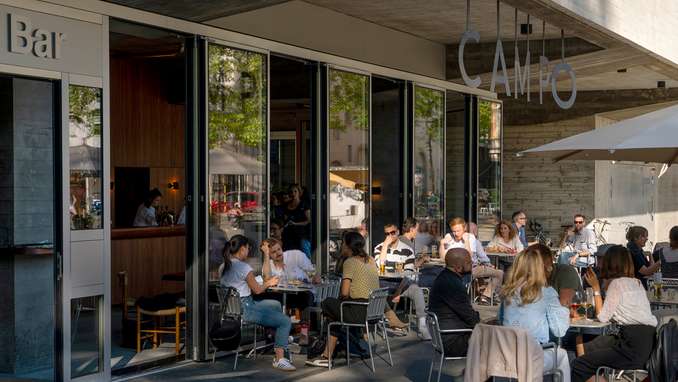
Dining out in Zürich

No matter where in the world, our cities are designed for living, working, cultural entertainment and late nights. Some times, they are even designed for fresh starts.

While some cities have it figured out, some don’t. From transportation and green spaces to retail possibilities and residential settlements, what makes a good city a great place to live?

Every summer, Monocle, the London-based global magazine that’s always been a must-read for me for its coverage of international affairs, business, culture and design, presents a special quality of life rankings with a top of the world list of the 25 best global cities. Most years, the list is heavy in cities located in Europe and the Asia Pacific. Not surprisingly, North American cities – especially in the United States – rank low or out of the running. (This year is no different as the only city to rank in the Top 25 was Vancouver, B.C., Canada.)

As the magazine suggests, “places grow and change and so do our ideas of how we want our cities to be.”

In his editor’s letter in the July/August issue, Monocle’s editor-in-chief Tyler Brûlé wrote: “When we look at a city we’re constantly asking if the infrastructure is in place to allow residents and visitors to be as productive as possible while also having a pleasant experience navigating the place.”

While I’ve written about Monocle’s Quality of Life rankings before, it’s always an interesting subject to study and dissect. In looking over this year’s list of the Top 25 cities in the world, it makes me pine for world travel.

Here’s Monocle’s Top 25 places in the world to live:

1. Zürich
2. Tokyo
3. Munich
4. Copenhagen
5. Vienna
6. Helsinki
7. Hamburg
8. Madrid
9. Berlin
10. Lisbon
11. Melbourne
12. Stockholm
13. Sydney
14. Amsterdam
15. Vancouver
16. Hong Kong
17. Kyoto
18. Barcelona
19. Paris
20. Düsseldorf
21. Auckland 
22. Fukuoka
23. Brisbane
24. Oslo
25. Singapore

In describing Zurich, the magazine writes: “Zürich is a city that gives you the feeling that all is right with the world. It starts at the airport, where you’ll encounter few queues at customs and a punctual train that delivers you from arrivals to the city Centre in minutes. You’ll step out onto nearly swept streets lined with well-appointed shops – and in the distance catch a glimpse of the snow-capped Alps beyond the turquoise blue of Lake Zürich. 

In commenting about this year’s No. 1 city, Zürich, Brûlé wrote, “Zurich has become something of a global master at making travel a joy. Add global connectivity to the mix via its airport and railway stations, high-quality housing and an ever-improving restaurant-and-retail scene and you'll know why we often refer to it as Berlin for people over 40 (or who know better.).

“While Zürich still has many areas that could be improved (more-daring architecture, more relaxed retail trading hours, more mature trees planted by developers and more incentives to make balconies greener) it’s got most things right. And it’s for this reason that it’s vaulted a few positions this year to take the top spot – yet again. Indeed, this is the second time that Zürich has clinched the highest position on the winners’ podium.”

Photos: Courtesy of Monocle.com.

Tuesday, May 24, 2016

SFMOMA – Welcoming an old friend back to the City


Welcome back / The new-look SFMOMA has grown from five to 10 stories.

Last Thursday evening, my wife and I welcomed an old friend back to San Francisco. The San Francisco Museum of Modern ART (SFMOMA) reopened earlier this month after being closed for the past three years while undergoing a massive – and challenging – expansion project by Oslo and New York design firm Snøhetta. The new-look SFMOMA has grown from five to 10 stories. Dropping in on the newly transformed museum after work for a short visit before heading out for dinner and shopping, we delighted in seeing some favorite artworks and architectural features – including some of the gems from the Doris and Donald Fisher Collection, considered to be one of the world's greatest.

The largest living wall in the U.S. greets visitors to SFMOMA.
From first glimpse, there's much to like about the new look and space of SFMOMA, including new galleries, expanded exhibition space, better lighting, greater access, art-filled public spaces, six terraces and sculptural staircases, which offer unique views out to the city.

As visitors step outside onto the main terrace, they are greeted by a giant living wall designed by Habitat Horticulture. It is part art, part landscape and it's the nation's largest public green wall of native plants.

Constellation  (1949) / From Alexander Calder: Motion Lab
We delighted in seeing the Alexander Calder: Motion Lab, which highlights Calder's restless innovation in bringing actual movement into art. We viewed About Time: Photography in a Moment of Change, a thematic exhibition which investigates how photography has profoundly reflected, inflected and transformed our perception of time through its 180-year history. We also saw Model Behavior, Snøhetta's initial sketches and models for the expanded SFMOMA building, located in a challenging and prominent urban site on Third Street, just south of Market Street.

A swarm of chaotic energy /
Studying Antony Gormley's "Quantum Cloud VIII"
Finally, upon ascending to Floor 5, we admired British Sculptors, in which more than forty years of diverse sculpture by artists who were born or reside in Great Britain was displayed.

My favorite was Antony Gormley's "Quantum Cloud VIII," a 1999 steel sculpture that was acquired by the Fisher Family in 2000. According to the sculptor, "Quantum Cloud VIII conceives of the body as a swarm of chaotic energy. A human figure seems to alternately materialize from and disintegrate into the cloud of metal bars."

Created between 1999 and 2009, Gormley's Quantum Cloud series reflects on "how the subatomic particles and energy that make up our bodies are integrated with those that compose the universe around us."

Alexander Calder /
Big Crinkly (1969)
There is much to see and enjoy in the 170,000 square feet of exhibition space, and as members, we look forward to going back often to see some of the things we missed during our initial visit. Some of the current exhibits include:

Paul Klee in Color, which includes paintings and watercolors by the Swiss-born modernist Paul Klee (1879-1940) that explore "his intuitive and theoretical approaches to color."

German Art after 1960, which is an overview of leading German artists such as Gerhard Richter, Georg Baslitz, Anselm Kiefer, and Bernd and Hilla Becher.

Typeface to Interface, which features graphic design from the Collection, "a trajectory of iconic type and the evolution of digital tools marking the rapid transformation of graphic design over the past sixty years."

San Francisco / A city that loves art and open spaces.
In its 81-year history, SFMOMA has established itself as a premier showcase for modern art – think Calder, Close, Kahlo, Kelly, Pollack and Warhol. One things certain: There's definitely a new a positive dedication to openness as the museum begins a new dialogue with San Francisco, a city that loves its art.

To read more about what art critics are saying about the new SFMOMA design:
http://www.dezeen.com/2016/05/18/critics-reaction-san-francisco-museum-modern-art-sfmoma-extension-snohetta-mario-botta/

Photos: All photos by Michael Dickens © 2016.

Tuesday, May 3, 2016

Independent bookstores: A glimpse into the soul of a city


Contributing to the cultural fabric / Powell's City of Books, Portland, Ore.

The comedian Jerry Seinfeld once said that a bookstore is "one of the only pieces of evidence we have that people are still thinking."

Thank goodness for bookstores. Thank goodness we are still thinking, too.

Visiting independent bookstores are always a treat because they offer something unique. Whenever I travel, I try to seek them out. They offer a glimpse into the soul of a city and a sense of a pretty cool place to buy a book.

Despite the shuddering of nationwide chain Borders a few years ago and the bland sameness of Barnes & Noble stores throughout the U.S, we can be grateful for the colorfulness of independent bookstores across the country. In cities such as Portland, Ore., independent bookstores like Powell's City of Books – which covers an entire city block and offers maps for its customers – not only are thriving, they contribute to a city's cultural fabric.

READ / Window display outside of
Elliott Bay Book Company, Seattle.
A neon READ sign in a window display greets customers as they walk by Elliott Bay Book Company in Seattle's Capitol Hill neighborhood. It's a sign I never tire of photographing each time I visit the bookstore – and I've been coming to Seattle for more than 20 years. With over 120,000 titles to browse, and a spacious interior that includes original fir floors, a beamed ceiling with skylights, and an in-store café, Elliott Bay Book Company is always on our list of places to see – and to buy a book – when we visit our longtime Seattle friends.

Last Saturday, Independent Bookstore Day was celebrated across the United States. It brought to mind the many wonderful and unique independent bookstores I've visited over the years and willingly patronized. A few of them come to mind:

Book Passage in San Francisco's Ferry Plaza Building; Mrs. Dalloway's Literary and Garden Arts in Berkeley; Powell's City of Books in Portland, Ore.; Books & Books  in Coral Gables, Fla.; Lemuria Bookstore in Jackson, Miss.; Faulkner House Books on Pirate's Alley in New Orleans; Common Good Books in Saint Paul, Minn.; and my favorite, Elliott Bay Book Company in Seattle.

Bought a good book lately? Remember: Support your local independent bookstore. READ!

Original fir floors, beamed ceilings, plenty of
 books inside Elliott Bay Book Company, Seattle.

Tomes Not Drones / Timeless commentary
at Common Good Books, Saint Paul. 

Eat Sleep Read Dig / Window mantra
at Mrs. Dalloway's Literary & Garden Arts,
Berkeley, Calif.

We Recommend ... / Good books,
great atmosphere at Book Passage,
inside the Ferry Plaza Building,
along San Francisco's Embarcadero.

All photos: © Michael Dickens, 2012, 2013, 2014, 2015, 2016.


Tuesday, August 13, 2013

A simple question with a complicated answer: Where do you want to live?


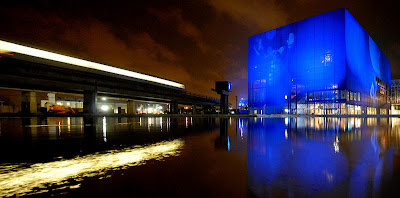
Copenhagen Concert Hall at night. /
The No. 1 best global city according to Monocle.

Our cities are designed for living, working, cultural entertainment and late nights. Even fresh starts. Some cities have it figured out, some don't.

From transportation to green space, retail possibilities and residential settlements, it's always interesting to find out what makes a good city a great place to live.

The July/August issue of Monocle
rates the 25 best global cities.
Each summer for the past seven years, Monocle, the London-based global magazine that's a must-read for its coverage of international affairs, business, culture and design, has presented a special quality of life rankings with a top of the world list of the 25 best global cities.

"Too many major cities, including some of our top 25, all but shut down on a Sunday -- we believe a city should be a seven-day operation," writes Monocle's Steve Bloomfield and Michael Booth, in the introduction to this year's top of the world list, which appears in the magazine's July/August 2013 issue (issue 65, volume 07). "We asked our team or correspondents and researchers to judge how easy it is to arrange a spontaneous dinner with friends on a Sunday night. Are the restaurants open? Can you buy groceries and wine?"

Other common factors which Monocle studied include: crime rates, weather, education, health care, transportation and "an airport with a host of international destinations." Of course, it helps if a city has good plazas and outdoor cafés as well as art galleries that stay open late and museums that are free, too.

It did not surprise me that few U.S. or North American cities made Monocle's Top 25 -- Honolulu at No. 17 was highest ranked while my beloved San Francisco ranked 24th. Nor, should it be surprising that six of the top 10 were European cities, including this year's No. 1 Copenhagen.

No. 14 Paris /
The Pyramid at the Louvre is always a buzz of activity.
Why did Copenhagen rank No. 1 and not Paris (ranked No. 14) or London (which did not even rank in the top 25)? Here's why: "World-conquering urban quality of life requires the trickiest of balancing acts -- between progress and preservation, stimulation and security, global and local. Perfection is unobtainable, of course, but Copenhagen is striking one of the best deals right now.

"The Danish capital has hit the top spot this year not just because of its daring art scene, its matrix of cycle super-highways and its pioneering approach to street culture but also its ability to define itself as a global city. Copenhagen's wonderful self-reinvention continues to impress."

As for what the magazine said about San Francisco, in a nutshell it wrote: "Northern California's spectacular city scores high on tolerance and urban verve but tech-dollars continue to drive up the cost of living." I'd have to agree. As much as I would enjoy living in the Inner Sunset, within walking distance of Golden Gate Park, the cost of buying or renting is somewhat prohibitive. Thus, living across the bay in Oakland, I believe, is a better value.

No. 19 Vancouver, B.C. /
This western Canadian city hosted the 2010 Winter Olympic Games.

Here's Monocle's world list of the 25 best global cities for 2013:

1. Copenhagen
2. Melbourne
3. Helsinki
4. Tokyo
5. Vienna
6. Zürich
7. Stockholm
8. Munich
9. Sydney
10. Auckland
11. Hong Kong
12. Fukuoka
13. Kyoto
14. Paris
15. Singapore
16. Hamburg
17. Honolulu
18. Madrid
19. Vancouver
20. Berlin
21. Barcelona
22. Amsterdam
23. Portland (Oregon, U.S.)
24. San Francisco
25. Düsseldorf

No. 22 Amsterdam /
The city's bicycle culture and canals are an appealing.
In looking over Monocle's top 25 best global cities list, I've been lucky enough to have visited eight of these cities in my lifetime -- Copenhagen, Helsinki, Paris, Honolulu, Vancouver, Amsterdam, Portland and, of course, San Francisco, which I get to see nearly every day. There are many more on Monocle's list I would love to visit some day in the future like Sydney and Berlin.

Does the perfect city exist? Not likely. Will it ever? Probably not. And, of course, what works for some of us, doesn't for all of us. Yet, it's nice know that there are a handful of good cities throughout the world whose quality of life makes me want to live there some day.

No. 24 San Francisco /
The de Young Fine Arts Museum in Golden Gate Park.
By the way, one reason the San Francisco Bay Area (which has been my home for nearly 18 years) is a great place to live is because it is easy to arrange a spontaneous dinner with friends on a Sunday night; great restaurants are open on Sunday nights; and you can buy groceries and wine on Sundays, day or night.

And, having a Major League baseball team -- the San Francisco Giants -- that's won two World Series titles in the past three years is a nice bonus and adds to the quality of life, too.

Where do you want to live?

Photo of Copenhagen Concert Hall courtesy of Wikipedia Commons.
Photo of Monocle courtesy of monocle.com.
All other photos by Michael Dickens, copyright 2010, 2012 and 2013.