Showing posts with label living. Show all posts

Thursday, August 8, 2019

What makes a good city great?


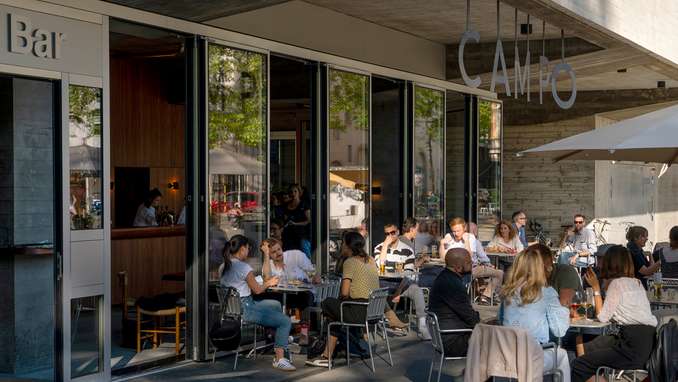
Dining out in Zürich

No matter where in the world, our cities are designed for living, working, cultural entertainment and late nights. Some times, they are even designed for fresh starts.

While some cities have it figured out, some don’t. From transportation and green spaces to retail possibilities and residential settlements, what makes a good city a great place to live?

Every summer, Monocle, the London-based global magazine that’s always been a must-read for me for its coverage of international affairs, business, culture and design, presents a special quality of life rankings with a top of the world list of the 25 best global cities. Most years, the list is heavy in cities located in Europe and the Asia Pacific. Not surprisingly, North American cities – especially in the United States – rank low or out of the running. (This year is no different as the only city to rank in the Top 25 was Vancouver, B.C., Canada.)

As the magazine suggests, “places grow and change and so do our ideas of how we want our cities to be.”

In his editor’s letter in the July/August issue, Monocle’s editor-in-chief Tyler Brûlé wrote: “When we look at a city we’re constantly asking if the infrastructure is in place to allow residents and visitors to be as productive as possible while also having a pleasant experience navigating the place.”

While I’ve written about Monocle’s Quality of Life rankings before, it’s always an interesting subject to study and dissect. In looking over this year’s list of the Top 25 cities in the world, it makes me pine for world travel.

Here’s Monocle’s Top 25 places in the world to live:

1. Zürich
2. Tokyo
3. Munich
4. Copenhagen
5. Vienna
6. Helsinki
7. Hamburg
8. Madrid
9. Berlin
10. Lisbon
11. Melbourne
12. Stockholm
13. Sydney
14. Amsterdam
15. Vancouver
16. Hong Kong
17. Kyoto
18. Barcelona
19. Paris
20. Düsseldorf
21. Auckland 
22. Fukuoka
23. Brisbane
24. Oslo
25. Singapore

In describing Zurich, the magazine writes: “Zürich is a city that gives you the feeling that all is right with the world. It starts at the airport, where you’ll encounter few queues at customs and a punctual train that delivers you from arrivals to the city Centre in minutes. You’ll step out onto nearly swept streets lined with well-appointed shops – and in the distance catch a glimpse of the snow-capped Alps beyond the turquoise blue of Lake Zürich. 

In commenting about this year’s No. 1 city, Zürich, Brûlé wrote, “Zurich has become something of a global master at making travel a joy. Add global connectivity to the mix via its airport and railway stations, high-quality housing and an ever-improving restaurant-and-retail scene and you'll know why we often refer to it as Berlin for people over 40 (or who know better.).

“While Zürich still has many areas that could be improved (more-daring architecture, more relaxed retail trading hours, more mature trees planted by developers and more incentives to make balconies greener) it’s got most things right. And it’s for this reason that it’s vaulted a few positions this year to take the top spot – yet again. Indeed, this is the second time that Zürich has clinched the highest position on the winners’ podium.”

Photos: Courtesy of Monocle.com.

Saturday, February 23, 2019

Here are 25 cities you may wish to call home

Some random thoughts while drinking coffee and enjoying a snow dayat home ...


Our cities are designed for living, working, cultural entertainment and late nights. Even fresh starts, like I experienced when I moved to Washington, D.C. in 2017, after spending 21-plus years living in the San Francisco Bay Area.

Some cities have it figured out, some don’t.

From transportation to green space, retail possibilities and residential settlements, it’s always interesting to find out what makes a good city a great place to live.

Every summer, Monocle, the London-based global magazine that’s always been a must-read for me, for its coverage of international affairs, business, culture and design, presents a special quality of life rankings with a top of the world list of the 25 best global cities.

Although I’ve written about Monocle’s Quality of Life rankings before, it’s been a few years – and, somehow, I haven’t visited the subject since 2016. So, as snow begins to blanket the Beltway, I’ve decided to take a look back at what Monocle had to say about last year’s quality of life rankings.

Here’s Monocle’s Top 25 cities in the world:

 1. Munich
 2. Tokyo
 3. Vienna
 4. Zurich
 5. Copenhagen
 6. Berlin
 7. Madrid
 8. Hamburg
 9. Melbourne
10. Helsinki
11. Stockholm
12. Lisbon
13. Sydney
14. Hong Kong
15. Vancouver
16. Amsterdam
17. Kyoto
18. Düsseldorf
19. Barcelona
20. Paris
21. Singapore
22. Fukuoka
23. Auckland
24. Brisbane
25. Oslo

“Cities are the future,” writes Monocle in discussing its 12th annual Quality of Life survey about the Top 25 global cities. You’ll notice the list is heavy on European and Pacific Asian cities, but it doesn’t include London, Paris or Rome. Only one North American city – Vancouver – made this year’s list. “You want a city that’s well run, delivers on life’s essentials and is fun, too.”

According to Monocle, “By 2030 urban areas are projected to house 60 percent of the global population. But while city halls need to prepare for that future – think grand infrastructure projects and investments in housing – they need to offer their residents a decent quality of life in the present. The best cities manage to find a healthy balance between planning for tomorrow and managing today.”

It makes us ask: What’s my city doing to change? Is it reviving former industrial neighborhoods for more housing stock and new cultures space? Is it expanding its airport or adding new routes to its train network? How well does my city do in putting on a welcoming face to outside businesses, newcomers and tourists?

Monocle suggests that getting it all right is “a challenge but some cities are getting it right.

“Take for instance, our winning city this year, which returned to the top spot: Munich. Safe and efficient with plenty of green space and good restaurants, the German city is thriving and more cosmopolitan than ever. Not only is Munich drawing an increasing number of students (it’s home to 18 universities) and entrepreneurs (its mobility, tech and IT sectors are booming), it’s been managing an influx of refugees and their integration.”

Looking ahead, as cities continue to expand, it seems that maintaining a great quality of life that gets recognized will be a challenge – even for the most forward thinking of cities. Monocle concludes, “Those that will prosper will be open and secure, ambitious and practical, with an eye on the future and a respect for the past.”

Photos and illustrations courtesy of Monocle/Monocle.com.


Tuesday, September 13, 2016

On being selective: To have fewer, but better things


Organize + Tidying Up = Spark Joy
Whether it was a desire to have fewer things in our lives or merely say thank you and bid adieu to things that fail to "spark joy" – or that we no longer value – my wife and I both agreed that we needed less.

In recent years, our buying habits have changed. Rather than rush out to buy books, we've made better use of our local public library as a resource to check out books we've read about in The New York Times or garnered an interest in from seeing an author appear on Comedy Central's The Daily Show. And, our music purchases have shifted away from physical CDs to mp3s via iTunes, which we can play on our iPhones (and I still have a classic iPod I use at the gym). Plus, thanks to streaming movies and binge-watching TV series using Netflix, buying DVDs has become irrelevant. There's definitely an ease of portability that we are using to our advantage.


Now, our living room space is neither minimalist or lacking in abundance – just decluttered.

We used the occasion of a remodeling project to "declutter" our living room, following in the success of the decluttering superstar Marie Kondo, who has written a couple of best-sellers on the subject, including The Life-Changing Magic of Tidying Up: The Japanese Art of Decluttering and Organizing and Spark Joy: An Illustrated Master Class on the Art of Organizing and Tidying Up.

On a recent Sunday afternoon, we assessed four bookcases-worth of books as well as several hundred CDs and DVDs. Following Kondo's guideline, we "dumped" the contents of both collections – first our books and later our CDs and DVDs – in the middle of the living room floor and decided what could stay and what needed to go among our material excess of living.

Following Kondo's guidelines, it forced us to ask ourselves whether each object was achieving a purpose. Did it spark joy in our lives? I'm happy to report that things went much smoother than I anticipated. There were no tug-of-wars or endless debates about what to keep or what to let go. By the end of our back-to-back sessions, we had earmarked 55 books to donate to the Friends of the Oakland Public Library store and close to 100 CDs and DVDs to sell for credit at our favorite record store in Berkeley.

It's taken time, but we have become more selective about what we buy and own – following a trend of having fewer, but perhaps better, things. We no longer feel the need to rush out the first day an author publishes a new book or a music artist releases a new album to purchase it. Now, our trips to our favorite bookseller or record store are fewer but more meaningful.

If I've learned anything from this exercise, it's this: Having fewer things of a higher quality – things which we can adore and enjoy – is a decluttering philosophy unto itself.


Tuesday, July 19, 2016

Where do you want to live? A simple question, but ...

For the second consecutive year, Tokyo was selected No. 1 in Monocle's
Quality of Life survey.

It's no secret that the best cities in the world are ones which are vibrant and offer the best quality of life for their residents. The best city environments are those which are tolerant and open-minded, celebrate diversity, have great universities and welcome creativity.

Having quality independent bookshops, green spaces and clean streets as well as efficient transportation systems are big pluses, too.

Back in summer 2007 when Monocle was still just a few months old, the London-based monthly briefing that's become a "must-read" – and a favorite of mine – through its focus on global affairs, business, culture and design, launched its inaugural "Quality of Life" survey, naming the best global cities to call home. Munich was the first No. 1. This year, it's Tokyo reigning at the top for the second consecutive year in the 10th year that Monocle has conducted its "Quality of Life" survey. It's both a source of pride for the cities who make the top 25 list – like receiving a prestigious Michelin star – and every year seems to unearth a surprise or two or three.

Monocle: A briefing on Global Affairs,
Business, Culture & Design.
Over the years, Monocle has added new metrics that take into account both intangibles and infrastructure – from nightlight to pet-friendly parks – which have led to some dramatic changes and brought about a new world order.

"We add to the metrics each year and this time we've measured cities' nocturnal qualities too, from closing times to the places that still serve a good meal after 22.00," wrote Monocle executive editor Steve Bloomfield in a preface to this year's "Quality of Life" survey. "Despite these new metrics, when looking back over the previous surveys it's striking to see how the fundamentals of what makes a livable city have remained the same.

"Among the metrics we still count the number of murders and break-ins, and the average response times of emergency services – because if your city isn't safe it doesn't matter how many art galleries there are. We still grade cities on their transport network too, from infrastructure to cost. Cities that encourage cycling and make it cheap and easy to use public transport continue to score well. So too do those that make it easy to get away; the best cities are connected to the rest of the world. And we still judge our cities on their food, drink and retail – the quality, not just the quantity. Those with a high number of independent bookshops prosper; those with a high number of Starbucks less so."

Bloomfield concludes: "The most livable cities are safe, affordable and exciting. And that will probably still be the case in another decade's time."

While London, Paris and Rome remain three of the biggest tourist destinations in the world, their popularity doesn't necessarily translate into great places to live. Hint: none of the Big three made Monocle's top 25 cities list.

Here are Monocle's top 25 cities in this year's "Quality of Life" survey:

•  1. Tokyo, Japan
•  2. Berlin, Germany
•  3. Vienna, Austria
•  4. Copenhagen, Denmark
•  5. Munich, Germany
•  6. Melbourne, Australia
•  7. Fukuoka, Japan
•  8. Sydney, Australia
•  9. Kyoto, Japan
•10. Stockholm, Sweden
•11. Vancouver, B.C. (Canada)
•12. Helsinki, Finland
•13. Zürich, Switzerland
•14. Madrid, Spain
•15. Hamburg, Germany
•16. Lisbon, Portugal
•17. Düsseldorf, Germany
•18. Hong Kong
•19. Barcelona, Spain
•20. Singapore
•21. Amsterdam, Netherlands
•22. Auckland, New Zealand
•23. Honolulu, Hawaii (USA)
•24. Portland, Oregon (USA)
•25. Montréal, Quebec (Canada)

Of the 25 cities, I have experienced seven of them: Copenhagen, Vancouver, Helsinki, Amsterdam, Honolulu, Portland and Montréal. I've been a return visitor to Vancouver, Amsterdam and Portland numerous times and there's much to enjoy in each of these cities. Vancouver was a welcoming host for both the 2010 Olympic Winter Games and the 2015 Women's World Cup football championships and I'm glad to have experienced both events as well as both winter and summer weather in Vancouver.

In justifying Tokyo's No. 1 ranking, Monocle wrote: "... the city's round-the-clock economy is a key feature that makes it one of the most attractive places to live and visit. With a conveniently located international airport open 24 hours a day, bookshops that open at 07.00 and close at 04.00, and restaurants and shops that never close, Tokyo recognizes the pull of being open all hours."

Tuesday, August 13, 2013

A simple question with a complicated answer: Where do you want to live?


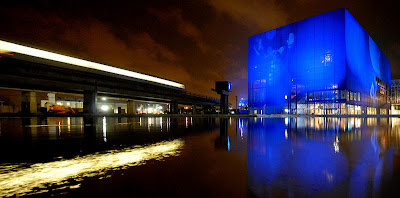
Copenhagen Concert Hall at night. /
The No. 1 best global city according to Monocle.

Our cities are designed for living, working, cultural entertainment and late nights. Even fresh starts. Some cities have it figured out, some don't.

From transportation to green space, retail possibilities and residential settlements, it's always interesting to find out what makes a good city a great place to live.

The July/August issue of Monocle
rates the 25 best global cities.
Each summer for the past seven years, Monocle, the London-based global magazine that's a must-read for its coverage of international affairs, business, culture and design, has presented a special quality of life rankings with a top of the world list of the 25 best global cities.

"Too many major cities, including some of our top 25, all but shut down on a Sunday -- we believe a city should be a seven-day operation," writes Monocle's Steve Bloomfield and Michael Booth, in the introduction to this year's top of the world list, which appears in the magazine's July/August 2013 issue (issue 65, volume 07). "We asked our team or correspondents and researchers to judge how easy it is to arrange a spontaneous dinner with friends on a Sunday night. Are the restaurants open? Can you buy groceries and wine?"

Other common factors which Monocle studied include: crime rates, weather, education, health care, transportation and "an airport with a host of international destinations." Of course, it helps if a city has good plazas and outdoor cafés as well as art galleries that stay open late and museums that are free, too.

It did not surprise me that few U.S. or North American cities made Monocle's Top 25 -- Honolulu at No. 17 was highest ranked while my beloved San Francisco ranked 24th. Nor, should it be surprising that six of the top 10 were European cities, including this year's No. 1 Copenhagen.

No. 14 Paris /
The Pyramid at the Louvre is always a buzz of activity.
Why did Copenhagen rank No. 1 and not Paris (ranked No. 14) or London (which did not even rank in the top 25)? Here's why: "World-conquering urban quality of life requires the trickiest of balancing acts -- between progress and preservation, stimulation and security, global and local. Perfection is unobtainable, of course, but Copenhagen is striking one of the best deals right now.

"The Danish capital has hit the top spot this year not just because of its daring art scene, its matrix of cycle super-highways and its pioneering approach to street culture but also its ability to define itself as a global city. Copenhagen's wonderful self-reinvention continues to impress."

As for what the magazine said about San Francisco, in a nutshell it wrote: "Northern California's spectacular city scores high on tolerance and urban verve but tech-dollars continue to drive up the cost of living." I'd have to agree. As much as I would enjoy living in the Inner Sunset, within walking distance of Golden Gate Park, the cost of buying or renting is somewhat prohibitive. Thus, living across the bay in Oakland, I believe, is a better value.

No. 19 Vancouver, B.C. /
This western Canadian city hosted the 2010 Winter Olympic Games.

Here's Monocle's world list of the 25 best global cities for 2013:

1. Copenhagen
2. Melbourne
3. Helsinki
4. Tokyo
5. Vienna
6. Zürich
7. Stockholm
8. Munich
9. Sydney
10. Auckland
11. Hong Kong
12. Fukuoka
13. Kyoto
14. Paris
15. Singapore
16. Hamburg
17. Honolulu
18. Madrid
19. Vancouver
20. Berlin
21. Barcelona
22. Amsterdam
23. Portland (Oregon, U.S.)
24. San Francisco
25. Düsseldorf

No. 22 Amsterdam /
The city's bicycle culture and canals are an appealing.
In looking over Monocle's top 25 best global cities list, I've been lucky enough to have visited eight of these cities in my lifetime -- Copenhagen, Helsinki, Paris, Honolulu, Vancouver, Amsterdam, Portland and, of course, San Francisco, which I get to see nearly every day. There are many more on Monocle's list I would love to visit some day in the future like Sydney and Berlin.

Does the perfect city exist? Not likely. Will it ever? Probably not. And, of course, what works for some of us, doesn't for all of us. Yet, it's nice know that there are a handful of good cities throughout the world whose quality of life makes me want to live there some day.

No. 24 San Francisco /
The de Young Fine Arts Museum in Golden Gate Park.
By the way, one reason the San Francisco Bay Area (which has been my home for nearly 18 years) is a great place to live is because it is easy to arrange a spontaneous dinner with friends on a Sunday night; great restaurants are open on Sunday nights; and you can buy groceries and wine on Sundays, day or night.

And, having a Major League baseball team -- the San Francisco Giants -- that's won two World Series titles in the past three years is a nice bonus and adds to the quality of life, too.

Where do you want to live?

Photo of Copenhagen Concert Hall courtesy of Wikipedia Commons.
Photo of Monocle courtesy of monocle.com.
All other photos by Michael Dickens, copyright 2010, 2012 and 2013.
Tuesday, September 11, 2012

In remembrance of the day that forever changed our lives and our world


In remembrance of September 11, 2001, a day that forever changed our lives and our world, here's a simple thought to share with each of you:

"The living owe it those who can no longer speak to tell their story for them."

Czesław Miłosz (1911-2004), Polish poet, prose writer and translator of Lithuanian origin, and Nobel Laureate, who became an American citizen.

Photograph of white rose by Michael Dickens, taken on September 11, 2012. Copyright 2012. All rights reserved.