Showing posts with label value. Show all posts

Tuesday, May 7, 2019

Bill James: Baseball is universe you can figure out


Since 1977, Bill James has written more than two dozen books devoted to baseball history and statistics. During that time, he’s worn many influential hats in and around the National Pastime as a baseball writer, historian and statistician. In 2006, Time named him to the Time 100 as one of the most influential people in the world. Currently, James is a senior advisor on Baseball Operations for the Boston Red Sox.

James coined the term sabermetrics in homage to the Society for American Baseball Research (SABR), in which one scientifically analyzes and studies baseball – think of Moneyball  by Michael Lewis – often through the use of statistical data that goes beyond mere home runs, runs batted in and batting averages in an attempt to determine why teams win and lose.

On Saturday, James visited the Library of Congress in Washington, D.C., where he spoke on a variety of subjects in conversation with D. Bruce Brown, president of the Baltimore Babe Ruth Chapter of the Society of American Baseball Research.

Why do you like baseball?
“You can trace it and study it unlike much of the rest of the world.”

Is research ruining the romance of baseball?
“We can get so wrapped up in what we do that it drives people away, dying the game. It’s a legitimate concern.”

What is the future of baseball?
“It’s old and has the ability to adapt. What I see as the next thing to save the game is – and I don’t know how or where it will happen – but it has to go broader. You can change everything (about the game) and it’s still baseball.”

How does your affiliation with the Red Sox change your outlook on the other 29 teams?
“I may have at times spoken disrespectfully of teams, but I would never write a book telling secrets. You have to have respect for secrets.”

Who was your favorite team growing up?
“I grew up a Kansas City A’s fan and became a Royals fan. (James was born in Holton, Kan.) I’m more of a Red Sox fan (now) than I was ever a Royals fan. It was difficult rooting for a team owned by Charlie Finley.”

What have you changed your mind about in 40 years?
“I used to think if you had a player who played second and shortstop, you made him a shortstop because he was more valuable. Maximize team value.”

James was asked to name his All-Time team:
C – Yogi Berra
1B – Lou Gehrig
2B – Joe Morgan/Eddie Collins
3B – Mike Schmidt
SS – Cal Ripken
OF – Babe Ruth, Willie Mays, Ted Williams
P –  Lefty Grove/Roger Clemens

A few closing thoughts ...

“Younger people now have a better command of the game than before.”

“Are you trying to win or entertain the fans? Many teams now put (those principles) on equal footing.”

Photo: By Michael Dickens

Tuesday, November 20, 2018

On art and fashion: Contemporary Muslim Fashions

Thanks to social media, I have become Facebook friends with several Tunisian women, all whom are Muslim. Some of them cover their heads in colorful headscarves, known as hijabs; most do not. Each have become individuals of style within and beyond their communities in this North African country bordered by Algeria, Libya and the Mediterranean Sea, as I’ve learned firsthand through many thoughtful online conversations. While the nature of the Muslim dress code worldwide is a complex and diverse one, like it or not, Muslim fashion has become part of the mass-media’s attention drawn to contemporary Muslim life.
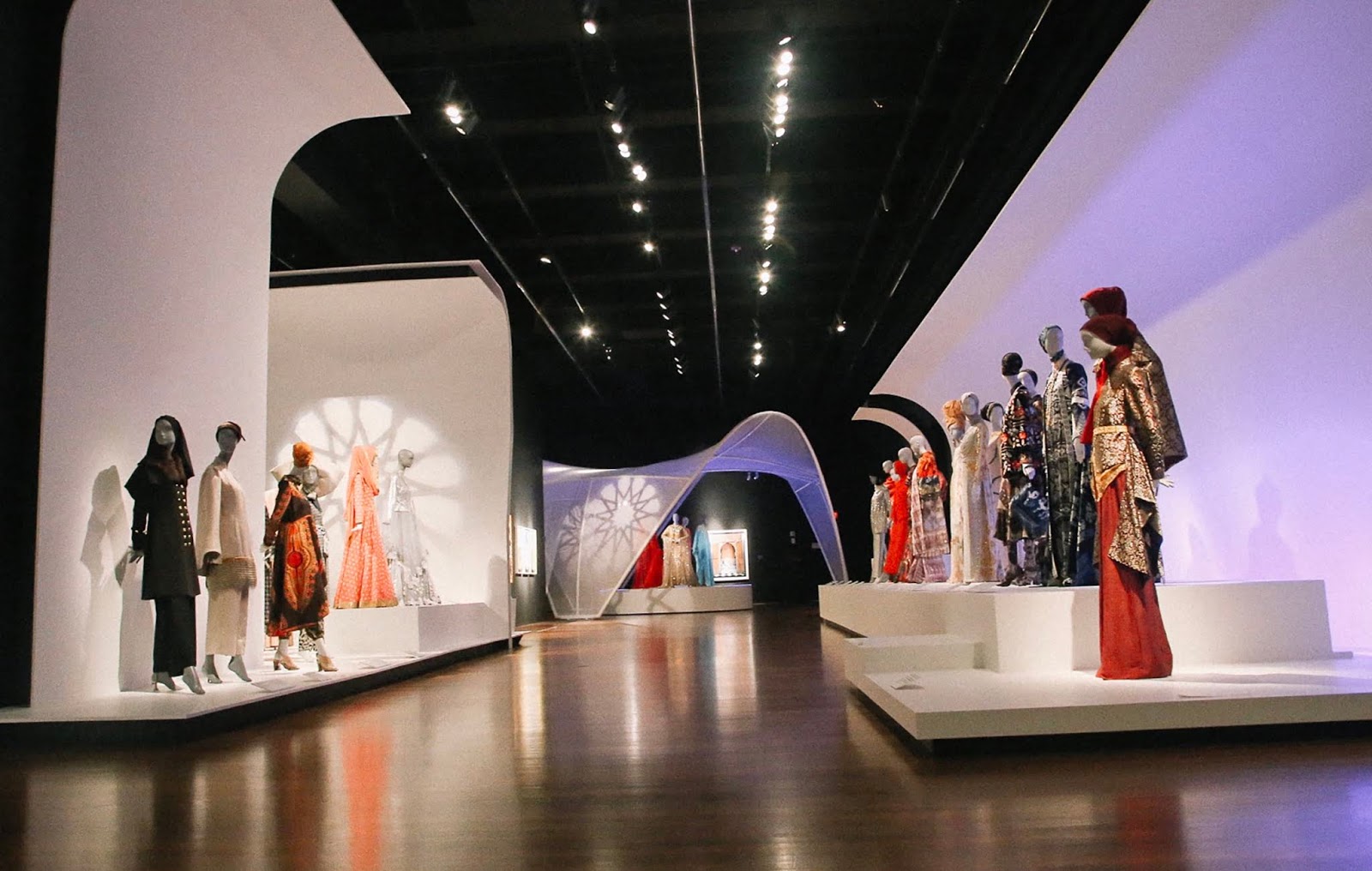
Currently, the deYoung Fine Arts Museum in San Francisco is examining Contemporary Muslim Fashions by “spotlighting places, garments, and styles from around the world,” in a show that began in late September and continues through January 6, 2019.

Contemporary Muslim Fashions is the first major museum exhibition to explore “the complex, diverse nature of Muslim dress codes worldwide” by bringing together different religious interpretations and cultures of Islam. The creativity and diversity – and politics – of modest dressing is celebrated.


I’ve learned that this exhibition considers “how Muslims define themselves – and are defined – by their dress and how these sartorial choices can reflect the multifaceted nature of their identities.”

Contemporary Muslim Fashions crosses through many different religious interpretations and cultures, featuring spectacular creations from a dynamic fashion scene by designers from both the Middle East and Southeast Asia – think Malaysia and Indonesia. From street wear to couture, the exhibition includes “high-end fashions, such as those by Malaysia-based Blancheur; street wear, such as modest designs from London-based Sarah Elenany; sportswear, such as the burkini; and commissioned garments from both emerging and established designers.”


The exhibition also includes the use of social media as a primary material – an agent of change. Muslim voices and personal narratives are framed by using runway footage of fashion shows and news clips as well as documentary and fashion photography.

As visitors to Contemporary Muslim Fashions will learn, while Islam is a multicultural faith, the dress of its followers is “shaped not only by religious principles but also by local customs and traditions and global fashion trends.” Thus, a woman from Tunisia is more likely to be contemporary in her fashion attire than a woman living in Saudi Arabia.


In her review of Contemporary Muslim Fashions for The Hollywood Reporter, critic Celine Semaan wrote, “Because of the current political climate from which it is rising, the show carries a message of hope and acceptance. The act itself of organizing this exhibition is nothing if not a peaceful demonstration of the American values written in the First Amendment: freedom of speech, freedom of expression, freedom of religion.”

Laird Borrelli-Persson of Vogue, in reviewing Contemporary Muslim Fashions, quotes curator Jill D’Alessandro, who believes, “Fashion can be an agent for positive change, for understanding, and breaking down barriers; they (fashion designers) want to exhibit in the United States and in Europe because they want their cultures to be understood.”

One thing’s for sure: There’s a diversity in Muslim fashion that is strikingly beautiful, both for its modern aesthetic and for its street-style appeal.

Photos: Cover – Mary Katrantzou skirt and shirt (silk and polyester), and Malone Souliers shoes.  Bottom – Flight jacket with U.S. Constitution written in Arabic on the back and First Amendment written in English inside, by Slow Factory (Courtesy of deYoung Museum and Google Images). Video: Courtesy of YouTube.com.

Tuesday, November 14, 2017

Reflections on patriotism: Dan Rather on what unites us

Dan Rather reads from his book 'What Unites Us.'
Dan Rather finds himself thinking deeply about what it means to love America as he surely does in the age of President Donald Trump.

At a time in our nation's history when there's a crisis over our national identity, the longtime broadcast journalist has surfaced as a calm, measured voice of reason and integrity. At 86, he has embraced social media, where he regularly contributes his thoughts and wisdom via his Facebook page, which has more than 2.5 million followers.

Last week, Rather's new book, What Unites Us: Reflections on Patriotism, written with Emmy Award-winning journalist Elliot Kirschner, was published. In it, Rather has written a collection of 16 original and passionate essays that reflect on what it means to be an American in the 21st century.

During a recent book tour lecture at George Washington University in Washington, D.C., I listened attentively to Rather, in conversation with Washington Post editorial writer Jonathan Capehart. He discussed a variety of topics including patriotism and freedom of the press, whose values have transformed us and represent institutions that sustain our nation.

On the subject of patriotism, Rather read from his book: "Patriotism – active, constructive patriotism – takes work. It takes knowledge, engagement with those who are different from you, and fairness in law and opportunity. It takes coming together for good causes," he said. "This is one of the things I cherish most about the United States: we are a nation not only of dreamers but also of fixers. We have looked at our land and people , and said, time and again, this is not good enough; we can be better."

When asked about Capehart to discuss freedom of the press, Rather didn't hesitate when he responded: "We are the witness to the truth and there's a lot of good reporting going on out there. This president is pushing us toward a 'post-truth' and 'post-fact' political era.

"American journalism is at a crossroads," he continued. "News is what the public needs to know and it's generally what somebody else doesn't want you to know about."

Rather's storied career – he spent more than 40 years with CBS News and succeeded the legendary Walter Cronkite in the anchor chair for The CBS Evening News – has made him one of the world's best-known journalists. He's interviewed every president since Eisenhower. With decades spent on the front lines covering the world's biggest stories – from the assassination of President John F. Kennedy to the Vietnam War to the Watergate crisis that ended with the resignation of President Richard Nixon – Rather is able to offer his readers a unique if not intimate view of America's history and its historical change.

It's easy to gain from reading What Unites Us and by listening to Rather that regardless of the state of our current national political climate, he maintains a fundamental sense of hope that comes from sharing our nation's transformative values, from empathy to inclusion to service.

Photo of Dan Rather by Michael Dickens © 2017.

Tuesday, September 13, 2016

On being selective: To have fewer, but better things


Organize + Tidying Up = Spark Joy
Whether it was a desire to have fewer things in our lives or merely say thank you and bid adieu to things that fail to "spark joy" – or that we no longer value – my wife and I both agreed that we needed less.

In recent years, our buying habits have changed. Rather than rush out to buy books, we've made better use of our local public library as a resource to check out books we've read about in The New York Times or garnered an interest in from seeing an author appear on Comedy Central's The Daily Show. And, our music purchases have shifted away from physical CDs to mp3s via iTunes, which we can play on our iPhones (and I still have a classic iPod I use at the gym). Plus, thanks to streaming movies and binge-watching TV series using Netflix, buying DVDs has become irrelevant. There's definitely an ease of portability that we are using to our advantage.


Now, our living room space is neither minimalist or lacking in abundance – just decluttered.

We used the occasion of a remodeling project to "declutter" our living room, following in the success of the decluttering superstar Marie Kondo, who has written a couple of best-sellers on the subject, including The Life-Changing Magic of Tidying Up: The Japanese Art of Decluttering and Organizing and Spark Joy: An Illustrated Master Class on the Art of Organizing and Tidying Up.

On a recent Sunday afternoon, we assessed four bookcases-worth of books as well as several hundred CDs and DVDs. Following Kondo's guideline, we "dumped" the contents of both collections – first our books and later our CDs and DVDs – in the middle of the living room floor and decided what could stay and what needed to go among our material excess of living.

Following Kondo's guidelines, it forced us to ask ourselves whether each object was achieving a purpose. Did it spark joy in our lives? I'm happy to report that things went much smoother than I anticipated. There were no tug-of-wars or endless debates about what to keep or what to let go. By the end of our back-to-back sessions, we had earmarked 55 books to donate to the Friends of the Oakland Public Library store and close to 100 CDs and DVDs to sell for credit at our favorite record store in Berkeley.

It's taken time, but we have become more selective about what we buy and own – following a trend of having fewer, but perhaps better, things. We no longer feel the need to rush out the first day an author publishes a new book or a music artist releases a new album to purchase it. Now, our trips to our favorite bookseller or record store are fewer but more meaningful.

If I've learned anything from this exercise, it's this: Having fewer things of a higher quality – things which we can adore and enjoy – is a decluttering philosophy unto itself.