Showing posts with label interpret. Show all posts

Tuesday, October 1, 2019

Rhiannon Giddens: A global voice that resonates with curiosity and purpose in these troubled times


Rhiannon Giddens / there is no Other

When Rhiannon Giddens released her latest album, the intense and sparsely-arranged there is no Other – recorded with Italian multi-instrumentalist Francesco Turrisi – earlier this year, it “at once was a condemnation of ‘othering’ as well as a celebration of the spreading of ideas and connectivity and of a shared experience.”

Together, Giddens and Turrisi traced an overlooked movement of sounds originating from Africa and the Arabic world and found common ground in how those sounds influenced European and American music. The original songs which Giddens penned for there is no Other as well as interpretations of others such as Ola Belle Reed’s “I’m Gonna Write Me a Letter,” Oscar Brown Jr.’s “Brown Baby” and the Italian traditional “Pizzica di San Vito,” collectively illustrate both her adoration of Appalachian bluegrass, gospel, opera and traditional Italian music and the commonality it brings to the human experience. Her interpretation of the gospel standard “Wayfaring Stranger” ranks up there with those of Emmylou Harris and Johnny Cash.

It was in this spirit that I saw Giddens and Turrisi perform selections from there is no Other last week in the 450-seat Terrace Theater at the Kennedy Center for the Performing Arts in Washington, D.C. It was the first time I had seen Giddens in concert. I hope it’s not the last.

Giddens, 42, is a celebrated Grammy Award-winning artist and MacArthur “Genius” Grant recipient, who loves to dig through the past to reveal bold and candid truths about our present. The messages in her songs have drawn upon slave narratives as well as African American experiences, including the 1960s Civil Rights movement, and are often told from the point of view of black women’s suffering and resilience. In concert, Giddens painstakingly takes the time to weave her excellent storytelling skills to put each song into an historical context.

Giddens recently was featured in the Ken Burns Country Music documentary film series. In an interview with the Greensboro (N.C.) News & Record, she said, “I have played country, I have sung country. I’ve listened to country or what we say is country. I’ve played a lot of music that has been funneled into what became country. I play music that country has been borrowed from.

“But it’s just a strand of what I do. You can’t box the music that I do. People ask me all the time, ‘What do you play?’ Well, I play American music. That includes what we would call country.”

Rhiannon Giddens and Francesco Turrisi
During her performance with Turrisi, the North Carolina-born Giddens sang in a beautiful contralto voice – she’s a conservatory-trained opera singer – and played a 1858 replica of a minstrel banjo as well as octave violin. Meanwhile, the jazz-inspired Turrisi performed on piano, accordion, frame drum, tamburello, banjo and colascione among many instruments.

Over the course of their two-hour show that was full of interplay between these two gifted musicians, Giddens and Turrisi criss-crossed cultures – African, Arabic, European and American – that reflected a wide global sensibility and brought together old and familiar – and new – stories. It was as if a music appreciation master class broke out extemporaneously. There’s a sense of curiosity and purpose in Giddens’ music that is both thoughtful and reflective – and, on this night last week, it was refreshing to hear it resonate clearly during these troubled times we live in.


Credits: Cover photo – courtesy of Google Images. Story photo – courtesy of rhiannongiddens.com. Video – courtesy of NPR Music.

Tuesday, November 20, 2018

On art and fashion: Contemporary Muslim Fashions

Thanks to social media, I have become Facebook friends with several Tunisian women, all whom are Muslim. Some of them cover their heads in colorful headscarves, known as hijabs; most do not. Each have become individuals of style within and beyond their communities in this North African country bordered by Algeria, Libya and the Mediterranean Sea, as I’ve learned firsthand through many thoughtful online conversations. While the nature of the Muslim dress code worldwide is a complex and diverse one, like it or not, Muslim fashion has become part of the mass-media’s attention drawn to contemporary Muslim life.
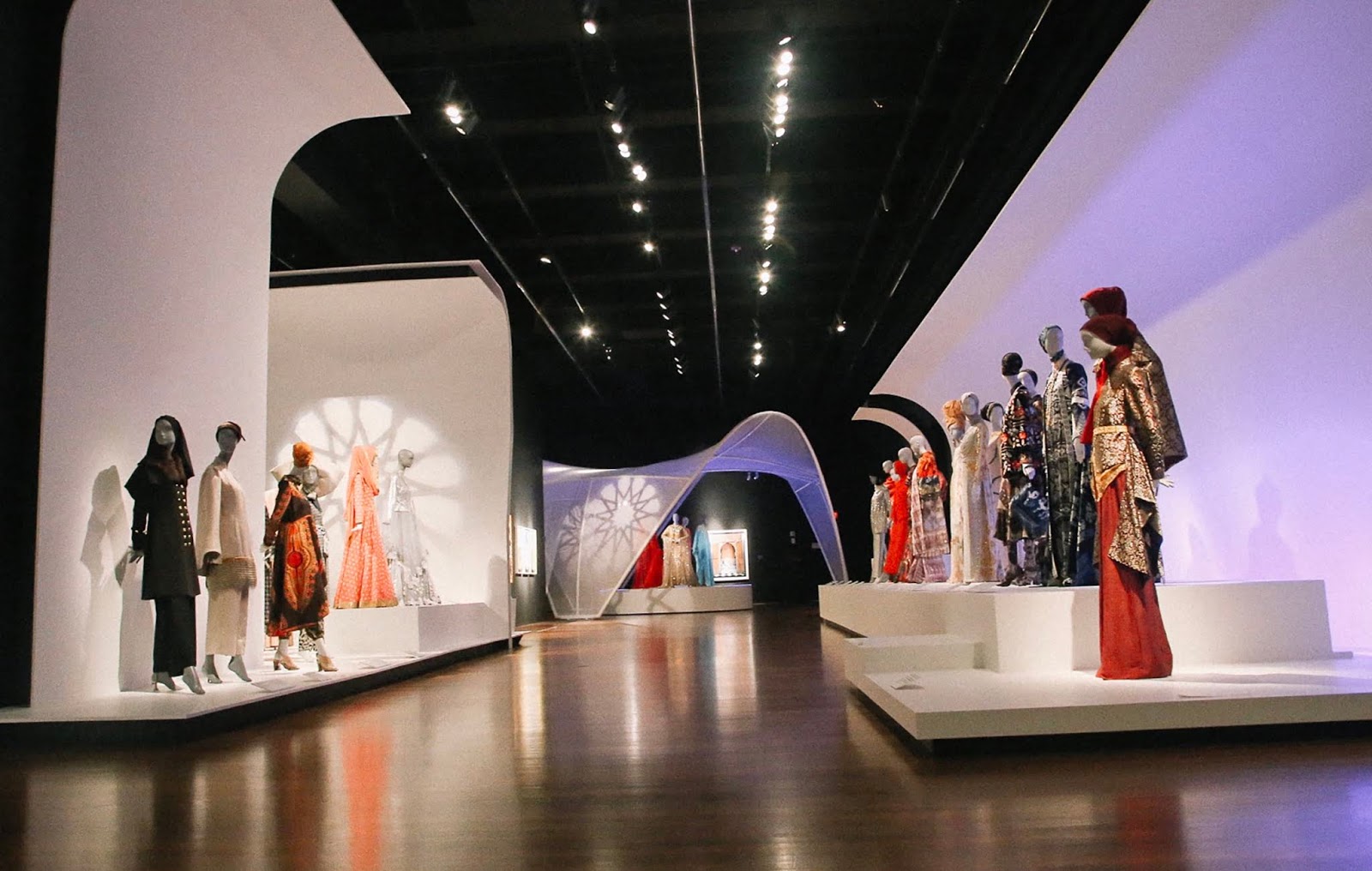
Currently, the deYoung Fine Arts Museum in San Francisco is examining Contemporary Muslim Fashions by “spotlighting places, garments, and styles from around the world,” in a show that began in late September and continues through January 6, 2019.

Contemporary Muslim Fashions is the first major museum exhibition to explore “the complex, diverse nature of Muslim dress codes worldwide” by bringing together different religious interpretations and cultures of Islam. The creativity and diversity – and politics – of modest dressing is celebrated.


I’ve learned that this exhibition considers “how Muslims define themselves – and are defined – by their dress and how these sartorial choices can reflect the multifaceted nature of their identities.”

Contemporary Muslim Fashions crosses through many different religious interpretations and cultures, featuring spectacular creations from a dynamic fashion scene by designers from both the Middle East and Southeast Asia – think Malaysia and Indonesia. From street wear to couture, the exhibition includes “high-end fashions, such as those by Malaysia-based Blancheur; street wear, such as modest designs from London-based Sarah Elenany; sportswear, such as the burkini; and commissioned garments from both emerging and established designers.”


The exhibition also includes the use of social media as a primary material – an agent of change. Muslim voices and personal narratives are framed by using runway footage of fashion shows and news clips as well as documentary and fashion photography.

As visitors to Contemporary Muslim Fashions will learn, while Islam is a multicultural faith, the dress of its followers is “shaped not only by religious principles but also by local customs and traditions and global fashion trends.” Thus, a woman from Tunisia is more likely to be contemporary in her fashion attire than a woman living in Saudi Arabia.


In her review of Contemporary Muslim Fashions for The Hollywood Reporter, critic Celine Semaan wrote, “Because of the current political climate from which it is rising, the show carries a message of hope and acceptance. The act itself of organizing this exhibition is nothing if not a peaceful demonstration of the American values written in the First Amendment: freedom of speech, freedom of expression, freedom of religion.”

Laird Borrelli-Persson of Vogue, in reviewing Contemporary Muslim Fashions, quotes curator Jill D’Alessandro, who believes, “Fashion can be an agent for positive change, for understanding, and breaking down barriers; they (fashion designers) want to exhibit in the United States and in Europe because they want their cultures to be understood.”

One thing’s for sure: There’s a diversity in Muslim fashion that is strikingly beautiful, both for its modern aesthetic and for its street-style appeal.

Photos: Cover – Mary Katrantzou skirt and shirt (silk and polyester), and Malone Souliers shoes.  Bottom – Flight jacket with U.S. Constitution written in Arabic on the back and First Amendment written in English inside, by Slow Factory (Courtesy of deYoung Museum and Google Images). Video: Courtesy of YouTube.com.