Showing posts with label journalism. Show all posts

Tuesday, November 14, 2017

Reflections on patriotism: Dan Rather on what unites us

Dan Rather reads from his book 'What Unites Us.'
Dan Rather finds himself thinking deeply about what it means to love America as he surely does in the age of President Donald Trump.

At a time in our nation's history when there's a crisis over our national identity, the longtime broadcast journalist has surfaced as a calm, measured voice of reason and integrity. At 86, he has embraced social media, where he regularly contributes his thoughts and wisdom via his Facebook page, which has more than 2.5 million followers.

Last week, Rather's new book, What Unites Us: Reflections on Patriotism, written with Emmy Award-winning journalist Elliot Kirschner, was published. In it, Rather has written a collection of 16 original and passionate essays that reflect on what it means to be an American in the 21st century.

During a recent book tour lecture at George Washington University in Washington, D.C., I listened attentively to Rather, in conversation with Washington Post editorial writer Jonathan Capehart. He discussed a variety of topics including patriotism and freedom of the press, whose values have transformed us and represent institutions that sustain our nation.

On the subject of patriotism, Rather read from his book: "Patriotism – active, constructive patriotism – takes work. It takes knowledge, engagement with those who are different from you, and fairness in law and opportunity. It takes coming together for good causes," he said. "This is one of the things I cherish most about the United States: we are a nation not only of dreamers but also of fixers. We have looked at our land and people , and said, time and again, this is not good enough; we can be better."

When asked about Capehart to discuss freedom of the press, Rather didn't hesitate when he responded: "We are the witness to the truth and there's a lot of good reporting going on out there. This president is pushing us toward a 'post-truth' and 'post-fact' political era.

"American journalism is at a crossroads," he continued. "News is what the public needs to know and it's generally what somebody else doesn't want you to know about."

Rather's storied career – he spent more than 40 years with CBS News and succeeded the legendary Walter Cronkite in the anchor chair for The CBS Evening News – has made him one of the world's best-known journalists. He's interviewed every president since Eisenhower. With decades spent on the front lines covering the world's biggest stories – from the assassination of President John F. Kennedy to the Vietnam War to the Watergate crisis that ended with the resignation of President Richard Nixon – Rather is able to offer his readers a unique if not intimate view of America's history and its historical change.

It's easy to gain from reading What Unites Us and by listening to Rather that regardless of the state of our current national political climate, he maintains a fundamental sense of hope that comes from sharing our nation's transformative values, from empathy to inclusion to service.

Photo of Dan Rather by Michael Dickens © 2017.

Wednesday, February 18, 2015

Of shock and sadness: It was a bad week for journalism

Journalism has been called story telling with a purpose. The past week was not a very kind one for the craft of journalism, a profession I love dearly, or for its practitioners. It was a week filled full of shock and sadness. Unfortunately, there's not been much time for reflection.

"This week has just been overwhelming," said Betsy West, a professor at the Columbia School of Journalism, recently quoted by the website pix11.com. "Some of the most tragic news that just keeps happening one after the other, after the other."

Brian Williams
The week started badly when America's most trusted and honored news anchor, Brian Williams of NBC News, was found to have lied about an incident in the Iraq War in which he said that a helicopter that he was riding in was struck by a rocket-propelled grenade and almost crashed. In fact, it was another gunship that was downed.

Williams's "misremembered" past coupled with a less-than-satisfactory on-air apology earned him a six month suspension without pay from the peacock network.

Jon Stewart
Then, Jon Stewart, America's best media and political satirist, announced that he was leaving as anchor of the Emmy Award-winning -- and influential -- The Daily Show later this year, ending a wonderful 16-year run on Comedy Central. His announcement sent shock waves through social media, lighting up Twitter and Facebook

"It's been an absolute privilege. It's been the honor of my professional life, and I thank you for watching it, for hate watching it, whatever reason you were tuning in for," said Stewart in sharing his decision to leave The Daily Show.

Bob Simon
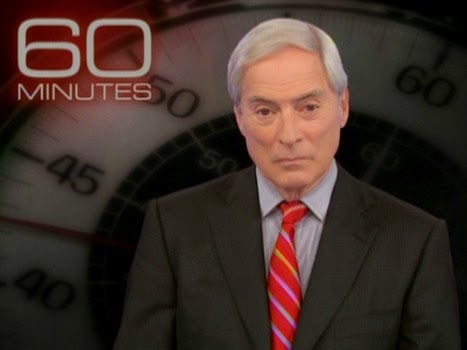
A day after Stewart's surprise, Bob Simon of CBS News and 60 Minutes fame, who established himself as one of America's heroic war correspondents covering difficult conflicts in all corners of the world, was killed in a tragic car accident in New York City.

On the night of his death, CBS Evening News anchor Scott Pelley, one of Simon's colleagues on 60 Minutes, tweeted: "One of the great writers of a generation has passed. Bob Simon was a journalist of extraordinary courage."

David Carr
Finally, David Carr, America's pre-eminent media columnist at The New York Times -- and a big champion of social media -- died in his own newsroom Thursday night after moderating a public panel hosted by his newspaper. Ironically, his last "Media Equation" column, published three days before he died, was about Brian Williams and focused on the trials and tribulations of being a celebrity journalist.

"I've never experienced a week where people were talking about journalism so much and about the importance of journalism," said West, formerly an award-winning member at 60 Minutes and a friend of Simon's.

Although the impact of all four events struck a chord with me, Stewart's surprise announcement and Simon's quick and sudden death -- in an avoidable car crash -- resonated with me the most.

It's not often that you get to leave something you're passionate about on your own terms and while at the top of your game, but that's what Stewart is doing -- leaving on a career high note. Since 1999, Stewart has informed us and entertained us in a way few have been able to do. He's championed causes, nurtured talent -- think Steve Carell, Stephen Colbert and John Oliver -- and turned his show into a vehicle for showcasing the best literary authors in the world, thereby rekindling the public's interest -- and my interest, too -- in reading books. And, what's not to like about Stewart's way he ends each broadcast with "a moment of Zen"?

While it's too early to speculate who will succeed Stewart as host of The Daily Show, one thing's certain: Stewart has set the bar awful high -- being "a comic genius, generous with his time and talent" in the words of Comedy Central's president -- and he will be dearly missed.

As for Simon, he was an esteemed broadcast journalist -- an award-winning storyteller without peer. The 73-year-old legendary CBS News and 60 Minutes correspondent, who started at the network in 1967, became renowned for his international coverage, including Vietnam, the Middle East and Israel. He covered many major news events and conflicts, both in the U.S. and throughout the world. As a war correspondent, Simon was captured by Iraqi forces near the Saudi-Kuwaiti border during the opening days of the Persian Gulf War in January 1991. He and his crew were freed after being held captive for 40 days.

I admired Simon's style and his ability to craft a story. For the past 19 years, he was a mainstay on the CBS Sunday night news magazine 60 Minutes and was equally outstanding narrating a serious or human interest storyThe most recent of his 27 Emmy Awards was a story he reported for 60 Minutes about an orchestra in Paraguay whose members made instruments out of trash.

Last Sunday night, Simon's last piece for 60 Minutes aired. It led the broadcast and told a story about a potential cure for the Ebola virus. The story was produced by Simon's daughter, Tanya. At the end of the show's broadcast, Simon's colleague, Steve Kroft, his voice trembling ever so slightly, looked at the camera and spoke these words: "All of us lost him -- his family, his colleagues here at 60 Minutes and all of you who have watched this broadcast over the years. We lost his curiosity, his unparalleled writing ability, his calm bravery under fire. And we lost his sense of justice and his sense of the absurd -- both of which he brought to so much of his reporting."

Indeed, Simon will be sorely missed. His legacy will endure through his storytelling.

Looking back, it has been a week when there's been both a greatness and emptiness in truth within the journalism industry.

Photos: Courtesy Google images.