Showing posts with label greatness. Show all posts

Wednesday, February 18, 2015

Of shock and sadness: It was a bad week for journalism

Journalism has been called story telling with a purpose. The past week was not a very kind one for the craft of journalism, a profession I love dearly, or for its practitioners. It was a week filled full of shock and sadness. Unfortunately, there's not been much time for reflection.

"This week has just been overwhelming," said Betsy West, a professor at the Columbia School of Journalism, recently quoted by the website pix11.com. "Some of the most tragic news that just keeps happening one after the other, after the other."

Brian Williams
The week started badly when America's most trusted and honored news anchor, Brian Williams of NBC News, was found to have lied about an incident in the Iraq War in which he said that a helicopter that he was riding in was struck by a rocket-propelled grenade and almost crashed. In fact, it was another gunship that was downed.

Williams's "misremembered" past coupled with a less-than-satisfactory on-air apology earned him a six month suspension without pay from the peacock network.

Jon Stewart
Then, Jon Stewart, America's best media and political satirist, announced that he was leaving as anchor of the Emmy Award-winning -- and influential -- The Daily Show later this year, ending a wonderful 16-year run on Comedy Central. His announcement sent shock waves through social media, lighting up Twitter and Facebook

"It's been an absolute privilege. It's been the honor of my professional life, and I thank you for watching it, for hate watching it, whatever reason you were tuning in for," said Stewart in sharing his decision to leave The Daily Show.
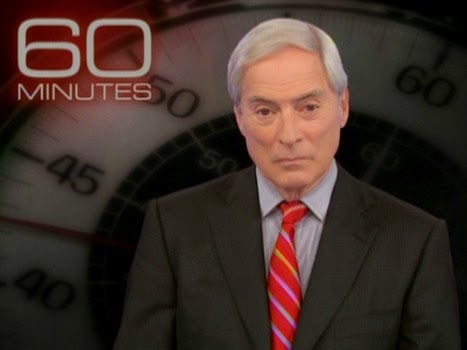
Bob Simon
A day after Stewart's surprise, Bob Simon of CBS News and 60 Minutes fame, who established himself as one of America's heroic war correspondents covering difficult conflicts in all corners of the world, was killed in a tragic car accident in New York City.

On the night of his death, CBS Evening News anchor Scott Pelley, one of Simon's colleagues on 60 Minutes, tweeted: "One of the great writers of a generation has passed. Bob Simon was a journalist of extraordinary courage."

David Carr
Finally, David Carr, America's pre-eminent media columnist at The New York Times -- and a big champion of social media -- died in his own newsroom Thursday night after moderating a public panel hosted by his newspaper. Ironically, his last "Media Equation" column, published three days before he died, was about Brian Williams and focused on the trials and tribulations of being a celebrity journalist.

"I've never experienced a week where people were talking about journalism so much and about the importance of journalism," said West, formerly an award-winning member at 60 Minutes and a friend of Simon's.

Although the impact of all four events struck a chord with me, Stewart's surprise announcement and Simon's quick and sudden death -- in an avoidable car crash -- resonated with me the most.

It's not often that you get to leave something you're passionate about on your own terms and while at the top of your game, but that's what Stewart is doing -- leaving on a career high note. Since 1999, Stewart has informed us and entertained us in a way few have been able to do. He's championed causes, nurtured talent -- think Steve Carell, Stephen Colbert and John Oliver -- and turned his show into a vehicle for showcasing the best literary authors in the world, thereby rekindling the public's interest -- and my interest, too -- in reading books. And, what's not to like about Stewart's way he ends each broadcast with "a moment of Zen"?

While it's too early to speculate who will succeed Stewart as host of The Daily Show, one thing's certain: Stewart has set the bar awful high -- being "a comic genius, generous with his time and talent" in the words of Comedy Central's president -- and he will be dearly missed.

As for Simon, he was an esteemed broadcast journalist -- an award-winning storyteller without peer. The 73-year-old legendary CBS News and 60 Minutes correspondent, who started at the network in 1967, became renowned for his international coverage, including Vietnam, the Middle East and Israel. He covered many major news events and conflicts, both in the U.S. and throughout the world. As a war correspondent, Simon was captured by Iraqi forces near the Saudi-Kuwaiti border during the opening days of the Persian Gulf War in January 1991. He and his crew were freed after being held captive for 40 days.

I admired Simon's style and his ability to craft a story. For the past 19 years, he was a mainstay on the CBS Sunday night news magazine 60 Minutes and was equally outstanding narrating a serious or human interest storyThe most recent of his 27 Emmy Awards was a story he reported for 60 Minutes about an orchestra in Paraguay whose members made instruments out of trash.

Last Sunday night, Simon's last piece for 60 Minutes aired. It led the broadcast and told a story about a potential cure for the Ebola virus. The story was produced by Simon's daughter, Tanya. At the end of the show's broadcast, Simon's colleague, Steve Kroft, his voice trembling ever so slightly, looked at the camera and spoke these words: "All of us lost him -- his family, his colleagues here at 60 Minutes and all of you who have watched this broadcast over the years. We lost his curiosity, his unparalleled writing ability, his calm bravery under fire. And we lost his sense of justice and his sense of the absurd -- both of which he brought to so much of his reporting."

Indeed, Simon will be sorely missed. His legacy will endure through his storytelling.

Looking back, it has been a week when there's been both a greatness and emptiness in truth within the journalism industry.

Photos: Courtesy Google images.

Tuesday, July 29, 2014

Baseball isn't perfect ... but it feels like it is


The Hall of Fame Class of 2014 / (L-R) Bobby Cox, Tony LaRussa,
Tom Glavine, Frank Thomas, Greg Maddux, Joe Torre.

"Baseball isn't perfect, but it feels like it is," said Joe Torre, one of six living inductees, whose speech capped a lively and, at times, emotion-filled day packed with wonderful stories and heartfelt memories as the Class of 2014 was honored in ceremonies and welcomed to Major League Baseball's Hall of Fame in Cooperstown, N.Y. on Sunday afternoon.

On a day when baseball got it right, the tone of Torre's speech was best described by The New York Times "as if designated to deliver the greatness-of-the-game testimonial." 

And he did.

"We're responsible for giving it the respect it deserves," said Torre, who managed the New York Yankees to six American League pennants (1996, 1998-2001, 2003) and won four World Series (1996, 1998-2000).

During the nationally televised three-hour ceremony, Torre was joined at the podium by fellow managers Bobby Cox and Tony LaRussa, slugger Frank Thomas and pitchers Greg Maddux and Tom Glavine. Each living great -- and I saw all of them play or manage -- exemplified the game in the right way. Together, they represented quite an assemblage of accomplishments across the baseball diamond: World Series championships, Cy Young Award winners, Most Valuable Player awards.

Decent men all of them, too.

Roger Angell accepting the J.G. Taylor Spink Award

Baseball also got it right when it enshrined the esteemed Roger Angell, a longtime writer and editor for The New Yorker, who received the J.G. Taylor Spink Award on Saturday, the Baseball Hall of Fame's writing honor. The bespectacled Angell, 93 and thin, is revered for his revealing portraits and essays on baseball, which began appearing in The New Yorker in the early 1960s. Since then, they have been compiled into several books filled full of meditations and observations about our national pastime, most notably The Summer Game, which I first read as a teenager. I still treasure the book's words today like the literary baseball bible it is.

In his debut as a baseball writer for The New Yorker in 1962, Angell wrote a wonderful essay full of humor and insight about attending spring training in Florida. "Big-league ball on the west coast of Florida is a spring sport played by the young for the divertissement of the elderly -- a sun-warmed, sleepy exhibition celebrating the juvenescence of the year and the senescence of the fans."

Many have acclaimed Angell as the greatest baseball writer. "Angell's prose is clear and erudite, elegant and informed; he is a fan with a wicked eye for detail, a sense of humor and a curiosity about the way athletes perform," wrote Richard Sandomir in The New York Times. "He filled his notebooks but did not have to convert his jottings into an article under a tight deadline. He had months to digest his observations and then wrote long -- very long."

Said Angell: "I didn't have to write after a game. That was unforgivable."

Angell's main job for many years at The New Yorker was as a fiction editor, a job once held by his mother, Katherine White. His stepfather was the famous children's author E.B. White, who penned Charlotte's Web. So, it's no surprise that writing became Angell's life-long passion. He was raised in good company.

"When he accepted the award Saturday at Doubleday Field," wrote Sandomir, "Angell said that he collected '.300 lifetime talkers like a billionaire hunting down Cézannes and Matisses' -- loquacious folks like Keith Hernandez, Roger Craig, Bill Rigney and Dan Quisenberry. And he gave his thanks to baseball, 'which has turned out to be so familiar and so startling, so spacious and so exacting, and so easy looking and so heartbreakingly difficult that it filled my notebooks in a rush.'"

Peter Gammons, like Angell, a longtime chronicler of baseball, wrote: "It isn't simply nostalgia, it is a weekend that allows us a sense of where we are. As Angell spoke, one thought about a life of literacy, not tweets, that not only did he wrote so elegantly, but he edited John Updike, he edited John McPhee, which made me recall the sign Angell said McPhee had in his kitchen: 'When everything is going your way, you're probably in the wrong lane.'"

Angell is a "lover of books and words," wrote Maureen Dowd in a wonderful New York Times Sunday Review column that appeared over the weekend. His prose combines his love of language with his passion for baseball. "Who else could use 'venery' in a story and write the world's longest palindrome?" she asked.

"Within the ballpark, time moves differently, marked by no clock except the events of the game," wrote Angell in The Summer Game, the first of his seven books about baseball"This is the unique, unchangeable feature of baseball, and perhaps explains why this sport, for all the enormous changes it has undergone in the past decade or two, remains somehow rustic, unviolent, and introspective. Baseball's time is seamless and invisible, a bubble within which players move at exactly the same pace and rhythms as all their predecessors. This is the way the game was played in our youth and in our fathers' youth, and even back then -- back in the country days -- there must have been the same feeling that time could be stopped. Since baseball time is measured only in outs, all you have to do is succeed utterly; keep hitting, keep the rally alive, and you have defeated time. You remain forever young."

Indeed, baseball hasn't always been perfect, but this past weekend it felt like it was. It made me feel forever young.

Photographs: Courtesy of MLB.com.