Showing posts with label truth. Show all posts

Tuesday, May 22, 2018

The 2018 French Open: Creating beautiful poster art through capturing the simple bounce of a tennis ball


Roland Garros and modern art have enjoyed a long, steady and tasteful relationship. It's a very French thing. In a sport where a player's instinct and spontaneous movement creates beautiful art out of work during every rally – especially on a terre battue canvas – the annual French Open poster is seen as a colorful and fascinating part of the Roland Garros experience. 

Each year since 1980, the grounds at Roland Garros in the 16th arrondissement of Paris have displayed bright and imaginative posters that truly embody the spirit and excitement of the French Open. After all, if tennis is seen as art – and why not? – then, its athletes are truly artists who have traded paint brushes for tennis rackets.

In an earlier era, Les Quatre Mousquetaires (Jacques Brugnon, Jean Borotra, Henri Cochet and René Lacoste) were prestigious French tennis players who dominated the sport in the second half of the 1920s and early '30s and were known for their dashing grace and athleticism. They became national icons in France – their success in winning the 1927 Davis Cup against the United States helped lead to the building of the Roland Garros venue at Porte d'Auteuil – and the French Open men's championship trophy was named the Coupe des Mousquetaires in honor of the quartet. 

Today, one need only think of World No. 1 Rafael Nadal, the undisputed king of clay, whose Picasso-like artistry as he glides across Court Philippe Chatrier – brushing his racquet against a tennis ball – is truly a bold and dynamic thing to admire. He's won 10 French Open singles titles, most of any athlete – male or female – which has endeared him to the French and tennis fans worldwide.

The quintessential Björn Borg's hair
as captured by Eduardo Arroyo in 1981.

Among the artists who have created French Open poster art since its inception are: Eduardo Arroyo, whose 1981 Pop Art image of Björn Borg's hair captured a quintessential quality of 1980s tennis; Joan Miró, one the most prominent influences on the development of both Surrealism and 20th-century art, who created the 1991 poster; documentary filmmaker and painter Jean-Michel Meurice, whose 1996 poster was inspired by the red clay and white lines of the Roland Garros courts; jazz drummer and composer Daniel Humair, who conveyed a musical rhythm to capture the pulse of the French Open in his 2004 poster; and Du Zhenjun, who in 2015 became the first Chinese artist selected to design a French Open poster. His training in traditional Chinese painting and calligraphy is reflected in his work.

Jazz drummer and composer Daniel Humair
conveyed a musical rhythm to capture
the pulse of the French Open in 2004.

For this year's French Open, Paris-born Fabienne Verdier was commissioned to create the poster for the 2018 tournament, which begins Sunday. Born in 1962, Verdier is the fourth woman selected to design the official Roland Garros poster, following in the footsteps of Jane Hammond (2003), Kate Shepherd (2007) and Nalini Malani (2010). She's also the first French artist, too. 

"For me, Roland Garros evokes those first warm days that herald the arrival of summer in Paris, when the intense light of May and June makes the ochre day sparkle," said Verdier, in an interview recently posted on French Open website rolandgarros.com. "As the sun races across the sky, the courts turn from amber to tobacco, from saffron to sepia, from ochre to red, from sienna to brown. During every rally, the balls collect this multicolored dust and, like comets, leave enchanting lines of energy in their wake."


In creating the 2018 French Open poster, Verdier chose to focus on the simple bounce of a tennis ball. In a split-second moment, she perfectly captures "that moment of truth in which the ball, after hitting the clay, sets off on one of many possible trajectories. The ball's movement gives off incredible energy."

Verdier describes her abstract impression this way: "I tried to portray the lightning speed of the player's movements. The energy that they transmit to the ball in a movement full of spontaneity, vitality, power, precision and slide. And I imagined one of those unexpected bounces that take the opponent by surprise and force them, in the following rally, to surpass themselves once again in order to get one step closer to victory in Paris."

To view the entire collection of French Open art posters: www.rolandgarros.com
Fabienne Verdier video courtesy of YouTube.com
French Open poster art courtesy of www.rolandgarros.com

Tuesday, April 3, 2018

An understanding of racial justice in the shadow of statues

In the Shadow of Statues, which
was published March 20, is
on the New York Times
Bestseller List.
"These statues are not just stone and metal. They were erected purposefully to send a strong message to all who walked in their shadows about who was still in charge." 

– Mitch Landrieu, from In the Shadow of Statues

New Orleans is one of the great multicultural cities in the world. It is also a racially divided city that has dealt with its fair share of poverty and urban violence. In spite of all of its troubles, the Big Easy remains a beloved cultural treasure to everyone who visits thanks to its rich tradition of funky jazz music and the beauty and grace of its amazing food.

Enter Mitch Landrieu, the mayor of New Orleans since 2010, who has been an important catalyst in helping his city rebuild from the devastation of Hurricane Katrina. As the son of a former state legislator and mayor of New Orleans – who was a huge force in the integration of that city in the 1960s and 1970s – and the brother of a former U.S. senator from Louisiana, Landrieu grew up with a progressive education in the racially divided Crescent City among America's lingering Confederate monuments.

At a time when the issue of racism has become resurgent "with seemingly tacit approval from the highest levels of government and when too many Americans have a misplaced nostalgia for a time and place that never existed," Landrieu has written In the Shadow of Statues – a book that's a must read.

In the Shadow of Statues is equal parts memoir, history, and a "prescription for finally confronting America's most painful legacy." As a white southerner confronting his city's past history, Landrieu contributes a very strong voice to our national conversation about race in America today by taking on many difficult issues related to it, including slavery and inequality.

In praising In the Shadow of Statues, Walter Isaacson, author of Leonardo da Vinci and Steve Jobs, writes: "With a balance of humility and conviction, he recounts his path to a more profound understanding of racial justice and explains how this journey led him to remove the Confederate monuments in New Orleans. It's an important book for everyone in America to read, because it shows how intellectual honesty can lead to moral clarity."

Mitch Landrieu at Politics & Prose Bookstore
in Washington, D.C. last week.
Last week, my wife and I attended a standing room-only book event at Politics & Prose Bookstore in northwest Washington, D.C., featuring a conversation between Landrieu and Jeffrey Goldberg, editor in chief of The Atlantic, before a thoughtful and engaging audience, that was followed by a 30-minute Q & A period and a book signing.

"There's a difference between remembering and revering history," said Landrieu, who addressed the people of New Orleans in May 2017 about his decision to take down and remove four Confederate monuments, including the statue of the famous southern Confederate general Robert E. Lee. The affected statues represent a mere four-year period of U.S. history, from 1861-65, but a searing one, too. While Landrieu said that the decision to remove the monuments was a difficult one, it was a right one, too. It was about eradicating history.

"We were on the wrong side of history," Landrieu told the Politics & Prose audience very matter-of-factly. "These statues were erected to send a strong message to all who walked in their shadows about who was still in charge. For decades, these statues have cast a long shadow on society, particularly African-Americans."

Lee Circle before the Confederate monument
of Robert E. Lee was removed in 2017.
Landrieu says In the Shadow of Statues is an invitation to stand and sit in other people's shoes. He recalled for his Politics & Prose audience a conversation he once shared with his dear friend, the famous jazz musician and educator – and New Orleans native son – Wynton Marsalis, who helped him see the truth about the city's exclusionary attitudes. "'Hey, man,'" Landrieu recalled the trumpeter saying to him. "'You should take the statue of Robert E. Lee down. Do you know how it got there and who put it up?'"

In the book, Landrieu expands on his conversation with Marsalis.

"I don't like the fact that Lee Circle is named Lee Circle."

"Why is that?"

"Let me help you see it through my eyes. Who is he? What does he represent? And in that most prominent space in the city of New Orleans, does that space reflect who we are, who we want to be, or who we are?"

Suddenly, Landrieu was listening.

Later in their conversation, according to the mayor, Marsalis added, "'Did you know Louis Armstrong left the city and never came back because of that statue? He did not even want to be buried in his hometown. You ever think about what Robert E. Lee means to someone black?'"

Landrieu emphasized that there's a difference between remembrance of history and reverence of it. "I think there are a lot of people who are struggling with the notion that the South fought for a cause that was reviled," he said. When you make sense of it, monuments are usually reserved for winners not losers. The Confederate monuments celebrated the losing side of the Civil War.

New Orleans Mayor Mitch Landrieu
As Landrieu remarked back during his May 2017 speech, "For America and New Orleans, it has been a long, winding road, marked by great tragedy and great triumph. But we cannot be afraid of our truth."

And, as Landrieu writes, "Here is the essential truth: We are better together than we are apart.

"Indivisibility is our essence."

Near the end of his conversation at Politics & Prose, Landrieu said, "If we are going to move forward as a country, we must confront the issue of race head on. Our diversity is what makes this country great.

"We need to understand our history. We need to tell the whole story."

Photo credits: Book cover courtesy of Amazon.com. Politics & Prose audience courtesy of @PoliticsProse Twitter. Robert E. Lee statue courtesy of New Orleans Advocate. Mitch Landrieu courtesy of Cheryl Gerber.

Wednesday, February 18, 2015

Of shock and sadness: It was a bad week for journalism

Journalism has been called story telling with a purpose. The past week was not a very kind one for the craft of journalism, a profession I love dearly, or for its practitioners. It was a week filled full of shock and sadness. Unfortunately, there's not been much time for reflection.

"This week has just been overwhelming," said Betsy West, a professor at the Columbia School of Journalism, recently quoted by the website pix11.com. "Some of the most tragic news that just keeps happening one after the other, after the other."

Brian Williams
The week started badly when America's most trusted and honored news anchor, Brian Williams of NBC News, was found to have lied about an incident in the Iraq War in which he said that a helicopter that he was riding in was struck by a rocket-propelled grenade and almost crashed. In fact, it was another gunship that was downed.

Williams's "misremembered" past coupled with a less-than-satisfactory on-air apology earned him a six month suspension without pay from the peacock network.

Jon Stewart
Then, Jon Stewart, America's best media and political satirist, announced that he was leaving as anchor of the Emmy Award-winning -- and influential -- The Daily Show later this year, ending a wonderful 16-year run on Comedy Central. His announcement sent shock waves through social media, lighting up Twitter and Facebook

"It's been an absolute privilege. It's been the honor of my professional life, and I thank you for watching it, for hate watching it, whatever reason you were tuning in for," said Stewart in sharing his decision to leave The Daily Show.

Bob Simon
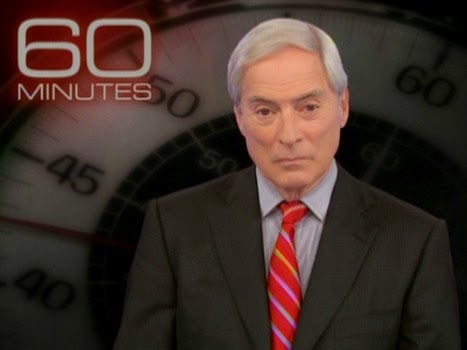
A day after Stewart's surprise, Bob Simon of CBS News and 60 Minutes fame, who established himself as one of America's heroic war correspondents covering difficult conflicts in all corners of the world, was killed in a tragic car accident in New York City.

On the night of his death, CBS Evening News anchor Scott Pelley, one of Simon's colleagues on 60 Minutes, tweeted: "One of the great writers of a generation has passed. Bob Simon was a journalist of extraordinary courage."

David Carr
Finally, David Carr, America's pre-eminent media columnist at The New York Times -- and a big champion of social media -- died in his own newsroom Thursday night after moderating a public panel hosted by his newspaper. Ironically, his last "Media Equation" column, published three days before he died, was about Brian Williams and focused on the trials and tribulations of being a celebrity journalist.

"I've never experienced a week where people were talking about journalism so much and about the importance of journalism," said West, formerly an award-winning member at 60 Minutes and a friend of Simon's.

Although the impact of all four events struck a chord with me, Stewart's surprise announcement and Simon's quick and sudden death -- in an avoidable car crash -- resonated with me the most.

It's not often that you get to leave something you're passionate about on your own terms and while at the top of your game, but that's what Stewart is doing -- leaving on a career high note. Since 1999, Stewart has informed us and entertained us in a way few have been able to do. He's championed causes, nurtured talent -- think Steve Carell, Stephen Colbert and John Oliver -- and turned his show into a vehicle for showcasing the best literary authors in the world, thereby rekindling the public's interest -- and my interest, too -- in reading books. And, what's not to like about Stewart's way he ends each broadcast with "a moment of Zen"?

While it's too early to speculate who will succeed Stewart as host of The Daily Show, one thing's certain: Stewart has set the bar awful high -- being "a comic genius, generous with his time and talent" in the words of Comedy Central's president -- and he will be dearly missed.

As for Simon, he was an esteemed broadcast journalist -- an award-winning storyteller without peer. The 73-year-old legendary CBS News and 60 Minutes correspondent, who started at the network in 1967, became renowned for his international coverage, including Vietnam, the Middle East and Israel. He covered many major news events and conflicts, both in the U.S. and throughout the world. As a war correspondent, Simon was captured by Iraqi forces near the Saudi-Kuwaiti border during the opening days of the Persian Gulf War in January 1991. He and his crew were freed after being held captive for 40 days.

I admired Simon's style and his ability to craft a story. For the past 19 years, he was a mainstay on the CBS Sunday night news magazine 60 Minutes and was equally outstanding narrating a serious or human interest storyThe most recent of his 27 Emmy Awards was a story he reported for 60 Minutes about an orchestra in Paraguay whose members made instruments out of trash.

Last Sunday night, Simon's last piece for 60 Minutes aired. It led the broadcast and told a story about a potential cure for the Ebola virus. The story was produced by Simon's daughter, Tanya. At the end of the show's broadcast, Simon's colleague, Steve Kroft, his voice trembling ever so slightly, looked at the camera and spoke these words: "All of us lost him -- his family, his colleagues here at 60 Minutes and all of you who have watched this broadcast over the years. We lost his curiosity, his unparalleled writing ability, his calm bravery under fire. And we lost his sense of justice and his sense of the absurd -- both of which he brought to so much of his reporting."

Indeed, Simon will be sorely missed. His legacy will endure through his storytelling.

Looking back, it has been a week when there's been both a greatness and emptiness in truth within the journalism industry.

Photos: Courtesy Google images.