Showing posts with label transportation. Show all posts

Thursday, August 8, 2019

What makes a good city great?


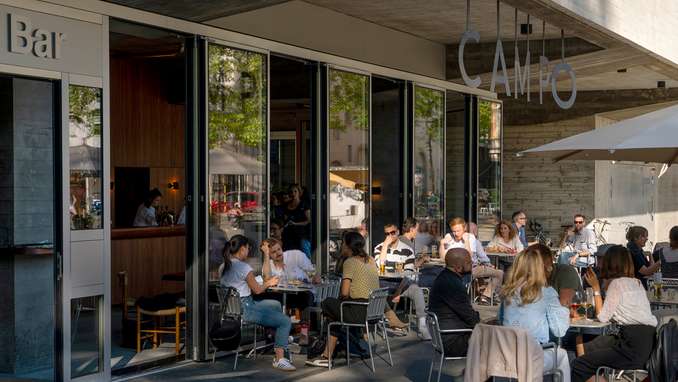
Dining out in Zürich

No matter where in the world, our cities are designed for living, working, cultural entertainment and late nights. Some times, they are even designed for fresh starts.

While some cities have it figured out, some don’t. From transportation and green spaces to retail possibilities and residential settlements, what makes a good city a great place to live?

Every summer, Monocle, the London-based global magazine that’s always been a must-read for me for its coverage of international affairs, business, culture and design, presents a special quality of life rankings with a top of the world list of the 25 best global cities. Most years, the list is heavy in cities located in Europe and the Asia Pacific. Not surprisingly, North American cities – especially in the United States – rank low or out of the running. (This year is no different as the only city to rank in the Top 25 was Vancouver, B.C., Canada.)

As the magazine suggests, “places grow and change and so do our ideas of how we want our cities to be.”

In his editor’s letter in the July/August issue, Monocle’s editor-in-chief Tyler Brûlé wrote: “When we look at a city we’re constantly asking if the infrastructure is in place to allow residents and visitors to be as productive as possible while also having a pleasant experience navigating the place.”

While I’ve written about Monocle’s Quality of Life rankings before, it’s always an interesting subject to study and dissect. In looking over this year’s list of the Top 25 cities in the world, it makes me pine for world travel.

Here’s Monocle’s Top 25 places in the world to live:

1. Zürich
2. Tokyo
3. Munich
4. Copenhagen
5. Vienna
6. Helsinki
7. Hamburg
8. Madrid
9. Berlin
10. Lisbon
11. Melbourne
12. Stockholm
13. Sydney
14. Amsterdam
15. Vancouver
16. Hong Kong
17. Kyoto
18. Barcelona
19. Paris
20. Düsseldorf
21. Auckland 
22. Fukuoka
23. Brisbane
24. Oslo
25. Singapore

In describing Zurich, the magazine writes: “Zürich is a city that gives you the feeling that all is right with the world. It starts at the airport, where you’ll encounter few queues at customs and a punctual train that delivers you from arrivals to the city Centre in minutes. You’ll step out onto nearly swept streets lined with well-appointed shops – and in the distance catch a glimpse of the snow-capped Alps beyond the turquoise blue of Lake Zürich. 

In commenting about this year’s No. 1 city, Zürich, Brûlé wrote, “Zurich has become something of a global master at making travel a joy. Add global connectivity to the mix via its airport and railway stations, high-quality housing and an ever-improving restaurant-and-retail scene and you'll know why we often refer to it as Berlin for people over 40 (or who know better.).

“While Zürich still has many areas that could be improved (more-daring architecture, more relaxed retail trading hours, more mature trees planted by developers and more incentives to make balconies greener) it’s got most things right. And it’s for this reason that it’s vaulted a few positions this year to take the top spot – yet again. Indeed, this is the second time that Zürich has clinched the highest position on the winners’ podium.”

Photos: Courtesy of Monocle.com.

Tuesday, February 26, 2019

On sustainable mobility: Uber Bike by Jump is affordable, reliable transportation that looks smart, too


Imagine a future where everyone, regardless of their income or where they live, has access to affordable, reliable transportation. The future is now.

During a recent visit to Seattle, it struck me that on nearly every downtown street corner – and especially near the trendy W Hotel (1112 4th Avenue, corner Seneca Street) where I stayed – there was an abundance of smart and safe red Uber Bike by Jump bicycles, a dockless, bike share option that is built of the smartest technology platform in micro-mobility.

The latest generation of these flashy, pedal-assist electric Jump bikes includes a lot of likable and useful features: phone mount, front dashboard, swappable battery and cable lock. Now, riders can use their smart phones for navigation hands free. The swappable battery ensures that bikes are readily available and charged and the cable lock is a good, flexible safety measure that enables bikes to be secured to a rack or permanent structure.

With a smarter and safer fleet of bikes offering its users an optimum performance experience, it will be interesting to see if these sleek Jump bikes, like the ones I saw in Seattle, become commonplace in other urban cities. Upon returning home to Washington, D.C., I started noticing more of them in and around the Capitol Hill and Eastern Market areas of the city as well as near Union Station. Like Seattle, in Washington, D.C., the target demo seems to be under-30-year-old Millennials.

Uber Bike by Jump are available in the following U.S. cities: Atlanta, Austin, Texas; Chicago, Dallas, Denver, Los Angeles, Nashville, New York, Phoenix, Providence, Sacramento, San Antonio, San Diego, San Francisco, Santa Cruz, Calif.; Seattle, and Washington, D.C.

Recently, Nick Foley, Jump’s head of product, was quoted by bikebiz.com as saying “With 4G connectivity, the booking experience – whether reserving remotely or walking up to a bike – is much faster. The ride experience is more reliable, since the bike can now self-diagnose its most common failures.

“And with full connectivity for all on-board vehicle systems, our fleets will be smarter and safer over time, as we use the live diagnostic data from each vehicle to uniquely optimize its performance with algorithms running in our cloud.”

Certainly, with Uber’s ability to mobilize its Jump bikes and place them in locations where they’ll enjoy a high profile, users should never have to trek too far to rent one.

Last fall, Uber announced it was committing $10 million over three years to support sustainable mobility in New York and other cities in which it operates. On Monday, the Sacramento Bee reported that an October study “found more Sacramentans were renting Jump bikes than using Uber’s car service by a 53 to 47 percent margin. That makes Sacramento, Calif., the first of 16 Uber cities that have both bike and car service where the bikes are more popular, company officials said.”

In cities with good weather, a flat terrain and a pro-bike mindset, it certainly looks like Jump bikes are here to stay.

Photo: Uber Bike by Jump by Michael Dickens, © Seattle, 2019.


Tuesday, July 22, 2014

What a mural can tell us about our glorious past


Our glorious past / A mural depicts the famous Key System
electric trains that connected Oakland and San Francisco.

There are many colorful, vivid and fascinating murals that dot the urban landscape in my Oakland neighborhood. While some of them are reminders of the glorious past history of this East Bay city situated across the bay from San Francisco, in particular, one of them depicts the famous Key System electric trains.

Believe me, there's plenty we can learn from studying a single, neo-WPA mural.

The Key Route Plaza mural, a 23-by-14-foot colorful and historic mural created by local artist Rocky Baird in 2005, tells a story about a bygone era of transportation that once connected Oakland and San Francisco, two major northern California cities on opposite sides of San Francisco Bay.

The Key System electric trolley car company established its first transit depot at Key Route Plaza, at the corner of Piedmont Avenue and 41st Street in Oakland, in 1904. The orange and silver train depicted in the mural that is located on what formerly was part of the transit depot is Car No. 159 on the C-Line which, according to a historic plaque, made its final departure from Piedmont Station on April 19, 1958 at 6:45 p.m.

The quixotic creator of the Key Route, Francis Marion "Borax" Smith, is a larger-than-life giant figure shown in the mural. He was a Nevada mining magnate who made his fortune in borax before he lost much of it in transit. The key that he is holding "has three rings at its handle to symbolize three lines to Berkeley, Oakland and Piedmont. The long stem represents the Key Pier, which carried trains about three miles over the bay, and the teeth represent the ferry slip," wrote Sam Whiting in a 2005 San Francisco Chronicle article.

At its height during the 1940s, the Key System had over 66 miles of track and serviced the hills and dales of Oakland and Berkeley as well as other East Bay cities like Alameda, Emeryville, Piedmont, San Leandro, El Cerrito, Richmond and Albany.

A historic plaque at the site of Key Route Plaza.

According to the commemorative plaque at Key Route Plaza, back in 1939 it took the streamlined trains 27 minutes to travel from Oakland's Piedmont Station over the Bay Bridge to the First and Mission Station in "The City." Not bad considering that in 2014 it still takes 20 minutes to travel by light rail transit on BART from MacArthur Station in Oakland to Embarcadero Station in San Francisco.

The Key Route Plaza mural is filled with other symbolism, too. There are sections of the mural in which we see figures representing the Black Power and Women's Suffrage movements as well as a link to U.S. military might and our need for petroleum.

According to the artist, who was interviewed by the San Francisco Chronicle about the mural, "the mural took two months of research and three months of painting." At a cost of $5,000 to create, Baird sold off the window seats in the train at $500 each to help raise funds.

Today, half of the depot sits idle while it awaits refurbishing into a cafe, while the other half has morphed into a popular municipal parking lot, which tells the fate of a train system that was displaced by the rise and popularity of the automobile.

To learn more about the history of the Key System: http://en.wikipedia.org/wiki/Key_System

To read more about the history of Oakland's electric trains: http://www.oaklandmagazine.com/Oakland-Magazine/January-2008/When-Trains-Ruled-the-East-Bay/

Photos by Michael Dickens ©2014.