Showing posts with label design. Show all posts

Thursday, August 8, 2019

What makes a good city great?


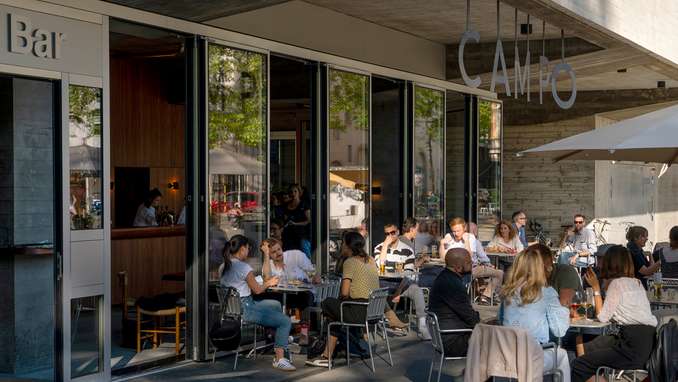
Dining out in Zürich

No matter where in the world, our cities are designed for living, working, cultural entertainment and late nights. Some times, they are even designed for fresh starts.

While some cities have it figured out, some don’t. From transportation and green spaces to retail possibilities and residential settlements, what makes a good city a great place to live?

Every summer, Monocle, the London-based global magazine that’s always been a must-read for me for its coverage of international affairs, business, culture and design, presents a special quality of life rankings with a top of the world list of the 25 best global cities. Most years, the list is heavy in cities located in Europe and the Asia Pacific. Not surprisingly, North American cities – especially in the United States – rank low or out of the running. (This year is no different as the only city to rank in the Top 25 was Vancouver, B.C., Canada.)

As the magazine suggests, “places grow and change and so do our ideas of how we want our cities to be.”

In his editor’s letter in the July/August issue, Monocle’s editor-in-chief Tyler Brûlé wrote: “When we look at a city we’re constantly asking if the infrastructure is in place to allow residents and visitors to be as productive as possible while also having a pleasant experience navigating the place.”

While I’ve written about Monocle’s Quality of Life rankings before, it’s always an interesting subject to study and dissect. In looking over this year’s list of the Top 25 cities in the world, it makes me pine for world travel.

Here’s Monocle’s Top 25 places in the world to live:

1. Zürich
2. Tokyo
3. Munich
4. Copenhagen
5. Vienna
6. Helsinki
7. Hamburg
8. Madrid
9. Berlin
10. Lisbon
11. Melbourne
12. Stockholm
13. Sydney
14. Amsterdam
15. Vancouver
16. Hong Kong
17. Kyoto
18. Barcelona
19. Paris
20. Düsseldorf
21. Auckland 
22. Fukuoka
23. Brisbane
24. Oslo
25. Singapore

In describing Zurich, the magazine writes: “Zürich is a city that gives you the feeling that all is right with the world. It starts at the airport, where you’ll encounter few queues at customs and a punctual train that delivers you from arrivals to the city Centre in minutes. You’ll step out onto nearly swept streets lined with well-appointed shops – and in the distance catch a glimpse of the snow-capped Alps beyond the turquoise blue of Lake Zürich. 

In commenting about this year’s No. 1 city, Zürich, Brûlé wrote, “Zurich has become something of a global master at making travel a joy. Add global connectivity to the mix via its airport and railway stations, high-quality housing and an ever-improving restaurant-and-retail scene and you'll know why we often refer to it as Berlin for people over 40 (or who know better.).

“While Zürich still has many areas that could be improved (more-daring architecture, more relaxed retail trading hours, more mature trees planted by developers and more incentives to make balconies greener) it’s got most things right. And it’s for this reason that it’s vaulted a few positions this year to take the top spot – yet again. Indeed, this is the second time that Zürich has clinched the highest position on the winners’ podium.”

Photos: Courtesy of Monocle.com.

Saturday, February 23, 2019

Here are 25 cities you may wish to call home

Some random thoughts while drinking coffee and enjoying a snow dayat home ...


Our cities are designed for living, working, cultural entertainment and late nights. Even fresh starts, like I experienced when I moved to Washington, D.C. in 2017, after spending 21-plus years living in the San Francisco Bay Area.

Some cities have it figured out, some don’t.

From transportation to green space, retail possibilities and residential settlements, it’s always interesting to find out what makes a good city a great place to live.

Every summer, Monocle, the London-based global magazine that’s always been a must-read for me, for its coverage of international affairs, business, culture and design, presents a special quality of life rankings with a top of the world list of the 25 best global cities.

Although I’ve written about Monocle’s Quality of Life rankings before, it’s been a few years – and, somehow, I haven’t visited the subject since 2016. So, as snow begins to blanket the Beltway, I’ve decided to take a look back at what Monocle had to say about last year’s quality of life rankings.

Here’s Monocle’s Top 25 cities in the world:

 1. Munich
 2. Tokyo
 3. Vienna
 4. Zurich
 5. Copenhagen
 6. Berlin
 7. Madrid
 8. Hamburg
 9. Melbourne
10. Helsinki
11. Stockholm
12. Lisbon
13. Sydney
14. Hong Kong
15. Vancouver
16. Amsterdam
17. Kyoto
18. Düsseldorf
19. Barcelona
20. Paris
21. Singapore
22. Fukuoka
23. Auckland
24. Brisbane
25. Oslo

“Cities are the future,” writes Monocle in discussing its 12th annual Quality of Life survey about the Top 25 global cities. You’ll notice the list is heavy on European and Pacific Asian cities, but it doesn’t include London, Paris or Rome. Only one North American city – Vancouver – made this year’s list. “You want a city that’s well run, delivers on life’s essentials and is fun, too.”

According to Monocle, “By 2030 urban areas are projected to house 60 percent of the global population. But while city halls need to prepare for that future – think grand infrastructure projects and investments in housing – they need to offer their residents a decent quality of life in the present. The best cities manage to find a healthy balance between planning for tomorrow and managing today.”

It makes us ask: What’s my city doing to change? Is it reviving former industrial neighborhoods for more housing stock and new cultures space? Is it expanding its airport or adding new routes to its train network? How well does my city do in putting on a welcoming face to outside businesses, newcomers and tourists?

Monocle suggests that getting it all right is “a challenge but some cities are getting it right.

“Take for instance, our winning city this year, which returned to the top spot: Munich. Safe and efficient with plenty of green space and good restaurants, the German city is thriving and more cosmopolitan than ever. Not only is Munich drawing an increasing number of students (it’s home to 18 universities) and entrepreneurs (its mobility, tech and IT sectors are booming), it’s been managing an influx of refugees and their integration.”

Looking ahead, as cities continue to expand, it seems that maintaining a great quality of life that gets recognized will be a challenge – even for the most forward thinking of cities. Monocle concludes, “Those that will prosper will be open and secure, ambitious and practical, with an eye on the future and a respect for the past.”

Photos and illustrations courtesy of Monocle/Monocle.com.


Saturday, December 15, 2018

On architecture: The National Building Museum inspires curiosity about the world we design and build


One of the hidden gems among many great landmarks and monuments that dot Washington, D.C., our nation’s federal city, is the National Building Museum. Located at 401 F Street NW near Judiciary Square, the National Building Museum (formerly the Pension Building) inspires curiosity about the world we design and build for ourselves – from our homes, skyscrapers and public buildings to our parks, bridges and cities.

It is through the National Building Museum’s exhibitions, educational programs and publications that it educates us about American achievements in architecture, design, engineering, urban planning and construction.

National Building Museum
The National Building Museum dates back to its construction between 1882 and 1887 to house the U.S. Pension Bureau and as a national memorial to the Union forces who fought in the Civil War from 1861-65. It was designed by Gen. Montgomery C. Meigs, who studied both architectural design and engineering at West Point, then during the Civil War was appointed by President Abraham Lincoln as Quartermaster General of the U.S. Army.

Although the Pension Bureau relocated in 1926, the building continued to serve various government agencies for another 50 years. In the 1960s, an adaptive reuse plan that recommended restoring the structure and creating a museum devoted to building arts was established. In 1980, it became chartered by Congress as a private, nonprofit institution. Today, the National Building Museum is recognized as a National Historic Landmark.

The National Building Museum was designed to provide the nation’s capital with a large interior space for public events, and in 1885, two years before the building’s completion, President Grover Cleveland’s first inaugural ball was held in the building. I learned that elaborate decorations masked an unfinished interior, which was covered by a temporary wooden roof. The building’s Great Hall (which measures 316 feet by 116 feet) has gone on to host 19 inaugural celebrations, the most recent being in 2017.

The National Building Museum’s materials include 15.5 million bricks with brick and terra cotta ornament. Also, the Corinthian columns are among the tallest interior columns in the world at 75 feet high, eight feet in diameter and 25 feet in circumference. Each column was built of 70,000 bricks and painted in 1895 to resemble marble. The columns were re-marbleized in 2000 to reflect their original pattern.

The exterior frieze at the National Building Museum.

Worth noting is the exterior frieze of the building, which is 1,200 feet long by three feet high and was commissioned by Meigs in1882. Designed by the Bohemian-born sculptor Casper Buberl (1834-1889), the terra cotta frieze features a continuous parade of Civil War Union forces, including infantry, cavalry, artillery, naval, quartermaster and medical units.

Among the exhibits currently on display:

• Secret Cities: The Architecure and Planning of the Manhattan Project (through July 28, 2019). This exhibition explores the “Secret Cities” of Oak Ridge, Tennessee; Hanford/Richland, Washington; and Los Alamos, New Mexico, which the U.S. government built during World War II in order to produce an atomic bomb before the Axis powers could do so. It examines these cities as providing grounds for modern ideas about architecture, urban planning, and building technology.

• Flickering Treasures: Rediscovering Baltimore’s Forgotten Movie Theaters (through October 14, 2019). This exhibition explores the architectural and social history of Baltimore’s movie theaters from 1896 to present. Baltimore Sun award-winning photojournalist Amy Davis has contributed to this exhibition and there are also historic images, theater ephemera, furnishings and architectural fragments that will evoke memories of our movie-going past and present and also illuminate themes of loss and preservation.

Learn more: www.nbm.org. Open daily and Sunday except Thanksgiving and Christmas Day.

Photos: © Michael Dickens, 2018.

Wednesday, July 4, 2018

UNIQLO For the Win – New Apparel, Same Federer


Roger Federer/UNIQLO Global Brand Ambassador

When the eight-time Wimbledon champion and No. 1 seed Roger Federer walked out on Centre Court to christen the start of this year's Wimbledon Championship and begin his title defense on Monday afternoon, he wore a new brand, Tokyo-based UNIQLO - not Nike, his long-time apparel partner. The decades-long Federer-Nike era was over. It was a stunning sight to the start of this year's fortnight.

The 36-year-old Federer's nearly all-white attire – collarless shirt with a two-button front and a red pinstripe accent, shorts, bandana-style headband, socks and warm-up jacket – had the minimal and slim-cut red and white UNIQLO logo. His white shoes, which are custom made, were still Nike and bore the familiar swoosh logo. Federer's new UNIQLO kit bore the design of the Japanese brand's artistic director Christophe Lemaire.

Within minutes after the 20-time Grand Slam winner took Centre Court for his first-round match against 57th-ranked Dusan Lajovic of Serbia, UNIQLO UK tweeted:

"UNIQLO is honoured to welcome Roger Federer as our new Global Brand Ambassador!"

In a statement released by UNIQLO, Tadashi Yanai, UNIQLO's founder and chairman, said, "Mr. Federer is one of the greatest champions in history – my respect for him goes beyond sport.

"Our partnership will be about innovation on and off the court. We share a goal of making positive change in the world, and I hope together we can bring the highest quality of life to the greatest number of people. UNIQLO will help Mr. Federer continue taking tennis to new places while exploring innovations in a number of areas including technology and design with him."

Federer said, "I am deeply committed to tennis and to winning championships. But like UNIQLO, I also have great love for life, culture and humanity. We share a strong passion to have a positive impact on the world around us and look forward to combining our creative endeavors."

Soon after the announcement, Sports Illustrated executive editor and senior writer Jon Wertheim tweeted:

Roger Federer debuts his new Uniqlo kit
at Wimbledon on Monday.
"Uniqlo for the win. #Wimbledon"

Wertheim added, "As we see a global athlete wearing Uniqlo, a reminder: Tokyo will host the 2020 Olympics. $30 million per year, sources tell us. Do they get into performance footwear now?"

According to Darren Rovell of ESPN.com, the deal "is worth more than $300 million guaranteed over 10 years and has an unprecedented clause that says that Federer will still collect the money even if he doesn't play." He can also sell patches on his shirt, which he couldn't do with Nike.

When you take a look at Federer's $300 million UNIQLO deal, consider this: his career on-court earnings over the past two decades are a mere $116.6 million.

Federer's deal with Nike expired on March 1. He continued to wear Nike without a deal during recent grass-court tournaments in Stuttgart and Halle, Germany, last month. He appeared for his Wimbledon pre-tournament press conference on Sunday wearing an open-collar dress shirt and sports jacket. By all appearances, Federer looked like he was dressed up for a dinner out the Wimbledon village with his family and team instead of coming in from the practice courts.

Christopher Clarey, tennis columnist for The New York Times, said in a tweet that "Federer's Nike deal is done but have been told by industry sources that the RF logo will revert to Federer at some stage in the next few years. Am told they do not own the rights to it in perpetuity so it may well rise again."

As it happened, Federer beat Lajovic in the opening round, 6-1, 6-3, 6-4, in a tidy 1 hour and 19 minutes, then returned on Wednesday afternoon to Centre Court and beat 94th-ranked Lukas Lacko of Slovakia in straight sets, 6-4, 6-4, 6-1. He is undefeated wearing UNIQLO and has now won 26 consecutive sets at Wimbledon. Although it might take a few matches to get used to seeing Federer in UNIQLO instead of Nike, I think the change is a good one for the Swiss maestro. He's playing inspired, efficient tennis and – still – is the player to beat at Wimbledon this year.

"We're going to have to get adjusted to not seeing the Nike swoosh," said Hall of Famer Jim Courier, who analyzed Federer's opening-day match for Tennis Channel. "It's like Superman without the 'S'. We'll see if it has any impact on him. I doubt it."

While Federer's fashion choices will be debated by the media and his legion of worldwide fans, one thing's certain: the new UNIQLO grand brand ambassador still looks fabulous in white. His new adornments highlight his graceful movement and masterful strokes – and, as Federer has shown so far, he still knows how to play superb tennis.

Photos: Courtesy of Uniqlo Twitter feed and Google images.

Tuesday, July 25, 2017

New Deal Era murals depict a simpler county life

The Hyattsville Post Office, in Prince George's County, Maryland, is listed on the National Register of Historic Places. On most days, hundreds of people come and go by the post office, depositing their stamped, outgoing letter mail in one of four sturdy, blue U.S. Mail boxes that flank both sides of the post office's front staircase. Then, they disappear just as quickly, going about their daily business, perhaps ducking into Vigilante Coffee around the corner for an espresso drink or a croissant.

However, it's worth slowing down for a just a moment – or three – to go inside the interior of this north-facing, rectangular Colonial Revival building that was constructed during FDR's New Deal Era and discover the rest of the story behind this remarkable, one-story brick structure located at 4325 Gallatin Street. To do so is like stepping back in time into a simpler era of county life during a different century.

One look around the Hyattsville Post Office lobby reveals six murals created by the American Regionalist artist Eugene Kingman (1909-1975), whose en plein style depicts the agricultural heritage of Prince George's Country situated in Maryland's 5th Congressional District bordering northeast Washington, D.C. A cornstalk stripe below each mural ties their composition together.

A large wall plaque dated 1935 honors the beginning of the Hyattsville Post Office building, which was erected "under the acts of Congress of May 25, 1926 and June 19, 1934 and was completed during the administration of Frank D. Roosevelt, President of the United States of America."

In researching the history of both the Hyattsville Post Office and Kingman's murals, I learned that they consist of vignettes depicting county life during the New Deal Era of President Franklin D. Roosevelt (1933-37). Among the images are: horses grazing behind a fence, a rural church, frame structures along water with masts of sailboats visible in the distance, and ploughed fields. Several of these murals also reveal the appearance of rural delivery mail boxes in the foreground.

During the New Deal Era, Kingman, a native of Rhode Island, received commissions to create murals for two other U.S. post offices besides Hyattsville. His murals are still on display in post offices in East Providence, Rhode Island, and in Kemmerer, Wyoming.

It should be noted that credit for the architectural quality of the Hyattsville Post Office goes to Fourth Assistant Postmaster General Smith W. Purdum, who was a Hyattsville resident and lived nearby. Purdum spearheaded the engineering and research of the post office building and devoted great attention to its construction as well as to the design and execution of the murals.

Just after 8 o'clock one recent morning, as I stepped inside the Hyattsville Post Office to check my P.O. box for incoming mail – I was the only person inside the building's lobby before the post office windows opened for business at 9 a.m. – I looked around and marveled at both the beauty and artistry of this place and its murals. I tried to imagine what it must have been like when mailing a first-class letter cost just three cents. One thing that I find impressive today is the lobby has retained a remarkable degree of integrity. It has an old-fashioned look and feel, yet it also serves the residents of Hyattsville and the general public who also use it very efficiently.

(Learn more about the architectural detail of the Hyattsville Post Office here.)

Photos: Mural photos by Michael Dickens © 2017. Hyattsville Post Office photo courtesy of Google images.

Tuesday, December 6, 2016

Projecting an identity through fashion in flight

Everyday is a fashion show and the world is your runway. – Coco Chanel


Qantas c. 1986 /
Design by YSL
During a recent visit to the International Terminal at San Francisco International Airport, everywhere I looked there were colorful displays showcasing a history of airline uniforms worn by airline passenger-service and safety professionals – once called stewardesses and hostesses, and more recently flight attendants. This distinct type of fashionable attire – from haute couture to comfortable mix and match – has become a part of our popular culture. As I looked over the uniforms and learned more about them, I realized that not only have I been flying as an airline passenger for many years, but it made me nostalgic for travel when flying from destination to destination was fun and exciting instead of a stressful exercise in navigating from Point A to Point B.

Pan American c. 1975
Design by Edith Head
In Fashion in Flight: A History of Airline Uniform Design, on display in SFO's International Terminal Main Hall and the Aviation Museum & Library through January 2017, the seventy uniforms that comprise the exhibition date from 1930 to 2016 and include the work of a veritable who's who of more than thirty designers, including: Bill Blass, Piere Cardin, Oleg Cassini, Halston, Edith Head, Ralph Lauren, Valentino and Yves Saint Laurent. The long list of their clients includes past and present U.S. airlines such as American, Braniff, Continental, Delta, TWA and United, as well as international carriers Aeroméxico, Air France, Cathay Pacific, Japan Airlines, Qantas and Virgin Atlantic.

The vibrant and colorful outfits and accessories in Fashion in Flight are designed to not only "signify a distinct role in the workplace," but they also project a sense of identity for each airline – and they reflect prevailing fashions of the times, too. Through the years as airline fashion evolves and hemlines lift up and touch down, the passenger cabin has become a different kind of fashion runway.

Fashion statement /
United Airlines c. 1968 by Jean Louis.
If style is primarily a matter of instinct, as the American fashion designer Bill Blass suggests, then decade by decade, one notices a transformation from the tailored-suit look of the late 1930s to WWII's military influence, from postwar Paris haute couture to stylish New York designs – even interstellar chic as the 60s space age takes off. With the age of jet travel booming, bringing with it highly expressive uniforms, flight attendant fashion takes center stage. By the late 1970s, I learned, "pluralism and neo-traditionalism are seen emerging" and continuing into the '90s.

Finally, the business-like look of uniforms we see today – especially on U.S.-based carriers such as American, Delta and United – "have allowed greater contrast and noticeability for airlines that continue to engage celebrated designers in order to present contemporary fashion as an important part of the air travel experience."

Cover photo: Braniff International Airways hostess in uniform by Emilio Pucci c. 1965.
Cover photo and United Airlines photo: Courtesy of San Francisco Airport Commission, www.flysfo.com
Qantas and Pan American photos by Michael Dickens © 2016.


Tuesday, May 24, 2016

SFMOMA – Welcoming an old friend back to the City


Welcome back / The new-look SFMOMA has grown from five to 10 stories.

Last Thursday evening, my wife and I welcomed an old friend back to San Francisco. The San Francisco Museum of Modern ART (SFMOMA) reopened earlier this month after being closed for the past three years while undergoing a massive – and challenging – expansion project by Oslo and New York design firm Snøhetta. The new-look SFMOMA has grown from five to 10 stories. Dropping in on the newly transformed museum after work for a short visit before heading out for dinner and shopping, we delighted in seeing some favorite artworks and architectural features – including some of the gems from the Doris and Donald Fisher Collection, considered to be one of the world's greatest.

The largest living wall in the U.S. greets visitors to SFMOMA.
From first glimpse, there's much to like about the new look and space of SFMOMA, including new galleries, expanded exhibition space, better lighting, greater access, art-filled public spaces, six terraces and sculptural staircases, which offer unique views out to the city.

As visitors step outside onto the main terrace, they are greeted by a giant living wall designed by Habitat Horticulture. It is part art, part landscape and it's the nation's largest public green wall of native plants.

Constellation  (1949) / From Alexander Calder: Motion Lab
We delighted in seeing the Alexander Calder: Motion Lab, which highlights Calder's restless innovation in bringing actual movement into art. We viewed About Time: Photography in a Moment of Change, a thematic exhibition which investigates how photography has profoundly reflected, inflected and transformed our perception of time through its 180-year history. We also saw Model Behavior, Snøhetta's initial sketches and models for the expanded SFMOMA building, located in a challenging and prominent urban site on Third Street, just south of Market Street.

A swarm of chaotic energy /
Studying Antony Gormley's "Quantum Cloud VIII"
Finally, upon ascending to Floor 5, we admired British Sculptors, in which more than forty years of diverse sculpture by artists who were born or reside in Great Britain was displayed.

My favorite was Antony Gormley's "Quantum Cloud VIII," a 1999 steel sculpture that was acquired by the Fisher Family in 2000. According to the sculptor, "Quantum Cloud VIII conceives of the body as a swarm of chaotic energy. A human figure seems to alternately materialize from and disintegrate into the cloud of metal bars."

Created between 1999 and 2009, Gormley's Quantum Cloud series reflects on "how the subatomic particles and energy that make up our bodies are integrated with those that compose the universe around us."

Alexander Calder /
Big Crinkly (1969)
There is much to see and enjoy in the 170,000 square feet of exhibition space, and as members, we look forward to going back often to see some of the things we missed during our initial visit. Some of the current exhibits include:

Paul Klee in Color, which includes paintings and watercolors by the Swiss-born modernist Paul Klee (1879-1940) that explore "his intuitive and theoretical approaches to color."

German Art after 1960, which is an overview of leading German artists such as Gerhard Richter, Georg Baslitz, Anselm Kiefer, and Bernd and Hilla Becher.

Typeface to Interface, which features graphic design from the Collection, "a trajectory of iconic type and the evolution of digital tools marking the rapid transformation of graphic design over the past sixty years."

San Francisco / A city that loves art and open spaces.
In its 81-year history, SFMOMA has established itself as a premier showcase for modern art – think Calder, Close, Kahlo, Kelly, Pollack and Warhol. One things certain: There's definitely a new a positive dedication to openness as the museum begins a new dialogue with San Francisco, a city that loves its art.

To read more about what art critics are saying about the new SFMOMA design:
http://www.dezeen.com/2016/05/18/critics-reaction-san-francisco-museum-modern-art-sfmoma-extension-snohetta-mario-botta/

Photos: All photos by Michael Dickens © 2016.

Tuesday, March 29, 2016

Oscar de la Renta: Celebrating a global fashion icon

Oscar de la Renta / The Dominican-born
American designer celebrated the best in us.
"Beauty, optimism, confidence." Three words that define how Dominican-born American designer Oscar de la Renta celebrated the best in us through his remarkable and colorful fashion. De la Renta (1932-2014) dressed women for modern life, and he was one of the most beloved and influential fashion icons whose career spanned both the 20th and 21st centuries. 

De la Renta's knowledge of literature, art, music and social history influenced his fashion design, and "his work was admired for its contemporary sensibility, romantic artistry, and traditional workmanship." 

His fashion has been worn by distinguished women and celebrities, including First Ladies Betty Ford, Nancy Reagan, Laura Bush and Hillary Clinton, actress Sarah Jessica Parker, and singer Rihanna.


Oscar de la Renta / He was deeply
influenced by the people, history and
customs of Spain.
Last week, I had the opportunity to see a world-premiere retrospective of de la Renta's designs with my wife that opened less than two weeks ago at the de Young Fine Arts Museum in San Francisco's Golden Gate Park. "This is the first major survey to celebrate the life and career of one of fashion's most influential designers, examining his craft and technique, the historical and cultural influences on his work, and the clients who wore his designs," according to Fine Arts magazine.

The colorful exhibition included more than 130 ensembles spanning de la Renta's remarkable career, beginning in Spain where he first gained his initial commissions to his formative years that were spent in some of the world's most famous and iconic European fashion houses, and finally to his role as a designer for many influential and celebrated personalities. 


Oscar de la Renta for Pierre Balmain
Evening ensemble; coat and pants,
Spring/summer, 2000.
"Today, people – clothes – are international. Frontiers are non-existent," de la Renta once said. He broke a barrier in becoming the first American designer to head a French couture house when he joined Pierre Balmain.

André Leon Talley, former American Vogue editor-at-large and the exhibition's curator, said of the iconic designer: "Oscar carried with him the warmth of paradise, surely drawn from the sheer happiness of his childhood, growing up in a tropical environment in a huge family, surrounded by love." 


Throughout the 1970s, Oscar de la Renta's
collections included his hallmark sophisticated
take on daywear.
Further, Talley said: "Throughout his life, there was always love and laughter and it infused everything he took to task, be it the designing a simple cashmere coat, a suit, or a gorgeous evening dress; preparing a lovely dinner party; or tending to his gardens. Oscar loved life, and the light from within him beamed out to his world."

It became clear to me as I walked through the exhibit rooms that de la Renta's designs were full of beauty and color, and filled with elegance. It is evident that he had a true desire to make all of his women look and feel beautiful.

The special exhibition celebrating the fashion of Oscar de la Renta continues through May 30 in the Herbst Exhibition Galleries at the de Young. 

If your travels bring you to the San Francisco Bay Area between now and the end of May, I highly recommend you treat yourself and see this enjoyable exhibition – and bring your camera along to take photographs as non-flash photography is allowed in this exhibition.

Learn more about the Oscar de la Renta exhibition:
http://deyoung.famsf.org/exhibitions/oscar-de-la-renta-retrospective

Photos: Oscar de la Renta courtesy of Fine Arts magazine and FAMSF. Exhibition photographs by Michael Dickens, © 2016.

Tuesday, April 14, 2015

High Style: Going window shopping through time

The manipulation of cloth: Charles James / "Tree" ball gown, 1955.

The masterworks of fashion have come together in "High Style: The Brooklyn Museum Costume Collection" at the Legion of Honor in San Francisco. Walking through each exhibit room, gazing at each display, it's a bit like going window shopping through time.

"High Style" showcases women's fashions worn in America from 1910 to 1980 and it celebrates the Brooklyn Museum Costume Collection, one of America's earliest and --arguably -- most distinguished holdings of fashion design.

Colorful designs by Elsa Schiaparelli.
I had the opportunity to see this highly colorful exhibition, which debuted last month, on Easter Sunday. It features a variety of representative pieces: approximately 60 garments, ranging from ball gowns to sportswear; 30 costume accessories, such as shoes and hats, and related fashion sketches, by some of the 20th century's most important and influential American and European designers such as Elsa Schiaparelli, Charles James, Coco Chanel and Christian Dior.

Among the highlights of the exhibition is the display of 25 pieces, including garments, muslins and sketches by fashion designer Charles James. In an interview with Fine Arts magazine, Jan Glier Reeder, the curator of "High Style" said of James: "Rather than merely a dressmaker, James was an artist and sculptor who chose the manipulation of cloth as his primary medium of expression.

"Conceiving his designs in the round, James masterfully translated two-dimensional cloth into dazzling three-dimensional shapes never before seen in the history of fashion. He developed an idiosyncratic process using architectural, mathematical, and engineering principles alongside an in-depth knowledge of the female form to build and mold his garments."

"High Style" runs through July 19 -- and, if you live in the Bay Area or will be visiting soon, I highly recommend you see it.

Photographs: By Michael Dickens © 2015.

Tuesday, August 13, 2013

A simple question with a complicated answer: Where do you want to live?


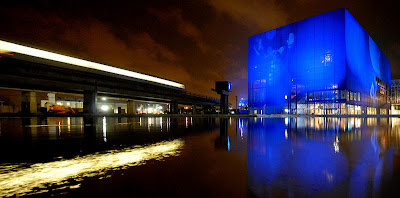
Copenhagen Concert Hall at night. /
The No. 1 best global city according to Monocle.

Our cities are designed for living, working, cultural entertainment and late nights. Even fresh starts. Some cities have it figured out, some don't.

From transportation to green space, retail possibilities and residential settlements, it's always interesting to find out what makes a good city a great place to live.

The July/August issue of Monocle
rates the 25 best global cities.
Each summer for the past seven years, Monocle, the London-based global magazine that's a must-read for its coverage of international affairs, business, culture and design, has presented a special quality of life rankings with a top of the world list of the 25 best global cities.

"Too many major cities, including some of our top 25, all but shut down on a Sunday -- we believe a city should be a seven-day operation," writes Monocle's Steve Bloomfield and Michael Booth, in the introduction to this year's top of the world list, which appears in the magazine's July/August 2013 issue (issue 65, volume 07). "We asked our team or correspondents and researchers to judge how easy it is to arrange a spontaneous dinner with friends on a Sunday night. Are the restaurants open? Can you buy groceries and wine?"

Other common factors which Monocle studied include: crime rates, weather, education, health care, transportation and "an airport with a host of international destinations." Of course, it helps if a city has good plazas and outdoor cafés as well as art galleries that stay open late and museums that are free, too.

It did not surprise me that few U.S. or North American cities made Monocle's Top 25 -- Honolulu at No. 17 was highest ranked while my beloved San Francisco ranked 24th. Nor, should it be surprising that six of the top 10 were European cities, including this year's No. 1 Copenhagen.

No. 14 Paris /
The Pyramid at the Louvre is always a buzz of activity.
Why did Copenhagen rank No. 1 and not Paris (ranked No. 14) or London (which did not even rank in the top 25)? Here's why: "World-conquering urban quality of life requires the trickiest of balancing acts -- between progress and preservation, stimulation and security, global and local. Perfection is unobtainable, of course, but Copenhagen is striking one of the best deals right now.

"The Danish capital has hit the top spot this year not just because of its daring art scene, its matrix of cycle super-highways and its pioneering approach to street culture but also its ability to define itself as a global city. Copenhagen's wonderful self-reinvention continues to impress."

As for what the magazine said about San Francisco, in a nutshell it wrote: "Northern California's spectacular city scores high on tolerance and urban verve but tech-dollars continue to drive up the cost of living." I'd have to agree. As much as I would enjoy living in the Inner Sunset, within walking distance of Golden Gate Park, the cost of buying or renting is somewhat prohibitive. Thus, living across the bay in Oakland, I believe, is a better value.

No. 19 Vancouver, B.C. /
This western Canadian city hosted the 2010 Winter Olympic Games.

Here's Monocle's world list of the 25 best global cities for 2013:

1. Copenhagen
2. Melbourne
3. Helsinki
4. Tokyo
5. Vienna
6. Zürich
7. Stockholm
8. Munich
9. Sydney
10. Auckland
11. Hong Kong
12. Fukuoka
13. Kyoto
14. Paris
15. Singapore
16. Hamburg
17. Honolulu
18. Madrid
19. Vancouver
20. Berlin
21. Barcelona
22. Amsterdam
23. Portland (Oregon, U.S.)
24. San Francisco
25. Düsseldorf

No. 22 Amsterdam /
The city's bicycle culture and canals are an appealing.
In looking over Monocle's top 25 best global cities list, I've been lucky enough to have visited eight of these cities in my lifetime -- Copenhagen, Helsinki, Paris, Honolulu, Vancouver, Amsterdam, Portland and, of course, San Francisco, which I get to see nearly every day. There are many more on Monocle's list I would love to visit some day in the future like Sydney and Berlin.

Does the perfect city exist? Not likely. Will it ever? Probably not. And, of course, what works for some of us, doesn't for all of us. Yet, it's nice know that there are a handful of good cities throughout the world whose quality of life makes me want to live there some day.

No. 24 San Francisco /
The de Young Fine Arts Museum in Golden Gate Park.
By the way, one reason the San Francisco Bay Area (which has been my home for nearly 18 years) is a great place to live is because it is easy to arrange a spontaneous dinner with friends on a Sunday night; great restaurants are open on Sunday nights; and you can buy groceries and wine on Sundays, day or night.

And, having a Major League baseball team -- the San Francisco Giants -- that's won two World Series titles in the past three years is a nice bonus and adds to the quality of life, too.

Where do you want to live?

Photo of Copenhagen Concert Hall courtesy of Wikipedia Commons.
Photo of Monocle courtesy of monocle.com.
All other photos by Michael Dickens, copyright 2010, 2012 and 2013.
Tuesday, July 23, 2013

On pop culture: A great design that's always making a fashion statement


The Converse Chuck Taylor All-Star sneaker

In recent years, the colorful, unisex appeal of Converse Chuck Taylor All-Star sneakers has become quite noticeable, especially among teens and young, college-aged adults.

After all, great design never goes out of style. Sometimes, it just gets a little edgy and interactive.

I learned this first hand last week while perusing a Converse Store during a walk along Santa Monica's Third Street Promenade, which houses the largest collection of Converse footwear (which includes Chuck Taylor All-Star and their companion sneaker Jack Purcell) and apparel in the world.

Converse Chuck Taylor All-Star sneakers have come a long way since their basic black and white styles were once the elite footwear of choice for generations of basketball-playing Americans. Their popularity predates Adidas and Nike. In the 1970s, the iconic American punk rock band The Ramones gave the Converse brand a worldwide counterculture status. Other notables who've worn the Chuck Taylor All-Star brand include Kurt Cobain of grunge rock Nirvana fame and British actor David Tennant, the Tenth Doctor, in the BBC television science fiction series Dr. Who.

Today, thanks to their casual appearance and variety of bright and vivid colors, the Converse Chuck Taylor All-Star sneakers are a "must-have" for a new generation of sneaker wearers. While they are now known more for their vintage fashion appeal than their athletic use, there is still a "wow" factor and a casual sense of coolness attached to them.

At Converse's Third Street Promenade flagship store, you can even design your own creative, one-of-a-kind pair of All-Star kicks in what is billed as Converse Customization. Through the use of iPad technology and over 150 customization graphics, including collaborations with local Santa Monica artists, customers can channel their inner Jackson Pollack or Andy Warhol in expressing their own personal and artistic style -- from abstract expressionist to modern pop art.

The Converse Chuck Taylor All-Star sneakers remain a great design, always making a fashion statement.

Photograph of Converse Chuck Taylor All-Star sneakers by Michael Dickens, copyright 2013.

Tuesday, February 5, 2013

Form + function + green technology = meeting the aesthetic and environmental needs of a city


"Seismic Wave" / Waiting for the Muni
Metro N Judah train at the corner
of Carl and Cole in San Francisco. 

The city of San Francisco has enjoyed a history of environmental sustainability and it prides itself on being a city of inclusion, too.

Reflecting these values are the colorful and artistic "Seismic Wave" Muni transit shelters that have sprouted up all around the City since the first one debuted on Geary and Arguello Boulevards in 2009. By the end of this year, there will be about 1,000 transit shelters that are making use of innovative solar technology and design.

In the words of former San Francisco Mayor Gavin Newsom, who oversaw the ribbon-cutting ceremony of the first of the new transit shelters nearly four years ago, they "will make getting around this beautiful city easier and greener."

On a recent visit to the City, I rode the Muni Metro train from Embarcadero Station to Golden Gate Park to see the Rudolf Nureyev exhibit at the de Young Fine Arts Museum. During my nearly half-hour ride, I noticed several of these aesthetically-pleasing transit shelters dotting the N Judah route.

On my return trip downtown, I encountered one of the hip, "seismic wave" shelters up close at the corner of Carl and Cole Streets, across from the Crepes on Cole cafe where I had stopped for lunch, in the heart of the City's Cole Valley neighborhood.

I didn't mind that my wait for the next N Judah train would be eight minutes because it gave me time to study and admire the "Seismic Wave's" design and function.

A poster inside one of the shelter's display panels caught my attention: "Form and function combine with green technology to create a compelling, iconic structure designed to meet the aesthetic and environmental needs of a City at the forefront of new age technology."

The San Francisco Municipal Transportation Agency (SFMTA) touts its new "Seismic Wave" transit shelters as "the most sustainable shelter under the sun."

It's easy to see how and why.

Among the shelter's many "green" features" according to the SFMTA are:

  • Solar-powered photovoltaic cells can generate up to 100 watts of electricity -- enough to power high efficiency fluorescent backlit information panels, super efficient rooftop lighting and NextBus and Push to Talk technologies.
  • Up to 40 percent of all energy captured can be recycled back into the power grid.
  • Wave-shaped plastic canopy composed of 40 percent post-industrial recycled content.
  • Galvanized steel beams created with 60 to 70 percent reclaimed product.

Other features include: ergonomically-designed seats for up to six customers and steel support columns that can vary in length to accommodate San Francisco's hilly terrain.

In a 2009 interview with sf.streetsblog.org., project designer designer Olle Lundberg said it's been fun leaving his signature on the city. Lundberg Design, a local architect, was selected in a competition to design the civic project.

"We've done some really beautiful buildings in the city, but honestly nothing will have the same impact as (1000) of these will," said Lundberg. "These are going to be everywhere and are going to be this kind of icon. I do hope that they become part of the street vocabulary of San Francisco."

Indeed, form + function + green technology = meeting the aesthetic and environmental needs of a city -- the City.

"Seismic Wave" photograph by Michael Dickens, copyright 2013. All rights reserved.