Showing posts with label iconic. Show all posts

Tuesday, October 15, 2019

Getting lost at the Smithsonian with Aasif Mandvi


Aasif Mandvi is a comedian and actor – and, as I’ve recently learned much to my delight, a pop culture fanatic at heart. In his new podcast series, “Lost at the Smithsonian with Aasif Mandvi,” the former “Daily Show” correspondent who now co-stars in the CBS drama “Evil,” gets up close and personal with some of the most iconic artifacts at the National Museum of American History in Washington, D.C.

Whether exploring vintage clothing (Fonzie’s leather jacket from “Happy Days”), ratty furniture (Archie Bunker’s chair from “All in the Family”) or mismatched shoes (Dorothy’s ruby slippers in “The Wizard of Oz”), there are endless ways to get lost at the Smithsonian. Mandvi and his guests at the Smithsonian share how these and other items – 10 iconic pop culture objects out of 156 million in the Smithsonian collection – each became defining symbols of 20th century American pop culture.

In the opening episode of the series, we learn why Henry Winkler’s portrayal of “The Fonz” became the breakout character in the mid-70s sit-com “Happy Days” and how his leather jacket became a symbol of coolness in an era of Watergate, when Americans yearned for simpler, happy days. Mandvi interviews Winkler to learn how he was able to turn “The Fonz” into an American icon.

“He was everybody who I wanted to be and who I wasn’t, because I was not in control of my life or my psyche,” said Winkler in describing his portrayal of “The Fonz.”

In the second episode, Mandvi explores the acoustic guitar belonging to José Feliciano, who at age 22 was the first artist to perform a “personalized” rendition of the National Anthem. Today, taking liberties with the National Anthem is commonplace before baseball games and many other American sporting events. However, as Feliciano deviated from the norm when he performed “The Star Spangled Banner” before a 1968 World Series game in Detroit, it nearly destroyed his career. But was it an act of protest or patriotism? You might be surprised by the musician’s answer.

“My version was not outlandish,” recalled Feliciano, now 72, during his conversation with Mandvi. “It was a combination of soul, gospel and because I’m Latin, I gave it a little bit of a Latin feel.”

What began as a chat about Feliciano’s legendary guitar ended up morphing into a thoughtful conversation about race, about patriotism, and what it means to be an American. The blind, Grammy Award-winning Puerto Rican artist also performs a private concert when he’s reunited with his guitar at the Smithsonian.

The third episode, which debuted last week, focuses on the ruby slippers Judy Garland wore in the 1939 film classic “The Wizard of Oz.” As Mandvi recently tweeted, “Click your heels 3 times and say ‘There’s no place like @amhistorymuseum,’ & you’ll be transported to an exhibit that’s been viewed 100,000,000+ times. ... Well, not really. But you’ll get pretty close.”

Curator Ryan Lintelman said of Dorothy’s famous ruby slippers: “So we estimate that since 1979 we we got them, a hundred million people have seen them probably. You know, it’s pretty incredible. And other than like maybe the Mona Lisa, I don’t know that any other museum can really claim that one thing has been seen by so many people,” he said.

Thus far, three episodes of “Lost at the Smithsonian” have aired and new podcast episodes drop each week via Stitcher. Those in the know have hinted that among the future items Mandvi explores include Muhammad Ali’s boxing robe and Mr. Spock’s ears from the original “Star Trek” TV series.

I don’t know about you, but I can’t wait to get lost at the Smithsonian.

Listen to “Lost at the Smithsonian” via Stitcher:

https://www.stitcher.com/podcast/stitcher/lost-at-the-smithsonian

A postscript: “Lost at the Smithsonian” concluded its run on November 24. Following is a list of themes for each episode:

1. Fonzie’s Jacket
2. Jose Feliciano’s Guitar
3. Dorothy’s Ruby Slippers
4. Phyllis Diller’s Gag File
5. Muhammad Ali’s Robe
6. Carrie Bradshaw’s Laptop
7. Archie Bunker’s Chair
8. Pele’s #10 Jersey
9. Bee Gees’ Silver Suits
10. The Original Muppets

Friday, January 15, 2016

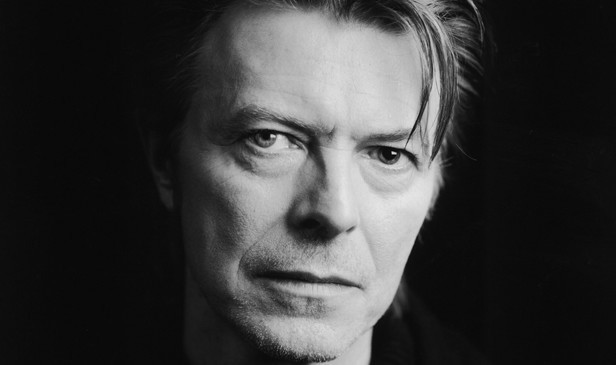
David Bowie was a pop genius who kept getting it right


David Bowie
(1947-2016)
A truly great artist, beautiful melodist, and elegant gentleman.

Like so many of my generation, waking up to the news of David Bowie's death was a shocker. The first words I heard when my clock radio alarm sounded at 6 a.m. on Monday morning, the start of a new work week, came from the voice of Steve Inskeep, host of NPR's Morning Edition, who said matter-of-factly -- and without any hesitation -- "David Bowie is dead."

With these four words, "David Bowie is dead," immediately I sat up in bed, confused, my head spinning. Fight back tears, I began remembering the many faces and sounds of this most innovative, iconic and illustrious artist and musician.

The 69-year-old Bowie's career had staying power -- five decades and 25 albums -- stretched over two centuries. Imagine that. His hits were many. "Fame," "Heroes," "Young Americans," "Changes," "Let's Dance," "Modern Love," "China Girl," immediately come to mind. But there are so many more, too. Bowie excelled at mixing rock, jazz, disco, pop, soul, glam, art rock, hard rock, metal, punk, electronica with ease. He bent genres with his music -- and was gender-bending with his many personas.

David Bowie ~ 30 essential songs:
http://www.rollingstone.com/music/lists/david-bowie-30-essential-songs-20160111

David Bowie / His artistic breakthrough came with
the gender-bending persona Ziggy Stardust.
In remembering Bowie, The Hollywood Reporter wrote: "Bowie's artistic breakthrough came with 1972's The Rise and Fall of Ziggy Stardust and the Spiders From Mars, an album that fostered the notion of rock star as space alien. Fusing British mod with Japanese kabuki styles and rock with theater, Bowie created the flamboyant, androgynous alter ego Ziggy Stardust."

Rolling Stone called the influential Bowie "One of the most original and singular voices in rock & roll for nearly five decades" noting that the British artist and musician "championed mystery, rebellion and curiosity in his music. Ever unpredictable, the mercurial artist and fashion icon wore many guises throughout his life."

A Tuesday Night Memo explores David Bowie's "Where Are We Now?" 
http://tuesdaynightmemo.blogspot.com/2013/01/david-bowie-where-are-we-now.html

Soon, after word of Bowie's passing spread through social media, the tributes and accolades began pouring in, both from musicians and music critics.

"The right words would be written in ink on card, not to be suddenly and brutally, like the news. In acknowledgement, the lights on this particular and peculiar little theatre will be lowered for a while. With deepest gratitude and respectful condolences to the family and friends of a truly great artist, beautiful melodist and elegant gentleman," wrote Elvis Costello on his Facebook page.

Sting on the passing of David Bowie wrote: "Trudie and I were totally captivated by his energetic charm, his extraordinary music, his art and his unique spirit. We will never forget him."

The Rolling Stones issued a statement: "The Rolling Stones are shocked and deeply saddened to hear of the death of our dear friend David Bowie. As well as being a wonderful and kind man, he was an extraordinary artist and a true original." Added Mick Jagger: "David was always an inspiration to me. He was wonderfully shameless in his work. We had so many good times together. He was my friend. I will never forget him."

Peter Ames Carlin, the author of several books, including biographies of Bruce Springsteen and Brian Wilson of the Beach Boys, wrote on his Facebook page: "I am both crushed and awed by David Bowie's death. That he knew he was dying, that that fact informed everything about this epic work of art he unleashed hours before he died. That 'Lazarus,' the song and especially the video, are such beautifully rendered works about his own life and death. He turned death into a creation. It's kind of the ultimate act of artistry, that he could transform the dousing of the lights into such a spectacular life-affirming event."


On the PBS News Hour, Rolling Stone critic Anthony DeCurtis said: "He continually reinvented himself. David Bowie never seemed old." Added British Prime Minister David Cameron: "David Bowie was a genius. For someone my age, he provided a lot of the soundtrack of our lives."

Indeed, Bowie wrote anthems for the alienated, mixing rock music and theatricality throughout his career. Think Major Tom, think Ziggy Stardust, think Thin White Duke. He influenced generations of musicians and fans. I remember the thrill of spinning his early eighties album, Let's Dance, as a college DJ in Saint Paul, Minnesota. It remains my favorite David Bowie album.

On the occasion of his 69th birthday last week, Bowie released a new album called Blackstar, made in collaboration with a quintet of jazz musicians. Said NPR: "Bowie's work often addressed inner truths and existential questions. He was always morphing his sound and his look."

David Bowie / His new album, 'Blackstar' showed him
to be an adventurous artist and musician to the end.
Like so many, immediately after learning the news of Bowie's death, I began exploring his life and career. That afternoon, I purchased Blackstar via iTunes. Not surprisingly, it has been the most downloaded album on iTunes throughout the world this week. That evening as I sat down to dinner, I listened to it in its entirety for the first time after hearing "Lazarus" a few times in recent weeks on the "Morning Becomes Eclectic" show via KCRW.com.

I enjoyed what I heard from start to finish, and like the chameleon Bowie had been his entire career, I'm not surprised he avoided rock & roll. Instead, Bowie surrounded himself with a group of very bright and talented jazz musicians and created a jazz fusion album, a throwback to Miles Davis circa early seventies. It's very listenable and I think longtime Bowie enthusiasts will applaud his sound and direction.

"It could've gone so terribly wrong," wrote NPR music critic Barry Walters in his review of Blackstar. Fortunately, it didn't and Blackstar showed Bowie to be an adventurous artist and musician to the end.

David Bowie / "What I'm most proud of is that I can't help
but notice that I've affected the vocabulary of pop music."
As the subject of countless interviews, Bowie once said: "My entire career, I've only really worked with the same subject matter. The trousers may change, but the actual words and subjects I've always chosen to write with are things to do with isolation, abandonment, fear and anxiety -- all the high points of one's life."

Bowie will be remembered as a musical master of reinvention, a pop genius who kept getting it right.

"What I'm most proud of is that I can't help but notice that I've affected the vocabulary of pop music," he said. "For me, frankly, as an artist, that's the most satisfying thing for the ego."

Video of "Blackstar": Courtesy of YouTube. Photos: Courtesy of Google Images. 

Tuesday, December 29, 2015

Jerry Seinfeld and the art of conversation

President Obama and Jerry Seinfeld sharing the art of conversation --
and a good laugh, too.

Comedians In Cars Getting Coffee is a show that focuses on the art of conversation. It's a gathering of comedian Jerry Seinfeld and his friends, going for a cup of coffee, driving in cool old cars, sharing stories all the way.

"It's a show about trust," said former Daily Show host Jon Stewart.

Now, in an ultimate show of trust, President Obama is going to ride in a car and share coffee with Seinfeld. The president will appear in the opening show of the seventh season of the popular web series, which debuts on Dec. 30. He becomes the first non-comedian to appear with Seinfeld.

In their episode filmed earlier this month in Washington, D.C., Mr. Obama and Seinfeld take turns driving a blue 1963 Corvette Sting Ray split-window coupe around the White House driveway that encircles the South Lawn, then sit down to chat over coffee in a staff dining room.

According to the White House, the president's appearance in Comedians In Cars Getting Coffee was "an opportunity to pull back the curtain for Americans on life in the White House.

"The president and Jerry had a unique, candid conversation that focused largely on the lighter side of the presidency," said a White House statement last week.

"Growing up in the '60s my kid dream was always to be an astronaut -- doing a comedy show with President Obama in and around the White House felt like going into space," said Seinfeld in a statement released by Crackle, Sony's online video site and the show's distributor.

At 61, Seinfeld has been a comedian his whole adult life. He's one of the best when it comes to the art of observational humor, whether talking about personal relationships or the nuances of uncomfortable social obligations. It's what we loved about the New York native in Seinfeld, which spanned 180 episodes over nine seasons from 1989-98 on NBC. The series remains a fixture in reruns across the country.

Now, in transitioning from TV to the internet, Seinfeld takes an offbeat approach that shows the other side of the comedy world, something he feels talk shows and interviews can't or don't let you see. The web-based comedy series he created, directs and stars in debuted in 2012 and is shot using DSLR and interior-mounted Go-Pro cameras.

A who's who of contemporary A-list comedians, including Chris Rock, Ricky Gervais, Sarah Silverman and Amy Schumer as well as iconic comedians Mel Brooks and Don Rickles, have been coffee companions of Seinfeld's. So have past and present late night TV hosts such as Stewart, Jay Leno, David Letterman, Jimmy Fallon, Trevor Noah, and Stephen Colbert. Seinfeld co-stars Julia Louis-Dreyfus, Jason Alexander and Michael Richards have also made appearances.

Each episode of Comedians In Cars Getting Coffee follows the premise of Seinfeld introducing a vintage car such as a 1952 Volkswagen Beetle or a 1967 Austin-Healey 3000, then picking up his guest comedian in that vintage car and, finally, taking them out to have coffee or dine in a restaurant. Seinfeld has filmed episodes on both coasts, in New York and Los Angeles, and he's also ventured to Portland, Oregon as well as to New Jersey and Massassuchetts. Comedians In Cars Getting Coffee can be seen by anyone, anywhere with access to the internet, and on any web-enabled device. And, don't worry, the language in each 12-to-20 minute episode is family friendly.

The unscripted conversations between Seinfeld and his companions in Comedians In Cars Getting Coffee are at times both meaningful and meandering, silly and deep. Yet, with the series having been streamed over 100 million times, they're very comfortable to watch on a smart phone.

Hardly a show about nothing.


Note: The seventh season of Comedians In Cars Getting Coffee premieres online on Dec. 30 at 11:30 p.m. Eastern Standard Time. Along with President Obama, other featured guests this season include Will Ferrell, Steve Martin and Garry Shandling.

Go behind the wheel of the President Obama episode of Comedians In Cars Getting Coffee: https://www.washingtonpost.com/lifestyle/style/behind-the-wheel-of-the-obama-episode-of-seinfelds-comedians-in-cars/2015/12/21/2d6376b0-a29b-11e5-9c4e-be37f66848bb_story.html

To watch previous episodes: http://comediansincarsgettingcoffee.com

Photo: Courtesy of comediansgettingcarsgettingcoffee.com. Video: Courtesy of YouTube. 

Tuesday, October 27, 2015

Elvis Costello: A master of high fidelity and storytelling, too


Elvis Costello / Charming crowds with his music and storytelling.

Elvis Costello knows how to charm the pants off an audience. He's done it successfully for the past 40 years as one of his generation's greatest songwriters. Now, with a simple wink, a friendly smile, or just the right choice of words and upbeat tone of voice, the bespectacled and iconic English musician who was once described by a critic as a "pop encyclopedia," is delighting crowds with his good-natured manner and geniality of conversation. He's become a master of the craft of storytelling.

Last Thursday evening's City Arts & Lectures event at the Nourse in San Francisco provided Costello with a forum for talking at length about his new memoir -- 'Unfaithful Music & Disappearing Ink' -- that (at a hefty but very readable 670 pages) shows Costello to be an intelligent, thoughtful, witty and lyrical writer.

In conversation with Dan Stone, editor-in-chief of Radio Silence, Costello showed why he's a wonderful conversationalist and gifted storyteller. Costello stood and read several passages from his memoir that recalled a mostly happy childhood growing up in a musical family in Liverpool, England, and the special relationship he shared with his father, Ross MacManus, who was a professional singer in a popular dance band. The younger MacManus recalled with clarity watching his father play afternoon dance gigs at the Hammersmith Palais in the 1961. By the end of the decade, Costello had gone into the family business, following in both his father's and grandfather's footsteps, and he took the popular music world by storm by the age of 24, replete with his black-framed Buddy Holly glasses.

Over the course of about 80 minutes, there were many funny and good-natured reminisces about Costello's coming of age, including: one of his first jobs as a data-entry clerk for cosmetics giant Elizabeth Arden; the influence of the Beatles on both his and his father's musical careers; coming to play San Francisco for the first time in his early twenties back in the 1970s; and his infamous TV appearance on Saturday Night Live. Costello punctuated his fluid storytelling by sharing many candid family photos that were projected overhead on a giant movie screen for the audience to delight in.

While 'Unfaithful Music & Disappearing Ink' doesn't adhere to a linear chronology, what I have read thus far has been a fun and enjoyable read, and each chapter presents colorful highlights in Costello's remarkable life. The New York Times called 'Unfaithful Music & Disappearing Ink' "some of the best writing -- funny, strange, spiteful, anguished -- we've ever had from an important musician."

Throughout last Thursday's conversation and later, during a Question and Answer period with the house lights turned up, we learned why Costello, 61, is truly a music fan and delights in championing the works of other musicians such as country star George Jones, jazz pianist Allen Toussaint, pop composer Burt Bacharach, rock guitarist and producer T Bone Burnett, English singer/songwriter Nick Lowe, former Beatles icon Paul McCartney, and hip hop/neo soul band The Roots, to name just a few whom Costello has collaborated with over the years.

But wait, the best part of the night was yet to come. Without any prompting, Costello asked the audience: "Hey, you wanna hear a song?" The sold-out audience at the Nourse responded by amping up their already enthusiastic applause. Before the cheering could fade, an acoustic Gibson guitar was brought out and handed to Costello to play and, quickly, a stool, microphone and music stand were in place for "the show" to go on.

Thus, Elvis began an impromptu "mini concert" by performing a very meaningful and moving -- and slowed-down -- version of "Every Day I Write the Book" from 1983's Punch the Clock, followed by "I Hear a Melody," originally recorded in 1977 for his debut album My Aim is True. Finally, a medley of "Radio Sweetheart/What Jackie Wilson Said," the former penned by Costello and the latter composed by Van Morrison, brought the crowd to its feet. The night was complete.

Photo images: Courtesy of 'Unfaithful Music & Disappearing Ink', 2015.

Tuesday, March 5, 2013

Girl with a Pearl Earring: Who's that girl?


Girl with a Pearl Earring 

If life is best shared through story, as it's been said, then, art is the medium through which we illustrate these stories.

One such story that has been wonderfully illustrated is Vermeer's Girl with a Pearl Earring. This renowned and beloved masterpiece, labeled the Dutch Mona Lisais one of the most beautiful and artistically important paintings in the world.

Currently, the de Young Fine Arts Museum in San Francisco's Golden Gate Park is hosting Girl with a Pearl Earring: Dutch Paintings from the Mauritshuis. The show, which opened on January 26 to much fanfare, continues its residency in The City through June 2. It is drawing tremendous crowds and much attention, too.

Last Friday, I visited the exhibition, which is on loan from the Royal Picture Gallery Mauritshuis in The Hague, and came away impressed by the many outstanding paintings from the 17th-century Dutch Golden Age. Both portraits and still lifes, which give Dutch art a visually and intellectually appealing resonance, were well represented among the 35 paintings. Among them were: A Hunting Party near the Hofvijver in The Hague, Seen from the Plaats (ca. 1690) by Gerrit Berckheyde and The Goldfinch (1654) by Carel Fabritius. Other masterstroke artists represented included: Salomon van Ruysdael, Abraham van Beyeren and Rachel Ruysch.

And, of course, the special exhibition wouldn't be complete without giving due props to the most famous Dutch master of them all, Rembrandt. In fact, a separate exhibition gallery featuring 60 etchings by Rembrandt van Rijn, entitled Rembrandt's Century, is also on display and included in the admission price for Girl.

However, the centerpiece of the Dutch Golden Age exhibition remained the iconic Girl with a Pearl Earring. It was the one spectacular painting that garnered everyone's attention, the one everyone wanted to see. And I must say this: The showstopper, which had its very own gallery room, was quite the jewel.

Johannes Vermeer painted the timeless portrait of Girl with a Pearl Earring using oils on canvas, circa 1665. While it's been a popular painting for several centuries, its celebrity and superstar status was enhanced only recently, in both literature and on film. In 1999, Tracy Chevallier's best-selling, historical novel fictionalized the circumstances of the creation of the painting. In turn, the novel inspired a 2003 dramatic movie starring Colin Firth as Vermeer and Scarlett Johansson as the wide-eyed girl, Griet. Hired by Vermeer as an assistant, she sits for him as a painting model while wearing one of his wife's pearl earrings dangling from her left earlobe. The book and the film brought the radiant painting to life and helped introduce it to a wide-reaching audience.

On this particular morning, I took my time in absorbing the atmosphere of the spacious gallery room as I approached Girl with a Pearl Earring. I wanted to take full advantage of this rare opportunity to see the most famous of Vermeer's 36 paintings and, arguably, the second most famous painting in the world.

First, I stood to the right of the hauntingly beautiful, softly-lit masterpiece. Then, I stood in front of it. Finally, I shifted to the painting's left side. I wanted to see this lovely portrait set against a dark, neutral background from a variety of angles. In each instance, there were different aspects of the painting, which was restored in 1994, that I focused upon: the girl's beautiful wide eyes, her parted lips, her blue turban-like headscarf with its yellow veil, her yellowish-brown jacket with the shining white collar, the intimacy of her gaze towards me. And, of course, the focal point: the most famous pearl earring ever painted.

Soon, I left the exhibition and headed out into a lovely, sunlit San Francisco afternoon impressed by Girl with a Pearl Earring. Yet, after seeing this magical face full of much drama and conflict, I couldn't help but think that there were many questions about this masterpiece in search of answers. I pondered some of them while walking across the park on my way to eat lunch.

  • What is the girl thinking as she stares at us? 
  • Do her eyes and half-smile convey a sense of innocence or are they meant to be seductive? 
  • And, centrally, why is the girl wearing a pearl earring?

I'm sure others are asking the same questions as me.

Indeed, who's that girl?

Tuesday, February 5, 2013

Form + function + green technology = meeting the aesthetic and environmental needs of a city


"Seismic Wave" / Waiting for the Muni
Metro N Judah train at the corner
of Carl and Cole in San Francisco. 

The city of San Francisco has enjoyed a history of environmental sustainability and it prides itself on being a city of inclusion, too.

Reflecting these values are the colorful and artistic "Seismic Wave" Muni transit shelters that have sprouted up all around the City since the first one debuted on Geary and Arguello Boulevards in 2009. By the end of this year, there will be about 1,000 transit shelters that are making use of innovative solar technology and design.

In the words of former San Francisco Mayor Gavin Newsom, who oversaw the ribbon-cutting ceremony of the first of the new transit shelters nearly four years ago, they "will make getting around this beautiful city easier and greener."

On a recent visit to the City, I rode the Muni Metro train from Embarcadero Station to Golden Gate Park to see the Rudolf Nureyev exhibit at the de Young Fine Arts Museum. During my nearly half-hour ride, I noticed several of these aesthetically-pleasing transit shelters dotting the N Judah route.

On my return trip downtown, I encountered one of the hip, "seismic wave" shelters up close at the corner of Carl and Cole Streets, across from the Crepes on Cole cafe where I had stopped for lunch, in the heart of the City's Cole Valley neighborhood.

I didn't mind that my wait for the next N Judah train would be eight minutes because it gave me time to study and admire the "Seismic Wave's" design and function.

A poster inside one of the shelter's display panels caught my attention: "Form and function combine with green technology to create a compelling, iconic structure designed to meet the aesthetic and environmental needs of a City at the forefront of new age technology."

The San Francisco Municipal Transportation Agency (SFMTA) touts its new "Seismic Wave" transit shelters as "the most sustainable shelter under the sun."

It's easy to see how and why.

Among the shelter's many "green" features" according to the SFMTA are:

  • Solar-powered photovoltaic cells can generate up to 100 watts of electricity -- enough to power high efficiency fluorescent backlit information panels, super efficient rooftop lighting and NextBus and Push to Talk technologies.
  • Up to 40 percent of all energy captured can be recycled back into the power grid.
  • Wave-shaped plastic canopy composed of 40 percent post-industrial recycled content.
  • Galvanized steel beams created with 60 to 70 percent reclaimed product.

Other features include: ergonomically-designed seats for up to six customers and steel support columns that can vary in length to accommodate San Francisco's hilly terrain.

In a 2009 interview with sf.streetsblog.org., project designer designer Olle Lundberg said it's been fun leaving his signature on the city. Lundberg Design, a local architect, was selected in a competition to design the civic project.

"We've done some really beautiful buildings in the city, but honestly nothing will have the same impact as (1000) of these will," said Lundberg. "These are going to be everywhere and are going to be this kind of icon. I do hope that they become part of the street vocabulary of San Francisco."

Indeed, form + function + green technology = meeting the aesthetic and environmental needs of a city -- the City.

"Seismic Wave" photograph by Michael Dickens, copyright 2013. All rights reserved.

Sunday, May 27, 2012

The most photographed bridge in the world


The iconic Golden Gate Bridge at 75

It's a Happy 75th Birthday today for the Golden Gate Bridge, the most photographed bridge in the world.

The Golden Gate Bridge is a suspension bridge spanning the Golden Gate, which is the opening of the San Francisco Bay into the Pacific Ocean. It is part of both U.S. Highway 101 and California State Highway 1 routes, and it links the city of San Francisco, on the northern tip of the San Francisco Peninsula to Marin County. Construction on the Golden Gate Bridge began in 1933 and it opened to the public on May 27, 1937. It has a height of 220 feet and is 8,980 feet long.

The Golden Gate Bridge is one of the most internationally recognized and photographed symbols of San Francisco. Each year, countless photographs of the Golden Gate Bridge are taken by both locals and tourists.  It's a very beautiful sight to behold no matter the point of view: from the vista point near the northern end to the Crissy Field shoreline adjacent to the Marina Green.

The American Society of Civil Engineers selected the Golden Gate Bridge as one of the modern Wonders of the World and it's easy to see and understand why.

As a resident of the San Francisco Bay Area for 16 years, I've seen the Golden Gate Bridge countless times ~ from both sides of the bay ~ and snapped many photographs of it, too. I'm happy to say that it's still a very welcoming sight to my eyes after all these years.

Golden Gate Bridge photograph by Michael Dickens. Copyright 2012. All rights reserved.