Showing posts with label fear. Show all posts

Tuesday, December 8, 2020

On books: Jon Meacham’s ‘The Soul of America: The Battle for Our Better Angels’ is still timely reading


Jon Meacham is a Pulitzer Prize-winning historian and presidential biographer whose voice has become a familiar and reassuring one on MSNBC during the Trump Era. He’s a contributing writer to The New York Times Book Review, a contributing editor to Time magazine, and a former Editor-in-Chief of Newsweek. Meacham holds the Carolyn T. And Robert M. Rogers Endowed Chair in American Presidency at Vanderbilt University.

In writing about presidents as varied as Abraham Lincoln and George Herbert Walker Bush, Meacham has noted that “both called on us to choose the right over the convenient, to hope rather than to fear and to heed not our worse impulses but our best instincts.”

In Meacham’s 2018 best-selling book, The Soul of America: The Battle for Our Better Angels, a brilliant and fascinating – if not timely work – which I have found good reading during this pandemic-interrupted year, we are reminded that from our country’s very beginnings, the United States has, in the words of American historian and law professor Annette Gordon-Reed, “struggled to deliver on the promise of the Declaration of Independence and to make our Union ‘more perfect.’ Race has often been at the heart of those struggles, and The Soul of America persuasively argues that the resilient spirit of those who fought throughout our history to overcome that seemingly intractable problem is still with us. It is that spirit that gives us cause to be hopeful in the face of doubts about our country’s future.”

Meacham writes with both clarity and purpose throughout The Soul of America and explains how our current “Trumpian” climate of partisan fury is not new. He explores other contentious periods of our nation’s history – from the Civil War to World War I to the fight for women’s rights to Lyndon Johnson’s crusade against Jim Crow – to show how presidents and ordinary citizens have united to defeat “the forces of anger, intolerance, and extremism.”

Through each of these periods of our nation’s history, Meacham explains, our national life “has been shaped by the contest to lead the country to look forward rather than back, to assert hope over fear – a struggle that continues even now.” As Meacham once explained to Trevor Noah on The Daily Show when he was promoting the book two years ago, “every era is a battle between our best impulses and our worst impulses.”

Careful students of history will be familiar with some of these stories, but as Meacham notes, “if we have learned anything in recent years – years in which the president of the United States has taken pride in his deliberate lack of acquaintance with the most essential historical elements of his office – it is that even the most basic facts of our common past repay attention. ‘Eternal vigilance,’ it has been long said, ‘is the price of liberty’ and a consciousness about what has worked – and what hasn’t – in previous eras is surely a useful form of such vigilance.”

Historian Ken Burns, no stranger to the study of our nation’s past, summed his thoughts about The Soul of America by saying, “Rather than curse the darkness, Jon Meacham, with his usual eloquence and surpassing knowledge of our history, has offered us all the sublime and calming reassurance that, as threatening as so much of the present moment seems, Americans have weathered such storms before and come out on the other side with fresh and progressive horizons. This is a beautifully expressed and convincing prayer to summon our own ‘better angels’ to meet the obvious challenges of today.”

Meacham concludes The Soul of America by writing, “For all of our darker impulses, for all of our shortcomings, and for all of the dreams denied and deferred, the experiment begun so long ago, carried out so imperfectly, is worth the fight. There is, in fact, no struggle more important, and none nobler, than the one we wage in the serve of those better angels who, however besieged, are always ready for battle.”

A footnote: In October, HBO debuted a documentary, “The Soul of America,” based upon Meacham’s 2018 book of the same name. Here is a an interview Meacham gave on NBC’s “The Today Show” to discuss the documentary.


Tuesday, December 11, 2018

On books: Jon Meacham’s ‘The Soul of America: The Battle for Our Better Angels’ is timely reading


Jon Meacham is a Pulitzer Prize-winning historian and author of Destiny and Power: The American Odyssey of George Herbert Walker Bush, the definitive biography of the recently deceased 41st President of the United States. Last week, Meacham eulogized Mr. Bush, calling him “America’s last great solider-statesman, a 20th-century founding father.”

During Meacham’s eulogy, he said, “Abraham Lincoln’s ‘better angels of our nature’ and George H.W. Bush’s ‘thousand points of light’ are companion verses in America’s national hymn. For Lincoln and Bush both called on us to choose the right over the convenient, to hope rather than to fear and to heed not our worst impulses but our best instincts.”

In Meacham’s latest best-selling book, The Soul of America: The Battle for Our Better Angels, a brilliant and fascinating – if not timely work – we are reminded that from our country’s very beginnings, the United States has, in the words of American historian and law professor Annette Gordon-Reed, “struggled to deliver on the promise of the Declaration of Independence and to make our Union ‘more perfect.’ Race has often been at the heart of those struggles, and The Soul of America persuasively argues that the resilient spirit of those who fought throughout our history to overcome that seemingly intractable problem is still with us. It is that spirit that gives us cause to be hopeful in the face of doubts about our country’s future.”

Meacham writes with both clarity and purpose throughout The Soul of America and explains how our current “Trumpian” climate of partisan fury is not new. He explores other contentious periods of our nation’s history – from the Civil War to World War I to the fight for women’s rights to Lyndon Johnson’s crusade against Jim Crow – to show how presidents and ordinary citizens have united to defeat “the forces of anger, intolerance, and extremism.”

Through each of these periods of our nation’s history, Meacham explains, our national life “has been shaped by the contest to lead the country to look forward rather than back, to assert hope over fear – a struggle that continues even now.” As Meacham told Trevor Noah recently on The Daily Show, “every era is a battle between our best impulses and our worst impulses.”

Careful students of history will be familiar with some of these stories, but as Meacham notes, “if we have learned anything in recent years – years in which the president of the United States has taken pride in his deliberate lack of acquaintance with the most essential historical elements of his office – it is that even the most basic facts of our common past repay attention. ‘Eternal vigilance,’ it has been long said, ‘is the price of liberty’ and a consciousness about what has worked – and what hasn’t – in previous eras is surely a useful form of such vigilance.”

Historian Ken Burns, no stranger to the study of our nation’s past, summed his thoughts about The Soul of America by saying, “Rather than curse the darkness, John Meacham, with his usual eloquence and surpassing knowledge of our history, has offered us all the sublime and calming reassurance that, as threatening as so much of the present moment seems, Americans have weathered such storms before and come out on the other side with fresh and progressive horizons. This is a beautifully expressed and convincing prayer to summon our own ‘better angels’ to meet the obvious challenges of today.”

Meacham concludes The Soul of America by writing, “For all of our darker impulses, for all of our shortcomings, and for all of the dreams denied and deferred, the experiment begun so long ago, carried out so imperfectly, is worth the fight. There is, in fact, no struggle more important, and none nobler, than the one we wage in the serve of those better angels who, however besieged, are always ready for battle.”


Photos: Courtesy of Google images. Video: Courtesy of YouTube.com/The Daily Show.

Wednesday, November 16, 2016

Opinions that matter: When these coaches speak ...


Gregg Popovich /
"Values are more important to me than
anyone's skill in business ... It tells us who
we are, how we want to live and what kind
of people we are."
It's been a week and counting since Election Day 2016. Dazed and confused, we've been trying to make sense of the new world around us. Many of us have felt sucker punched by Donald Trump's victory over Hillary Clinton. Yet, some who are prominent in our sports culture are taking a stand while demonstrating their political activism. When these coaches speak ... I listen. So should you.

San Antonio Spurs head coach Gregg Popovich and Golden State Warriors head coach Steve Kerr, a couple of the best and brightest minds in sports, are among the many professional coaches and athletes who have shared blistering critiques following Donald Trump's election as President of the United States last Tuesday. As coaches in the NBA, where 75 percent of the athletes are black, their opinions matter.

In a recently published ESPN interview, Popovich spoke out in frustration of Trump, who will become the 45th President of the United States when he is inaugurated in January.


"I'm a rich, white guy. And I'm sick to my stomach thinking about it," said Popovich, a graduate of the Air Force Academy. "I couldn't imagine being a Muslim right now or a woman or an African-American, a Hispanic, a handicapped person, and how disenfranchised they might feel." He went on to say that for any one in those groups that voted for Trump, "it's just beyond my comprehension how they ignored all that."

On the day after the election, in an interview with The New York Times, Kerr said: "All of a sudden you're faced with the reality that the man who's going to lead you has routinely used racist, misogynist, insulting words. I didn't think this was The Jerry Springer Show." 

Over the past four years, I've had the pleasure of informally meeting Kerr on several occasions. He is a parent of University of California women's volleyball player Maddy Kerr, and my wife and I have season tickets to Cal volleyball. Kerr is warm, friendly and outgoing – and never one to shy away from societal discourse. As the son of an American academic who specialized in the Middle East, Kerr spent much of his childhood in Lebanon and other Middle East countries before returning to the U.S. to study history and sociology and star as a basketball player at the University of Arizona, then embark on a fruitful professional career in the National Basketball Association.


Steve Kerr (right) with Draymond Green /
The Golden State Warriors head coach is not one to shy
away from societal discourse.
"I didn't think this was 'The Jerry Springer Show.'"
"People are getting paid millions of dollars to go on TV and scream at each other, whether it's in sports or politics or entertainment" said Kerr, a five-time NBA champion as a player who coached the Golden State Warriors to a championship in 2015 in his rookie season as a head coach. "I guess it was only a matter of time before it spilled into politics."

Before a recent home game against the Detroit Pistons, whose own head coach Stan Van Gundy also spoke critically about Trump, Popovich admitted he's sick to his stomach, "and not basically because the Republicans won or anything, but the disgusting tenor, tone and all the comments that have been xenophobic, homophobic, racist, misogynistic. And I live in that country where half the people ignored all that to elect someone. That's the scariest part of (the) whole thing to me.

"It's got nothing to do with the environment, Obamacare and all the other stuff. We live in a country that ignored all those values that we would hold our kids accountable for."

Popovich believes that Trump's words and actions cannot be overlooked or forgotten. He went on to say this: "Everybody wants him to be successful. It's our country; we don't want it to go down the drain. Any reasonable person would come to that conclusion, but it does not take away the fact that he used that fear-mongering and all the comments from day one. The race-baiting with trying to make Barack Obama, our first black president, illegitimate. It leaves me to wonder where I've been living and with whom I'm living."

The Spurs head coach also showed empathy for minority groups which might be adversely affected by the President-elect's remarks made during his campaign.

"What gets lost in the process are African-Americans, Hispanics, women and the gay population, not to mention the eight-grade developmental stage exhibited by him when made fun of the handicapped person," Popovich said. "I mean, come on. That's what an eighth-grade bully does, and he was elected president of the United States. We would have scolded our kids. We would have had discussions and talked until we were blue in the face trying to get them to understand these things. And he is in charge of our country. That's disgusting."

Popovich's frustration with the President-elect goes beyond partisan politics.

Gregg Popovich /
A Trump presidency, he said, is on the same path as the
Roman Empire. "My final conclusion is, my big fear is,
we are Rome."
"Values to me are more important than anybody's skill in business or anything else because it tells who we are, how we want to live and what kind of people we are," he said. "That's why I have great respect for people like Lindsey Graham, John McCain, John Kasich, who I disagree with on a lot of political things. But they had enough fiber and respect for humanity and tolerance for all groups to say what they said about (Trump)."

Popovich continued, by saying "One could go on and on. We didn't make this stuff up. He's angry at the media because they reported what he said and how he acted. It's ironic to me. It just makes no sense. So that's my real fear. And that's what gives me so much pause and makes me feel so badly, that the country is willing to be that intolerant and not understand the empathy that's necessary to understand other groups' situations.

Popovich was finished – or was he? As he ended his remarks, he had one final thought. He said he was concerned that the United States under a Trump presidency is on the same path as the Roman Empire. "My final conclusion is, my big fear is, we are Rome."

Photos: Courtesy of Google Images.

Tuesday, September 20, 2016

Game, set, match = world peace, if for just 71 minutes

Tunisia's Malek Jaziri / 
Center of attention in a political hot-button issue.

In 2013, Tunisia's Malek Jaziri found himself the center of attention in a political hot-button issue no athlete ever wants to be in. The top Arab tennis player in the world was ordered by his country's governing tennis body, the Tunisia tennis federation, to withdraw from an ATP tournament in Tashkent, Uzbekistan, rather than face a Jew, Israel's Amir Weintraub, who happened to his scheduled opponent.

In response to Jaziri's abrupt withdraw, the International Tennis Federation (ITF) banned Tunisia from Davis Cup competition for an entire year, in 2014.

The basic principle is that sports has nothing to do with politics. However, it should be noted that many Arab countries have for decades observed, to varying degrees, boycotts against Israeli athletes as a matter of protest over the situation of Israel's treatment of Palestinians.

"What a lot of people don't understand is that it's a difficult situation for the player no matter what," Reem Abulleil, a Dubai-based tennis journalist for Sport360.com, told the New York Times' Ben Rothenberg during a 2015 tennis podcast No Challenges Remaining. "There's always consequences, whether you like it or not."

Malek Jaziri was the top-seeded player at Istanbul.
Fast forward to this past week in Istanbul, Turkey, where Jaziri was the top-seeded player and Dudi Sela of Israel was the tournament's No. 2 seed in an ATP Challenger Tour tournament, tennis' version of the minor leagues. If the seeds held true – and they did – it would mean an Arab and a Jew would play for the championship of the American Express Istanbul Challenger. Mind you, most tennis fans throughout the world were focused on the semifinal round of the Davis Cup competition.

As the Sunday final approached, despite the fear that the Tunisian tennis authorities may again intervene, the championship match between the 70th-ranked Jaziri and the 74th-ranked Sela went ahead – and without incident. Unlike three years ago, Jaziri's career has been on the upswing this year under the guidance of coach Dejan Petrovic. He's playing better and his visibility on the court has been enhanced by a new clothing endorsement with Hydrogen, an Italian athletic wear company. Earlier this year, the Tunisian achieved a career-best ranking of 53rd. Facing the possibility of further sanctions, perhaps it's safe to assume that the Tunisian tennis federation wised up to the possibility of harsher sanctions by the ITF if it ordered Jaziri off the court. Or, maybe, it has changed its stance on matters of allowing its athletes to compete against all comers without political interference.

Dudi Sela (left), umpire Adel Nour, and Malek Jaziri.
At 3 p.m. Sunday afternoon, Jaziri and Sela, friends off the court, posed for a pre-match photo with Adel Nour, an Egyptian chair umpire. And, the final was on. At the conclusion of their 71-minute match, won by Jaziri, 1-6, 6-1, 6-0, the Tunisian and the Israeli shook hands at the net with sincerity and without any outward appearance of awkwardness. (I must confess, I watched the match at home in the U.S. on my iPhone 6 using the free ATPWorldTour.com feed that was absent of any commentary.) 

The Center Court crowd applauded both players, and when Jaziri returned to the court, he waved and tapped his heart with his right hand. He seemed very genuine in his emotion and appreciative of the reception he received from the fans in attendance.

Malek Jaziri and Dudi Sela shook hands at the net.
The victory gave Jaziri his third ATP Challenger Tour of the season and sixth of his career. Importantly, he earned 90 ATP points, which boosted his ranking to No. 55, as he heads on to his next tournament in Metz, France, this week. The Istanbul champion's purse of $10,800, although modest, was most welcomed by Jaziri.

As the news spread across the Atlantic, a couple of prominent American tennis journalists expressed their sentiment via Twitter. "Forget Davis Cup," tweeted Ben Rothenberg of the New York Times. "This is the biggest thing happening in tennis today. Jaziri-Sela heading toward a third set." Then, after the match, Rothenberg tweeted again: "Game, set match: World Peace. Jaziri, a Tunisian pressured to withdraw against Israelis before, plays, beats Sela." 

Malek Jaziri posed with the championship trophy.
Also, TennisChannel host and commentator Brett Haber tweeted: "Pleased to see Jaziri play Sela in Istanbul final today. I choose to believe motivation was geopolitical progress & acceptance, not Pts & $."

Jaziri got to compete, the fans who attended witnessed a significant match, and the tournament organizers were not short-changed by an empty final. Most importantly, sport overruled decades of Arab-Israeli political differences. 

A source who has been in touch with Jaziri since his victory Sunday suggested to me that there are different people controlling sporting issues within Tunisia than three years ago, which may explain why Jaziri didn't meet any resistance in playing Sela. According to the source, Jaziri suggested that what happened to him in 2013 will not happen again.

For once, there would be no boycott. Instead, it was the players – not the politicians – who decided the outcome of the match.

Photos: Courtesy of Istanbul Challenger Facebook page, Malek Jaziri Facebook page, ATPWorldTour.com live match stream, and @tenisdunyasi via Twitter.

Tuesday, May 10, 2016

"My name is Sadiq Khan and I'm the mayor of London!"


Sadiq Khan / I'm a Londoner, I'm European, I'm British, I'm English,
I'm of Islamic faith, of Asian origin, of Pakistani heritage, a dad, a husband."

London began the week with a new mayor. Meet Sadiq Khan. Not only is he the first Muslim to lead Britain's capital city, he's the first Muslim head of a major European capital.

"I'm a Londoner, I'm European, I'm British, I'm English, I'm of Islamic faith, of Asian origin, of Pakistani heritage, a dad, a husband," said the newly elected, 45-year-old Khan in a recent interview with The New York Times.

Khan, a Labour Party leader, succeeds two-term Conservative Boris Johnson, who was London's mayor since 2008. He was officially sworn in as London's new mayor last Saturday during a ceremony at Southwark Cathedral, and was immediately greeted with cheers and applause.

Sadiq Khan / The first Muslim leader of an important
western city.
Born in Tooting, South London, Khan is the fifth of eight children whose parents immigrated from Pakistan. He grew up in the 1970s in a public-housing project – known as a council estate – where his father drove a London city bus and his mother was a seamstress.

"My parents came here because they saw London as a beacon," Khan told The Guardian. "A place where they could create a better life."

Following a bitter Conservative campaign of personal attacks that was dominated by anxieties over his religion and ethnicity, Khan won a striking and historic victory over Tory candidate Zac Goldsmith, gaining a broad acceptance from the London electorate who supported him with 44 percent of first preference votes (56.8 percent of the vote overall) in a crowded field. His election brushed aside attempts by Conservative Prime Minister David Cameron's government to link Khan to the threat of Islamist extremism and, perhaps, it signaled "a broad acceptance by voters of London's racial and religious diversity just months after jihadi terrorist attacks in Brussels and Paris," wrote the Financial Times of London.

"Sadiq Khan's election as mayor of the British capital – making him the first Muslim leader of an important western city – is a historic moment that will be scrutinized around the world, particularly in other European cities struggling to integrate Muslim communities," wrote the Financial Times. "The victory of the Labour party candidate reaffirms London's multicultural image at a time of rising populist fervor in Europe and the U.S."

Khan has said he hoped that Donald J. Trump – the presumptive Republican Party presidential candidate who has called for barring Muslims from entering the U.S. – "loses badly."

As mayor of London, Khan will have power over transport, housing, air quality and policing. He's promised to make 50 percent of new homes affordable. He takes charge of one of the world's great cities, "a vibrant metropolis where every tongue is heard," wrote The New York Times. "In his victory, a triumph over the slurs that tried to tie him to Islamist extremism, Khan stood up for openness against isolationism, integration against confrontation, opportunity for all against racism and misogyny. He was the anti-Trump."

Khan, married and the father of two daughters, comes to his new leadership post following a career as a human rights lawyer. He was a Labour councillor in Tory-held Wandsworth for 12 years. He entered Parliament in 2005 and in 2010 his orchestrated Ed Miliband's winning Labour leadership campaign. He ran Labour's London campaign in the 2015 general election.

Sadiq Khan / "Proud that London has today chosen
hope over fear and unity over division."
As an observant Muslim, Khan seems well placed to tackle extremism in a city known for its tolerance and respect of each other. Although Britain has not sustained a major terrorist attack since 2005, it's worth noting that unlike France, Britain's Muslim population is well integrated, and one in eight Londoners identify as Muslim. During the campaign, Khan openly proclaimed his Muslim faith and declared that he was "the British Muslim who will take the fight to the extremists."

Still, Khan's election as mayor comes at a time when Europe is struggling with an increase in Islamaphobia, "riven by debates about the flood of Syrian migrants and on edge over religious, ethnic and cultural disputes," wrote The New York Times.

http://www.nytimes.com/video/world/europe/100000004391820/londons-new-mayor-gives-victory-speech.html

During Khan's acceptance speech, he noted that London's mayoral election "was not without controversy," but said he was "proud that London has today chosen hope over fear and unity over division."

He added: "I hope that we will never be offered such a stark choice again. Fear does not make us safer, it only makes us weaker and the politics of fear is simply not welcome in our city."

Photos: Cover photo: Courtesy of Sadiq Khan Facebook page. Others: Courtesy of Google Images. 

Friday, January 15, 2016

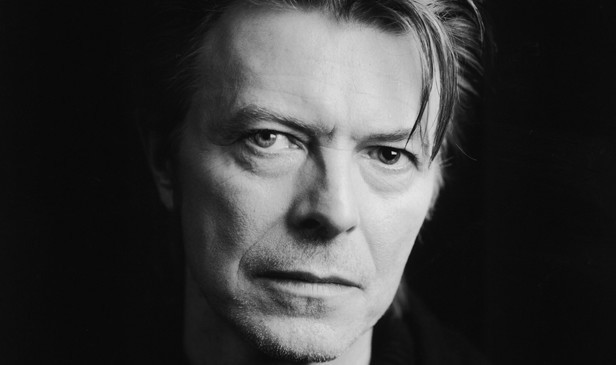
David Bowie was a pop genius who kept getting it right


David Bowie
(1947-2016)
A truly great artist, beautiful melodist, and elegant gentleman.

Like so many of my generation, waking up to the news of David Bowie's death was a shocker. The first words I heard when my clock radio alarm sounded at 6 a.m. on Monday morning, the start of a new work week, came from the voice of Steve Inskeep, host of NPR's Morning Edition, who said matter-of-factly -- and without any hesitation -- "David Bowie is dead."

With these four words, "David Bowie is dead," immediately I sat up in bed, confused, my head spinning. Fight back tears, I began remembering the many faces and sounds of this most innovative, iconic and illustrious artist and musician.

The 69-year-old Bowie's career had staying power -- five decades and 25 albums -- stretched over two centuries. Imagine that. His hits were many. "Fame," "Heroes," "Young Americans," "Changes," "Let's Dance," "Modern Love," "China Girl," immediately come to mind. But there are so many more, too. Bowie excelled at mixing rock, jazz, disco, pop, soul, glam, art rock, hard rock, metal, punk, electronica with ease. He bent genres with his music -- and was gender-bending with his many personas.

David Bowie ~ 30 essential songs:
http://www.rollingstone.com/music/lists/david-bowie-30-essential-songs-20160111

David Bowie / His artistic breakthrough came with
the gender-bending persona Ziggy Stardust.
In remembering Bowie, The Hollywood Reporter wrote: "Bowie's artistic breakthrough came with 1972's The Rise and Fall of Ziggy Stardust and the Spiders From Mars, an album that fostered the notion of rock star as space alien. Fusing British mod with Japanese kabuki styles and rock with theater, Bowie created the flamboyant, androgynous alter ego Ziggy Stardust."

Rolling Stone called the influential Bowie "One of the most original and singular voices in rock & roll for nearly five decades" noting that the British artist and musician "championed mystery, rebellion and curiosity in his music. Ever unpredictable, the mercurial artist and fashion icon wore many guises throughout his life."

A Tuesday Night Memo explores David Bowie's "Where Are We Now?" 
http://tuesdaynightmemo.blogspot.com/2013/01/david-bowie-where-are-we-now.html

Soon, after word of Bowie's passing spread through social media, the tributes and accolades began pouring in, both from musicians and music critics.

"The right words would be written in ink on card, not to be suddenly and brutally, like the news. In acknowledgement, the lights on this particular and peculiar little theatre will be lowered for a while. With deepest gratitude and respectful condolences to the family and friends of a truly great artist, beautiful melodist and elegant gentleman," wrote Elvis Costello on his Facebook page.

Sting on the passing of David Bowie wrote: "Trudie and I were totally captivated by his energetic charm, his extraordinary music, his art and his unique spirit. We will never forget him."

The Rolling Stones issued a statement: "The Rolling Stones are shocked and deeply saddened to hear of the death of our dear friend David Bowie. As well as being a wonderful and kind man, he was an extraordinary artist and a true original." Added Mick Jagger: "David was always an inspiration to me. He was wonderfully shameless in his work. We had so many good times together. He was my friend. I will never forget him."

Peter Ames Carlin, the author of several books, including biographies of Bruce Springsteen and Brian Wilson of the Beach Boys, wrote on his Facebook page: "I am both crushed and awed by David Bowie's death. That he knew he was dying, that that fact informed everything about this epic work of art he unleashed hours before he died. That 'Lazarus,' the song and especially the video, are such beautifully rendered works about his own life and death. He turned death into a creation. It's kind of the ultimate act of artistry, that he could transform the dousing of the lights into such a spectacular life-affirming event."


On the PBS News Hour, Rolling Stone critic Anthony DeCurtis said: "He continually reinvented himself. David Bowie never seemed old." Added British Prime Minister David Cameron: "David Bowie was a genius. For someone my age, he provided a lot of the soundtrack of our lives."

Indeed, Bowie wrote anthems for the alienated, mixing rock music and theatricality throughout his career. Think Major Tom, think Ziggy Stardust, think Thin White Duke. He influenced generations of musicians and fans. I remember the thrill of spinning his early eighties album, Let's Dance, as a college DJ in Saint Paul, Minnesota. It remains my favorite David Bowie album.

On the occasion of his 69th birthday last week, Bowie released a new album called Blackstar, made in collaboration with a quintet of jazz musicians. Said NPR: "Bowie's work often addressed inner truths and existential questions. He was always morphing his sound and his look."

David Bowie / His new album, 'Blackstar' showed him
to be an adventurous artist and musician to the end.
Like so many, immediately after learning the news of Bowie's death, I began exploring his life and career. That afternoon, I purchased Blackstar via iTunes. Not surprisingly, it has been the most downloaded album on iTunes throughout the world this week. That evening as I sat down to dinner, I listened to it in its entirety for the first time after hearing "Lazarus" a few times in recent weeks on the "Morning Becomes Eclectic" show via KCRW.com.

I enjoyed what I heard from start to finish, and like the chameleon Bowie had been his entire career, I'm not surprised he avoided rock & roll. Instead, Bowie surrounded himself with a group of very bright and talented jazz musicians and created a jazz fusion album, a throwback to Miles Davis circa early seventies. It's very listenable and I think longtime Bowie enthusiasts will applaud his sound and direction.

"It could've gone so terribly wrong," wrote NPR music critic Barry Walters in his review of Blackstar. Fortunately, it didn't and Blackstar showed Bowie to be an adventurous artist and musician to the end.

David Bowie / "What I'm most proud of is that I can't help
but notice that I've affected the vocabulary of pop music."
As the subject of countless interviews, Bowie once said: "My entire career, I've only really worked with the same subject matter. The trousers may change, but the actual words and subjects I've always chosen to write with are things to do with isolation, abandonment, fear and anxiety -- all the high points of one's life."

Bowie will be remembered as a musical master of reinvention, a pop genius who kept getting it right.

"What I'm most proud of is that I can't help but notice that I've affected the vocabulary of pop music," he said. "For me, frankly, as an artist, that's the most satisfying thing for the ego."

Video of "Blackstar": Courtesy of YouTube. Photos: Courtesy of Google Images.