Tuesday, September 24, 2019

“The Weight” – 50 years, still transcending time and space


Robbie Robertson / “The Weight”

Growing up as a teen in Ocean Springs, Miss., then continuing through my university days at Macalester College in Saint Paul, Minnesota, The Band always stood out as one of my favorite music groups. Starting with their outstanding live LP Rock of Ages, I started collecting their albums over the years and my appreciation for this Canadian-American roots rock group never wavered. They made critically-acclaimed soulful music enriched by a singular voice that was influenced by country, blues and Americana. Going on a musical journey with The Band also meant hearing gospel and mountain music – even Angelic hymns.

I always appreciated that there was stability – and versatility – in The Band’s lineup, which featured Robbie Robertson on guitar and vocals; Levon Helm on drums, vocals, mandolin and guitar; Rick Danko on bass guitar, vocals and fiddle; Garth Hudson on Lowrey organ and keyboards, accordion and saxophone; and Richard Manuel on piano and keyboards, drums and vocals. Though The Band had three vocalists sharing lead and harmonies, Manuel was seen as their primary vocalist. All but Helm, who was born among the dirt farms in Elaine, Arkansas, hailed from the provinces of Canada. It was during their time spent backing up Bob Dylan when he ditched folk and went electric that The Band gained not only prominence but also their monicker. They were originally formed as The Hawks, a backing band for the rockabilly singer Ronnie Hawkins, joining him one by one between 1958 and 1963.

Although they were always “the band” to the various frontmen and locals in Woodstock, New York, where they moved after touring with Dylan in the U.S. in 1965 and around the world in 1996, Helm once said the name “The Band” worked pretty well when they came into their own. Once they began performing as The Band in 1968, they recorded 10 studio albums and collaborated again with Dylan in 1974 on a live concert album. The original quintet ended their touring career back in 1976 with “The Last Waltz” concert at the Winterland Ballroom in San Francisco, which featured many iconic musical celebrities of that era, including: Dylan, Van Morrison, Eric Clapton, Neil Young, Muddy Waters, Dr. John, the Staples Singers and Joni Mitchell. The performance was filmed by Martin Scorsese and released as a 1978 documentary, The Last Waltz.

Since then, three of the original members of The Band have passed away – Manuel committed suicide in 1986, Danko died of heart failure in 1999 and Helm, who went on to a successful film career with roles in The Coal Miner’s Daughter and The Right Stuff, died of throat cancer at age 71 in 2012. Meanwhile, Robertson, now 76, found success with a solo career and as a Hollywood music producer. He has scored the music for 10 Martin Scorsese films. Hudson, now 82, went on to record a number of solo projects and is still a much in-demand studio musician. Last year, he was named a Member of the Order of Canada.

Although my music tastes have expanded over the years since my days as college radio disc jockey at Macalester’s WMCN-FM, I have maintained a fondness for The Band’s musical template of Americana, roots rock and country rock, which along with The Byrds and The Flying Burrito Brothers, helped pave the wave for the popularity of The Eagles.

The Band’s first album, Music From Big Pink, which was released in 1968, included three songs penned by Dylan: “This Wheel’s On Fire,” “Tears of Rage,” and “I Shall Be Released.” It also included “The Weight,” which was featured in the seminal counterculture film Easy Rider, making it one of the group’s most memorable and best-known songs. According to The Wall Street Journal, the songs on Music From Big Pink combined “vivid imagery with a touch of Impressionism; they sound both utterly original and like folk songs that have been passed down for generations.”

While it’s been a while since I listened to Music From Big Pink, lo and behold, a week ago I came across an interesting Rolling Stone article about Robbie Robertson playing “The Weight” with Ringo Starr and musicians across five continents, captured in an epic “Playing For Change” video, that was the result of two years of work spread across 10 countries. I was intrigued by the possibilities and gave the video a good watch and listen.

“The Weight,” written by Robertson and sung by Helm, has been described as “a masterpiece of Biblical allusions, enigmatic lines and iconic characters,” and its enduring popularity makes it an essential part of not only the American songbook but it’s also one of the great songs that shaped rock and roll, too.

“What key is it in, Robbie?” Starr, sitting behind his drum kit, asks Robertson, who’s in Los Angeles, during a telephone conversation at the beginning of the video. The former mop-top Beatles drummer nods. “F-demented!” What follows is a delightful and heartfelt cover of “The Weight,” beginning with Robertson’s soulful guitar lick that brings back memories of the original introduction. From there, the song takes off verse by verse as a series of all-star musicians spanning the globe – Lukas Nelson (son of Willie), Marcus King, Congolese soul singer Mermens Mosengo, Japanese guitar virtuoso Char, among many – add their own distinctive influence to enhance the palate of the song, each from different locations around the world.

According to Rolling Stone, the project for “The Weight” came from Playing For Change, a group that is dedicated to “breaking down the boundaries and overcome distances between people.” It includes 15 music schools across 11 countries, documentaries and viral videos bringing artists from different cultures together. Co-founder Mark Johnson, a Grammy Award-winning producer-engineer who has worked with Paul Simon among many, told Rolling Stone that it took a year and a half of production over five continents. “We made it brick by brick, starting with Robbie. That’s what makes this special. We could never have assembled this group in the studio. You need to go there, and then when you go there, you’re where they feel comfortable. You hear that in the music.”

After watching and listening to this version of “The Weight,” I’m gobsmacked. After 50 years, thanks to time and space, this enduring classic has only gotten better. Levon Helm would be proud.


Credits: Video courtesy of YouTube.com. Screenshot photo of Robbie Robertson courtesy of Playing For Change.

Sunday, September 15, 2019

Storytelling: Figuring out adulthood in “The Female Gaze”


“The Female Gaze,” a web series created by Shefali Vasudevan, is a twist on the classic romantic comedy genre that has always favored a man’s point of view. Produced and written by Vasudevan, an Emerson College graduate, “The Female Gaze” is directed by women and features a female-majority cast. It is her hope and wish that this series resonates with young women who are trying to figure out adulthood. 


Shefali Vasudevan
During a recent interview with Vasudevan and series co-star Camra Godwin, I was interested to learn about what inspired the creation of “The Female Gaze” and how it grew into a web series. The first season, which aired earlier this year via YouTube in seven weekly installments, is available for streaming. A successful Indiegogo campaign recently wrapped up to help provide backing for a second season that’s already in the works.

“A lot of the film and television I saw growing up was very male-centric,” says Vasudevan. “When I went to film school and realized how heavily male the industry was, I knew I really wanted to create something of my own to combat it. 

“The term ‘The Female Gaze’ is a twist on the term ‘Male Gaze,’ where everything in art, entertainment and news has been told strictly from the male perspective up until recent years. We wanted to flip that and make the narrative about women and how they view the world.”


Vasudevan approached Godwin, her Emerson classmate with whom she shared an improv class, with her idea of telling their stories in a unique way and she was instantly on board. “I had worked with Shefali before, and have always respected and trusted her vision,” says Godwin. “I was also excited about being involved with a web series that honestly portrayed a variety of stories about men and women that I could relate to.”


Camra Godwin 
Asked if it’s easy to relate to the situations her character, Jen, has found herself in, Godwin said that while her character “is not directly based on myself, she is in a lot of situations that I’ve also found myself in.

“For example, figuring out where she stands in a relationship versus being single and navigating jobs. I feel like I’ve been able to relate to every part of Jen, even if I haven’t been in her exact scenario. I still feel the same emotions and make the same discoveries that she does.

“For me, it was pretty easy to get inside Jen’s head, as a lot of what she experiences is similar to what I’ve gone through as I navigate my 20s. It’s a release for me to be able to bring my current awareness from personal situations and go back into that situation as Jen who’s experiencing it for the first time.


“Shefali has a really great honest writing style, but she also loves when actors make the role their own. During the rehearsals she encouraged us to improvise, which we sometimes added lines from, and tweak the dialogue to sound a little more like how our character would say it. It’s such a great experience to work with Shefali, because she puts so much into her work and then opens it up for collaboration to make the best product possible. That’s the ultimate dream!”

When Vasudevan started creating “The Female Gaze,” she was writing from her own perspective and personal experiences as a 24-year-old (she just turned 25 this month) and with an 18-to-30-year-old audience in mind. She said, “I think a lot of the themes are universal. 


“The characters deal with love and find themselves, and I don’t think anyone ever stops learning about themselves!”

Godwin, 25, agrees, saying “I think a lot of people 18-30 would relate directly to what each character is going through, but the emotions that our characters feel transcend age groups.

“Everyone has an idea of what heartbreak, excitement, love and confusion (to name a few) feels like!”

In developing “The Female Gaze,” Vasudevan, who earned a BFA in Film Production from Emerson College in Boston, originally hoped to learn more about filmmaking. She also became a central character in her own web series. The first series run of seven episodes included titles such as “First Time,” “F**kboy,” “Damsel,” and “Best Friends.”

In the fourth episode, “Damsel,” Vasudevan’s character, Priya, shares an intimate on-the-mouth kiss with her friend, Silvia (played by Avery Richardson). When asked if there was any sense of awkwardness, or if it was about Priya’s empowerment, acting upon her desires – perhaps figuring out her sexuality – she expressed, “I was writing this scene based on the experience of some of my friends and myself. What a lot of people today don’t really understand is that sexuality can be a little more complicated to navigate and not all black and white. It can also be something that is repressed in a lot of us because for so long in our lives we were told we had to think a certain way. Older generations tend to think that you can only like men or you can only like women. But I think for some people the attraction is based on person to person and relationship to relationship.”


Vasudevan suggested that Priya’s character “has entertained the thought of being with a girl, but until this moment in her life she has never met a girl in real life that she was attracted to. So, in the previous episode, she was with a man she felt attracted to,” but then “she feels so strongly toward Silvia that she has to act on it! I think by the end of the series, Priya realizes she has to explore this about herself before she can be in an open and honest relationship with either a man or a woman.”

While the final product of each six-to-seven minute episode comes off as a very smooth viewing experience, there’s plenty that goes into the creation and production. “We shot everything episode to episode,” said Vasudevan. The music heard in each episode comes from a variety of Emerson alumni (GUPPY, Pool Boys, Love Under the Sun) and Vasudevan said each were kind and gracious about contributing their music to the series.

“Learning how to self-produce my own work outside of college was difficult,” Vasudevan admits, “but I started to form a community and creat a good work flow this project.”

Road trippin’ with “The Female Gaze.” 
Within this community, which includes some of her former Emerson classmates and other Emerson alumnae residing in the Los Angeles area, Vasudevan decided to use an all female production crew for “The Female Gaze.” She said that most of the crews she’s work with have been majority male. “I would hear from the crew members things like, ‘Oh well, no women came out for the job,’ or ‘We’ve worked with this guy forever so we trust him.’ I thought this was insane because I know so many female crew members in different departments (such as lighting, camera team, production design) who are constantly not getting work. So, I wanted this set to be an opportunity for some of these female crew members.”

Indeed, Vasudevan changed the dynamic, and in doing so, she confesses that having a majority female crew also brings a different energy to the set. “There is a lot less ego involved – and a lot of creativity,” she said. “I have been on some really great male-run sets, but in general, on female-run sets everyone is just there to work and do a good job.”

When she was asked if there have been an production obstacles, Vasudevan said, “PLENTY! But I love it. My background from school is directing and writing, but more recently I decided to learn more about producing and acting.

“Producing has been such a fun way to use my problem solving skills. For the cafe episode (shot in a Le Pain Quotidien in Studio City), I actually talked to a few different cafes and Le Pain Quotidien was just the most responsive, affordable and flexible to work with! Lunch was also included in our space rental fee, which was incredible. I’m still dreaming about their chocolate hazelnut spread.


“The biggest obstacle was definitely the final episode of the first season and coordinating everyone on that set. I had a lot of help from my good friend and co-director on that episode, Caroline Ullman. The main issues came with coordinating actors and making sure we got through all of the scenes we needed to film in such a short amount of time. But the team of filmmakers we worked with were so incredible and patient with us! We ended up eating everything we needed and then some.”

Asked what the reaction from friends and family has been, Vasudevan said her family has been extremely supportive of the entire process. “I told my mom about what the story was going to be about a long time ago,” she recalled, “and when I started making the project I felt so insecure about it.

“There was one day when I was on the phone with her talking about how nervous I was, and she told me, ‘This is so incredible what you’re doing. You’re creating a body of work for yourself, of what you’re like right now, of what your friends are like, of what you’re experiencing, and you’re always going to remember it because you have this series.’ And that made me really happy and more confident about the project because yeah, maybe not a lot of people will see it, but it is such a truly vulnerable expression of my life right now and I’m excited to have that.” 

Godwin added, “When we first put it out, there’s always a sense of anxiousness because you want people to be able to connect with it like you did, and all that anxiousness has melted away for me now!”

With “The Female Gaze,” Vasudevan is emphasizing storytelling from a woman’s perspective. “I want people to see that women are messy and complicated and annoying and beautiful and weird, and that’s okay!

“I also hope that the stories resonate with people. Getting responses from people telling me that they related to the characters was incredible and more than what I thought I would get out of this experience initially.”


Find “The Female Gaze” on social media:
On Facebook @ https://www.facebook.com/thefemalegazeseries/
On Twitter @TFGSeries
On Instagram @thefemalegazeseries

Credits: “The Female Gaze” videos, courtesy of YouTube. Individual photos of Shefali Vasudevan and Camra Godwin by Lauren Cabanas. Cover photo and Road Trip episode photos by Zachary Shea Mills. Behind the Scenes of the final episode “This Is Not A Party” photo by Ariel Skovera.

Tuesday, August 20, 2019

Remembering the eloquence of Jack Whitaker

Jack Whitaker / 1924-2019

I spent some quiet time Monday morning reflecting upon the life of legendary sports broadcaster Jack Whitaker, known for his eloquent commentaries, who passed away Sunday at age 95. What a wonderful life Whitaker lived crafting broadcast essays about sports, inspired by writers he admired like Alastair Cooke and Heywood Hale Broun. You have to be of a certain age to remember these masters of the writing craft – and I am of that certain age.
Born and raised in Philadelphia, where he got his broadcasting start after graduating from St. Joseph’s College, Whitaker was a decorated veteran of World War II, fighting in the Normandy Campaign and was wounded by an artillery strike. He went on to a career as a sportscaster with both CBS and ABC.
Whitaker was regarded as “The Talking Head” of sports – long before David Byrne ran with the moniker and named his American rock band The Talking Heads. He broadcast football, golf and horse racing, among many sports. “I know that I’m regarded as The Talking Head,” he once told Sports Illustrated during a 1977 interview. “I’d like to be exactly that and say something that people will remember or get excited about. I’d like to bring sports into the thinking process.”

Jack Whitaker
On the eve of the Kentucky Derby horse race one year, Whitaker waxed poetically about the mood and feeling of one of America’s most iconic sporting events: “America never looks better than on a spring afternoon at the horse farms around Lexington.
“The bluegrass fields and limestone-permeated water has given strength to 81 Derby winners. Just up the road is Churchill Downs in the city of Louisville. In Louisville, America thrives. It was here that Americans discovered how to blend golden corn, barley, malt and rye into bourbon whiskey. It was here that baseball’s National League was founded and where they still make the famous Louisville sluggers. And it was in Louisville that the Kentucky Derby thrived and grew into something beyond a horse race.”


In perusing Whitaker’s obituary in Monday’s print edition of The New York Times, I learned that he “reserved his greatest passion for golf,“ and loved to weave historical imagery into his accounts. 
For instance, in commenting about the British Open at Troon, Scotland, for ABC’s World News Tonight in 1982, he spoke: 
“Through all the years, the British Open has changed very little. The biggest addition has been the tented city, looking like Henry V’s camp at the Battle of Agincourt. Here you can buy among other things lawn mowers, cashmere sweaters and Champagne, which is replacing tea as Britain’s national beverage. But basically the British Open is the same as it was in 1860 when they first played it down the road at Prestwick. Playing in the British Open is like reading American history at Independence Hall or studying opera at La Scala. It’s golf at its most simple, its most pure, its most magnificent.“
Rest in peace, Jack Whitaker. You shared a marvelous passion for sports with us for many years. I’ll remember what you said once about the sport of golf that you loved so much: “Golf accommodates itself anywhere. It travels better than Beaujolais. Golf is the most moveable feast of all.”

Thursday, August 8, 2019

What makes a good city great?


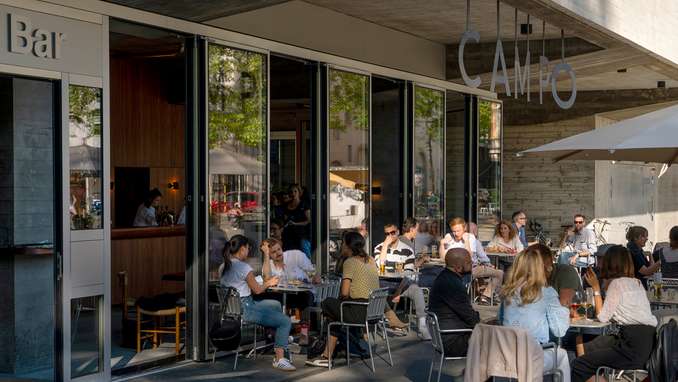
Dining out in Zürich

No matter where in the world, our cities are designed for living, working, cultural entertainment and late nights. Some times, they are even designed for fresh starts.

While some cities have it figured out, some don’t. From transportation and green spaces to retail possibilities and residential settlements, what makes a good city a great place to live?

Every summer, Monocle, the London-based global magazine that’s always been a must-read for me for its coverage of international affairs, business, culture and design, presents a special quality of life rankings with a top of the world list of the 25 best global cities. Most years, the list is heavy in cities located in Europe and the Asia Pacific. Not surprisingly, North American cities – especially in the United States – rank low or out of the running. (This year is no different as the only city to rank in the Top 25 was Vancouver, B.C., Canada.)

As the magazine suggests, “places grow and change and so do our ideas of how we want our cities to be.”

In his editor’s letter in the July/August issue, Monocle’s editor-in-chief Tyler Brûlé wrote: “When we look at a city we’re constantly asking if the infrastructure is in place to allow residents and visitors to be as productive as possible while also having a pleasant experience navigating the place.”

While I’ve written about Monocle’s Quality of Life rankings before, it’s always an interesting subject to study and dissect. In looking over this year’s list of the Top 25 cities in the world, it makes me pine for world travel.

Here’s Monocle’s Top 25 places in the world to live:

1. Zürich
2. Tokyo
3. Munich
4. Copenhagen
5. Vienna
6. Helsinki
7. Hamburg
8. Madrid
9. Berlin
10. Lisbon
11. Melbourne
12. Stockholm
13. Sydney
14. Amsterdam
15. Vancouver
16. Hong Kong
17. Kyoto
18. Barcelona
19. Paris
20. Düsseldorf
21. Auckland 
22. Fukuoka
23. Brisbane
24. Oslo
25. Singapore

In describing Zurich, the magazine writes: “Zürich is a city that gives you the feeling that all is right with the world. It starts at the airport, where you’ll encounter few queues at customs and a punctual train that delivers you from arrivals to the city Centre in minutes. You’ll step out onto nearly swept streets lined with well-appointed shops – and in the distance catch a glimpse of the snow-capped Alps beyond the turquoise blue of Lake Zürich. 

In commenting about this year’s No. 1 city, Zürich, Brûlé wrote, “Zurich has become something of a global master at making travel a joy. Add global connectivity to the mix via its airport and railway stations, high-quality housing and an ever-improving restaurant-and-retail scene and you'll know why we often refer to it as Berlin for people over 40 (or who know better.).

“While Zürich still has many areas that could be improved (more-daring architecture, more relaxed retail trading hours, more mature trees planted by developers and more incentives to make balconies greener) it’s got most things right. And it’s for this reason that it’s vaulted a few positions this year to take the top spot – yet again. Indeed, this is the second time that Zürich has clinched the highest position on the winners’ podium.”

Photos: Courtesy of Monocle.com.

Tuesday, July 23, 2019

Freshly brewed: Comedians in Cars Getting Coffee

Eddie Murphy and Jerry Seinfeld share a good laugh
in a 2004 Porsche Carrera GT

Freshly brewed episodes of Comedians in Cars Getting Coffee, comedian Jerry Seinfeld’s talk show that combines good laughs, great coffee and colorful vintage cars into a series of quirky but likable “caffeine-fueled adventures” with the sharpest minds in comedy, rolled out last week on Netflix.

The latest batch of 12 episodes of  Comedians ... features 11 comedians, 11 different cars, endless pots of coffee – especially prominently-featured Lavaazza Italian espresso – and lots of laughs. Among the featured guests this season are: Ricky Gervais (in back-to-back episodes), Eddie Murphy, Seth Rogen, Matthew Broderick, SNL’s Melissa Villaseñor and Martin Short. As for the cars, let’s see, they include: a 2004 Porsche Carrera GT, a 1976 Dodge Monaco, a 1969 Maserati Mistral and a 2018 Lamborghini Huracán Performante.

Each episode is touching in its own way, and thanks to Seinfeld – still curious at age 65 – the art of conversation remains alive and well. Seinfeld is one of the best when it comes to the art of observational humor, whether talking about personal relationships or the nuances of uncomfortable social obligations. It’s what we loved about the New York native in Seinfeld, which spanned 180 episodes over nine seasons from 1989-98 on NBC. The series remains a fixture in reruns across the country.

Now, having successfully transitioned from broadcast TV to an internet series, Seinfeld has taken an offbeat approach that shows another side of the comedy world. It’s something the comedian feels talk shows and interviews can’t or don’t let you see. The web-based comedy series he created, directs and stars in debuted in 2012 and is shot using DSLR and interior-mounted Go-Pro cameras.

“It’s a show about trust,” said former Daily Show host Jon Stewart.


Nominated for an Emmy Award for Outstanding Informational Series or Special, in Comedians ... Seinfeld connects with those whom he admires the most and the show shines in its ability to go inside the minds of some of the word’s funniest people. A who’s who of contemporary A-list comedians, including Chris Rock, Sarah Silverman and Amy Schumer as well as iconic ones Mel Brooks, Carl Reiner, Don Rickles and Jerry Lewis, have been coffee companions of Seinfeld’s. So have present and past late night TV hosts Trevor Noah, Stephen Colbert, Jimmy Fallon, David Letterman and Jay Leno. Seinfeld co-stars Julia Louis-Dreyfus, Jason Alexander and Michael Richards have also made appearances.

Each 12-to-20-minute episode of Comedians ... follows a premise of Seinfeld introducing a vintage car such as a 1983 Mercedes Benz station wagon or a 1991 Nissan Figaro, then picking up his guest comedian in that vintage car, driving around and sharing conversation, and, finally, stopping for coffee and more conversation. Seinfeld films most episodes in New York and Los Angeles, but has also ventured to New Jersey and Massassuchetts – even Portland, Ore.

In this season’s episode with Broderick, for instance, the two drive around the actor’s childhood Manhattan neighborhood, reminisce about their mutual love for Mel Brooks and share laughs about Brook’s original film version of The Producers. (Broderick co-starred as Leo Bloom in the Broadway musical adaptation as well as a 2005 remake of the film.) They also live out a baseball fantasy of being New York Mets ball players at Citi Field. The camera captures them walking into the clubhouse to don their Mets jerseys, then follows them out on the diamond hitting and fielding. Finally, we see the two sitting in box seats eating hot dogs while discussing Broderick’s 1986 film Ferris Bueller’s Day Off, which prominently includes the central character driving around Chicago in a sporty fire engine-red Ferrari and spending an afternoon in the bleacher seats at Chicago’s Wrigley Field cheering for the Cubs.

Meanwhile, when Seinfeld meets up with Short in L.A., not only do we get to re-live some of the best of Jiminy Glick, Short’s fictional Comedy Central talk show host character, but the former SNL and SCTV star also shares how appearing in a Canadian production of Godspell helped launch his comedy career and those of Gilda Radner, Eugene Levy and Paul Shaffer.

Whether meaningful or meandering, silly or deep, the unscripted conversations between Seinfeld and his Comedians in Cars Getting Coffee companions are hardly a show about nothing.

Cover photo: Courtesy of Comedians in Cars Getting Coffee website. Video: Courtesy of YouTube.

Tuesday, July 16, 2019

On Wimbledon: Gentlemen’s final was like none before it


Throughout the gentlemen’s singles final at the Wimbledon Championships Sunday, the margins were so small, the tension and excitement of a five-hour classic so great. It didn’t matter who won or lost. Novak Djokovic and Roger Federer entertained the world their excellence, in which the winner saved two match points and the outcome was decided in a first-of-its-kind tiebreaker.

The No. 1 seed Djokovic, 32, captured his fifth Wimbledon crown and his 16th Grand Slam title overall, outlasting the 37-year-old Federer 7-6 (5), 1-6, 7-6 (4), 4-6, 13-12 (3). The fifth set, alone, which was decided by a 12-games-all seven-point tie break, lasted two hours.

For much of the match, it was Federer who seemed to be the better player on Centre Court. But in the end, although he was on top of most of the statistical categories – which one Twitter pundit likened to winning the policy debates and popular vote in a U.S. presidential election, but ultimately losing to the Electoral College count – statistics didn’t count for a thing.

The latest Djokovic-Federer clash had something for everyone. It was tense, it was brilliant, it was bold, it was baffling, it had star power. It had royalty, movie stars, dot.com titans and Hall of Famers watching from the Royal Box. At times, Federer’s wife, Mirka, could be seen – picked up by the BBC cameras – with her head buried in her hands, too nervous and unable to look up at the action down on the court. Other times, Djokovic’s mother, Dijana, was shown clutching a religious pendant with both hands, perhaps, seeking divine intervention. Interspersed, there was plenty of superior, high-quality play displayed by both superstars. Each took time looking for weaknesses in each other’s game. There was much creative shotmaking throughout by both Federer and Djokovic to appreciate. Long, back-and-forth rallies were plentiful and not uncommon.

At times, both played like they were the best player in the world. Djokovic is the current No. 1 and Federer is a longtime former No. 1, who is currently ranked third. In losing, Federer came close to winning. In the fifth set, he had two championship points on his racquet, serving for the match at 8-7, 40-15, and was unable to convert either of them into his ninth Wimbledon singles championship, which would have tied him with Hall of Famer Martina Navratilova. He won 36 games during the match to 32 for Djokovic. He hit 94 winners compared to 54 for Djokovic. He hit more aces, 25-10, converted seven of 13 break point chances and, more often than not, controlled many of the points until he didn’t.


When he was asked during his post-match interview session what went wrong at the critical point of the championship match, Federer said simply, “One shot I guess. Don’t know which one to pick. Your choice.”

However, in the tightest moments of the match – the three tie-break deciders that came in the first, third and fifth sets – Djokovic reigned supreme. He proved more mentally fit and physically tougher. Meanwhile, Federer made some questionable decisions in each of the tie breaks, and each time, they came back to haunt him.

“I thought most of the match I was on the back foot,” Djokovic said during his news conference about beating Federer for the third time in a Wimbledon final. “I was defending. He was dictating the play. I just tried to fight and find a way when it mattered the most, which is what happened.”

In the end, on Djokovic’s championship point, Federer shanked a return high into the air – and it cost him dearly. The native of Belgrade, Serbia won the match and his fifth Wimbledon crown, not because he was necessarily the best player on Centre Court Sunday. Instead, Djokovic played the best when he needed to the most.

Roger Federer / Post-match news conference
Reflecting on what might have been, Federer said, “I just feel like it’s such an incredible opportunity missed, I can’t believe it.”

Federer was asked how his latest Grand Slam setback at Wimbledon compared to his epic 2008 loss to Rafael Nadal. “This one is more straightforward maybe in some ways because we didn’t have the rain delays, we didn’t have the night coming in and all that stuff,” he recalled. “But sure, epic ending, so close, so many moments. I mean, sure there’s similarities. But you’ve got to go dig, see what they are. I’m the loser both times, so that’s the only similarity I see.”

And what did Djokovic think of winning his 16th career major after being on the brink of defeat? “It was kind of a flashback,” he said, remembering that he saved two match points against Federer in the semifinals at the U.S. Open in both 2010 and 2011. “But look, in those kind of moments, I just try to never lose self-belief, just stay calm, just focus on trying to get the ball back, return, which wasn’t serving me very well today.”

Djokovic called his latest classic encounter with Federer, which was his fifth straight win over the Swiss star and fifth straight in Grand Slam play, “the most mentally demanding match” of his career. While he said that his nearly-six hour 2012 Australian Open final against Nadal was “the most physically demanding match” he’s ever played, against Federer Sunday, “mentally this was a different level because of everything.

“You need to be constantly playing well throughout five hours if you want to win a match like this. I guess there is an endurance part. But I think there is always this self-belief. You have to keep reminding yourself that you’re there for a reason and that you are better than the other guy.”

Photos: Courtesy of Wimbledon.com. Video: Courtesy of Wimbledon Twitter.

Tuesday, June 18, 2019

Thoughts on TV: ‘Chef’ has been turned into a TV show


Looking for something fun and enjoyable to watch on TV one recent evening, my wife and I came upon The Chef Show, which reunites multi-talented producer/actor/director Jon Favreau with Los Angeles chef Roy Choi. It’s the latest foodie offering from Netflix, which in recent months has very nicely taken over food TV with Chef’s Table, which explores the discipline and culinary talent of world-renowned chefs such as Mashama Bailey and Dario Cecchini; Salt, Fat, Acid, Heat, based upon Samin Nosrat’s book of the same name in which she travels the world to explore how these principles fuel good food; David Chang’s Ugly Delicious, in which the James Beard Award-winning chef uses food to break down cultural barriers; and the Great British Baking Show.

The Chef Show is all about bonding over the joy of cooking – in a kitchen – with friends. Each episode takes place around a place to eat or cook without being like a travelogue. Favreau described it for Grub Street as a “dinner party in the back of the house” kind of atmosphere. The series took its name from the 2014 film, Chef, which starred Favreau as Carl Casper, a chef who opens a Cuban food truck with his son in Miami. Choi, of Kogi Korean BBQ food truck fame, was the film’s food consultant and created all of the dishes that were featured – including the deliciously mouth-watering Cubano and grilled cheese sandwiches.


After watching the first three episodes of The Chef Show – there are eight in all and it’s quite easy to binge watch – it becomes evident from the beginning that Favreau and Choi have developed a deep and wonderful rapport in the kitchen – built upon mutual respect for one another – and they share a similar taste in food. Each episode always welcomes banter between hosts – taking with each other without looking directly at the camera – and celebrity guests such as actress Gwyneth Paltrow, Avengers actor Tom Holland and Sin City director Robert Rodriguez.

What viewers get to enjoy in this documentary-style series is the showcasing of Choi’s technique and enthusiasm for the craft of cooking and Favreau’s interest in absorbing this knowledge and wisdom while keeping things light and funny. Choi is the master chef and Favreau is both his student and best buddy.

One of the funniest bits that delivers a big laugh – and, thankfully, it didn’t wind up on the cutting-room floor – shows Favreau attempting to make New Orleans-style beignets made famous at Cafe Du Monde. After making the dough by just adding water, then cutting it into individual squares, deep frying them, and showering them with powdered sugar, Choi bites into one of them. He throws the rest into the garbage. Favreau deadpans, “It’s not quite like there.” Looking for the right response, Choi pauses for a moment, then with a serious look on his face that turns into a big grin, he looks at Favreau and says, “I can tell they were a year old.” Both burst out laughing. Choi adds: “I didn’t want to say it on camera, but f••k it, this whole thing isn’t about lying.”


In a recent story about The Chef Show, Eater’s Greg Morabito wrote: “This new series allows the chef to showcase his obsession with technique and enthusiasm for the craft of cooking in ways that we’ve never seen on TV before. In every kitchen sequence, he drops culinary knowledge like an older brother handing you a mixtape of his favorite jams. Favreau, meanwhile, manages to keep the spirit light, even as he tackles new culinary challenges at the encouragement of his friend. Part of the fun is watching (Favreau) gradually increase his skill level and build more confidence in the kitchen.”

As Favreau told Grubstreet.com in a recent interview, “I’ve watched all these episodes a dozen times in the process of making and defining the show. Every little thing, a lot of care went into it. The animation, the way we talk, there’s recipes in it, the way the food is filmed. It’s just incredibly personal and something we both like a lot. It’s just really nice to share.

“It’s like you cooked a meal you want to eat, and now you’ve invited people. It’s mind-boggling to me that there’ll be someone sitting on the opposite end of the world watching the most personal, specific story. I’m really interested to see who connects to it because if they do, there’s nothing else like it that they’ll find about people in L.A. cooking and talking about Korean food. It’s such a specific thing about what Roy and I geek out about.

“Hopefully, there’s some humanity and personalness. And then people who like to cook and want to just go and show people who cook for real, and not try to present it any other way. And what it’s like to be there by the side of someone who is really great at what they do and learning from them. I wanted to show what that was like.”

Adds Choi: “It’s really honest and tender. It’s really funny, too.”

Indeed, it’s funny – an absolute delight.

Note: The Chef Show (eight episodes) debuted via Netflix on June 7.

Tuesday, June 11, 2019

From tennis prodigy to cricket and back again, Ashleigh Barty is now a Grand Slam champion


Ashleigh Barty went from being a tennis prodigy who briefly traded her racquet for a cricket bat to becoming a skilled tennis professional with a solid all-court game. Only 23 years-old, the native of Ipswich, Queensland, is now the queen of the red clay and the pride of Australia.

On Saturday, the affable and talented Barty triumphed over Marketa Vondrousova, 19, from the Czech Republic, 6-1, 6-3, to win her first Grand Slam title at the French Open while playing in her first Grand Slam final. She became the first Australian woman to win the French Open since Margaret Court in 1973.

“For the last fortnight, the stars have aligned for me. I have been able to play really good tennis when I’ve needed it,” said the No. 8 seed Barty during her post-match press conference.

“This is just incredible. I never dreamt that I’d be sitting here with this trophy here at the French Open. I mean, obviously, we have dreams and goals as children, but this is incredible.

“I just kept saying to myself, I may never get this opportunity ever again, so try and grab it with both hands.”

At just 5-feet-5-inches (1.66 m), Barty possesses an abundance of natural skills, lower body strength and tremendous hand-eye coordination. Her overall game is technically sound – and she trusts it. With Barty, her game includes a dynamic kick serve, plenty of topspin forehands, lots of slice, and for an element of surprise, a few timely and well-placed drop shots.

“It’s been a natural progression of becoming stronger, not growing any taller, but getting stronger and being able to trust myself and hit my spots on my serve,” explained Barty.

“My serve is a massive part of my game, and I try and think my way around the court. I know where opponents like to return, and if they shift their position, where they return. And I try and expose those spots as best that I can.”


Ashleigh Barty reacts to winning
her first Grand Slam title.
Throughout the Paris fortnight, it became apparent how Barty developed her talent into a game that’s full of artistry as well as movement and power.

Against the left-handed Vondrousova, whom she had already beaten twice, the beguiling Barty took control of the match early by winning points with her forehand, using her sliced backhand to force her opponent into committing errors (22 unforced errors), and hitting winners (27). Her adroit volley skills enabled her to win 15 of 20 points at the net. It seemed the was little Barty could do wrong.

“I felt like for me it was the perfect tennis match, considering the situation, the conditions. It was amazing,” said Barty.

It’s a testament to what Barty’s done in just three years after taking a gap year to step away from the sport after she struggled with the expectations she had set after being a tennis prodigy and winning the Wimbledon junior girls’ title at age 15. She was ranked in the WTA Top 50 in doubles when she left the sport.

“For me, I needed time to step away, to live a normal life, because this tennis life certainly isn’t normal. I think I needed time to grow as a person, to mature,” recalled Barty.

So, Barty took up professional cricket in Australia in 2015. Then, after missing the “one-on-one battle, the ebbs and flows, the emotions you get from winning and losing matches,” she came back to tennis.

“You can only get them when you are playing and when you put yourself out on the line and you become vulnerable and try and do things that no one thinks of,” said Barty.

“I think it was just a natural progression for me coming back to tennis. Certainly, it’s alway been a big part of my life. Tennis will always be a big part of my life.”

Starting from the bottom, ranked 623rd, she had to qualify just to get into main draws. Now, with her first Grand Slam title secured, she is now ranked No. 2 in the world, behind No. 1 Naomi Osaka. This year, she’s won tournaments on both a hard court (Miami) and clay (Roland Garros), and compiled a 33-6 win-loss record in all competitions (27-5 in WTA tour events).

“It’s about creating your own path, creating your own journey, and embracing it,” expressed Barty. “There’s no formula how to, you know, become a professional tennis player. It’s your own, it’s unique, your own journey, your own path, your own experiences.

“I think the best thing to do is learn from your mistakes, learn from every single experience that you have, whether it’s good or bad. That’s the only way to go about it, only way to grow as a person and as a player.”

Ashleigh Barty shares a hug with
Marketa Vondrousova after their French Open final.
Throughout Australia and the rest of the tennis world, fellow pros offered hardy congratulations via social media for the engaging Barty soon after she won her first Grand Slam championship. She heard from Hall of Fame great Evonne Goolagong Cawley, one of her idols, who like her is an indigenous Australian and won Roland Garros in 1971. Barty was touched when she lifted the Coupe Suzanne Lenglen and saw Cawley’s name inscribed on the trophy.

“What a wonderful result for Australia and how exciting that another Aboriginal has won at the French. I’m almost scared to say it but it’s now 48 years ago since I won my first Slam there too,” Cawley expressed via Tennis Australia.

“Tennis Australia and all lovers of tennis here and around the world will be delighted by the natural skills and flair Ash possesses.”

In sharing her personal narrative during her post-match press conference, Barty admitted that there’s no way she would have won the French Open title if she hadn’t taken a sabbatical from tennis. Now that she’s back, she credits her team – coach Craig Tyzzer and mentor and performance coach Ben Crowe – for helping her thrive.

“I’m not the only person out there. I have an extraordinary group of people around me,” said Barty. “I love working with them every single day. “They’re with me at the hardest times of my life, and there with me in some of the most amazing times. I think, for us, it’s a celebration of the journey we have been on for the last three years.”

Cover photo: courtesy of rolandgarros.com. Screenshot photos: courtesy of NBC Sports images.
An original version of this story appeared in Tennis TourTalk (www.Tennis-TourTalk.com).


Tuesday, May 21, 2019

Trinity Church: Responding to a big city’s changing needs

Trinity Church /
New York City
One of the great joys during my recent visit to New York City was the opportunity to worship at historic Trinity Church, located near the Financial District, where Broadway intersects Wall Street.

Trinity Church was founded in 1697 as the first Anglican, or Church of England, parish in the colony of New York. Imagine, at the time, the entire city of New York lay south of the church – south of Wall Street!

The first church building opened on its current site in 1698.

Back during the Revolutionary War years of 1775 to 1783, Trinity parish soon expanded. It included two “chapels-of-ease”: St. Paul’s and St. George’s, which allowed it to serve a growing Anglican congregation. However, during this period, the Great Fire of 1776 destroyed the first Trinity Church building. St. Paul’s Chapel was used for worship until the second church building was built and opened in 1790.

I learned how among our country’s founding fathers – and mothers – that George Washington, our first President of the United States, worshipped in Trinity parish during the time when New York City was our nation’s capital (before it moved to Philadelphia and, subsequently, to Washington, D.C.). The first Justice of the Supreme Court, John Jay, was also a Trinity parish member as were the first Secretary of the Treasury, Alexander Hamilton, and his wife, Eliza Schuyler Hamilton, who was a philanthropist and orphanage co-founder. Both Alexander Hamilton and Eliza Schuyler Hamilton are buried in the churchyard at Trinity Church.

Alexander Hamilton and his wife,
Eliza Schuyler Hamilton, are buried
in the Trinity Church churchyard.

When structural damage to the second Trinity Church, caused by a heavy snowfall in 1838, occurred, the architect Richard Upjohn was hired to design a new church building, which still stands today. The third – and current – Trinity Church was consecrated in 1846.

By the late 19th century, thanks to immigration and industrialization, which transformed New York City, Trinity Church saw an expansion of its ministries. It began to operate a mission house, a day school, a night school, an industrial school, a cooking school and a ladies’ employment society. It also added worship services catering to business people.

As New York City continued to grow and expand to the north, Trinity parish included 11 chapels located in neighborhoods around the city, including the Church of the Intercession, located on 155th Street, and St Cornelius on Governors Island.

Inside Chapel of All Saints /
Trinity Church
As the 20th century arrived, the Chapel of All Saints was added to Trinity Church in 1913. It was designed by architect Thomas Nash in a fourteenth century English Gothic style. I learned that Nash used the buttresses of Trinity Church as “the piers” for the south side of the chapel. Eight representative saints from church history support the chapel ceiling: St. Peter and St. Paul, St. Ignacio’s and St. Clement, St. Augustine and St. Athanasius, and St. Patrick and St. Aidan.

During the 20th century, Trinity Church continued its mission of responding to the city’s changing needs. It began offering music ministries that were innovative, it supported homeless services, and it went about building a diverse congregation that was color blind. Most chapels became independent parishes by the 1970s.

Which brings us to Trinity Church today in the 21st century. As Trinity Church undergoes a two-year renovation, it continues a tradition of supporting its neighborhood through its work on social justice initiatives, conducting workshops and offering daily worship services. It remains a growing and vibrant Episcopal community that “seeks to serve and heal the world by building neighborhoods that live Gospel truths, generations of faithful leaders, and sustainable communities.”

With daily and Sunday morning worship at Chapel of All Saints as well as daily and Sunday worship services at St. Paul’s Chapel (on Broadway at Fulton Street), both offer sanctuaries of quiet and churchyards full of historic memorials and monuments.

Photos: Trinity Church exterior, courtesy of church website. Alexander Hamilton tombstone and Chapel of All Saints interior, by Michael Dickens © 2019.

Tuesday, May 7, 2019

Bill James: Baseball is universe you can figure out


Since 1977, Bill James has written more than two dozen books devoted to baseball history and statistics. During that time, he’s worn many influential hats in and around the National Pastime as a baseball writer, historian and statistician. In 2006, Time named him to the Time 100 as one of the most influential people in the world. Currently, James is a senior advisor on Baseball Operations for the Boston Red Sox.

James coined the term sabermetrics in homage to the Society for American Baseball Research (SABR), in which one scientifically analyzes and studies baseball – think of Moneyball  by Michael Lewis – often through the use of statistical data that goes beyond mere home runs, runs batted in and batting averages in an attempt to determine why teams win and lose.

On Saturday, James visited the Library of Congress in Washington, D.C., where he spoke on a variety of subjects in conversation with D. Bruce Brown, president of the Baltimore Babe Ruth Chapter of the Society of American Baseball Research.

Why do you like baseball?
“You can trace it and study it unlike much of the rest of the world.”

Is research ruining the romance of baseball?
“We can get so wrapped up in what we do that it drives people away, dying the game. It’s a legitimate concern.”

What is the future of baseball?
“It’s old and has the ability to adapt. What I see as the next thing to save the game is – and I don’t know how or where it will happen – but it has to go broader. You can change everything (about the game) and it’s still baseball.”

How does your affiliation with the Red Sox change your outlook on the other 29 teams?
“I may have at times spoken disrespectfully of teams, but I would never write a book telling secrets. You have to have respect for secrets.”

Who was your favorite team growing up?
“I grew up a Kansas City A’s fan and became a Royals fan. (James was born in Holton, Kan.) I’m more of a Red Sox fan (now) than I was ever a Royals fan. It was difficult rooting for a team owned by Charlie Finley.”

What have you changed your mind about in 40 years?
“I used to think if you had a player who played second and shortstop, you made him a shortstop because he was more valuable. Maximize team value.”

James was asked to name his All-Time team:
C – Yogi Berra
1B – Lou Gehrig
2B – Joe Morgan/Eddie Collins
3B – Mike Schmidt
SS – Cal Ripken
OF – Babe Ruth, Willie Mays, Ted Williams
P –  Lefty Grove/Roger Clemens

A few closing thoughts ...

“Younger people now have a better command of the game than before.”

“Are you trying to win or entertain the fans? Many teams now put (those principles) on equal footing.”

Photo: By Michael Dickens