Tuesday, June 14, 2022

Stephen Curry and Roger Federer: Sharing a zest for life and just joy for the process


While observing Stephen Curry throughout the NBA Finals, it’s easy to see and admire how the Golden State Warriors superstar guard values and loves his routine of beautiful basketball. However, as easy as it may seem to us on the surface, the 34-year-old Curry, who is in his 13th season in the NBA, has put in a lot of time and energy – hard work – to become the player he is.
In Game 4 Friday in Boston, Curry’s 43-point performance showed why he’s one of the best to ever play the sport. While the Warriors prepared for Game 5 of the NBA Finals series against the Boston Celtics in San Francisco Monday night – a game which Golden State won 104-94 to take a 3-2 series lead – it was interesting to learn from their head coach, Steve Kerr, that Curry and the Warriors once drew inspiration from a meeting the team had with tennis great Roger Federer five years ago in Shanghai, China. 

Kerr told reporters that Curry was greatly inspired by how the 20-time Grand Slam champion Federer comported himself. What he learned from the Swiss icon centered around how the love of his routine helped to keep him motivated and to keep playing tennis.

As Kerr described the meeting, Federer was asked by one of the Warriors, Draymond Green, just how he managed to keep doing this for 20 years?

“And his answer was just simple, yet profound,” Kerr explained. “He said, ‘I love my daily ritual.’ He said, ‘I get up, make my kids breakfast, drop them off at school, go train and I’ve figured out the right training methods to keep me in the best position at my age. I love competing.’ He said, ‘But every single day, I put my head on the pillow at the end of the day and think, Man, what a great day.’

“So, I think of Steph a lot when I think of that story from Roger Federer. Very, very similar just sort of zest for life and just joy for the process.”

Like Federer, there’s a lot of work routine for Curry that includes time devoted to the training room, the weight room and, finally, the basketball court, where he practices taking shots from a variety of locations. If it seems like there’s a sense of clockwork, you’re right.

Kerr went on to describe in detail that for Curry, there’s a “sense of joy and energy within that work. 

“He enjoys it so much. He loves the process. I that’s one of the things that ties all great athletes together, like talking about the superstar athletes, the Roger Federers of the world, the Steph Currys of the world. There’s a routine that not only is super-disciplined but it’s really enjoyed each day.

“There’s a passion that comes with it, and that’s what sustains it over time. When you love something like those guys do, you work at it, you get better and you just keep going.”

It should come as no surprise, then, that over the weekend Federer, 40, shared his goals for the remainder of the 2022 season. He’s been idle since last year’s Wimbledon and has undergone two surgeries on his right knee. Federer plans to resurface in September at the Laver Cup in London, then finish out the season at in October the Swiss Indoors in Basel. Beyond that, who knows? 

“After Basel, the season is over anyway,” Federer told Swiss tennis journalist Simon Graf on Saturday. “It’s important for me to get fit again so that I can train fully. Once I’ve done that, I can choose how many tournaments I play and where. The Laver Cup is a good start, I don’t have to play five matches in six days.

“I will have to be able to do that in Basel. That’s why I have to prepare for it in practice. I’m curious myself what’s still to come. But I’m hopeful, I’ve come a long way. I’m not far away. The next three or four months will be extremely important.”

Asked by Graf if he wishes to return to the ATP Tour in 2023 at age 41, if his knee cooperates, Federer replied affirmatively. “Yes, definitely. How and where, I don’t know yet. But that would be the idea. Definitely.”

In the meantime, like Curry, Federer will continue sharing a zest for life and just joy for the process of routine.

Photos: Stephen Curry, courtesy of Golden State Warriors Twitter; Roger Federer, courtesy of Instagram.

Tuesday, June 7, 2022

Rafael Nadal: The King of Clay Will Always Have Paris


“Victory belongs to the most tenacious,” are words inscribed in both English and French and appear on the upper-deck facing on either side of Court Philippe-Chatrier. They are very visible to players and fans alike. These words are attributed to French aviation and World War I hero Roland Garros, whose name is synonymous with the French Open. They serve as a reminder to those who play on the famed terre battue at Stade Roland Garros in Paris, the City of Lights.

On Sunday afternoon, Rafael Nadal, looking and playing unbeatable, won his 14th French Open title. He extended his remarkable men’s record of 22 major singles titles with 6-3, 6-3, 6-0 victory over Casper Ruud, 10 years his junior. Nadal won the last 11 games of the two hour, 18-minute title match before a sellout crowd of 15,000. 

At the end of the day, the King of Clay reigned, again, 17 years to the day he hoisted his first Coupe de Mousquetaires trophy as a long-haired, 19-year-old teenager in toreador pants, after defeating Mariano Puerta. His latest triumph was filled with emotion and it was important to him, too.

Nadal was asked by NBC’s Maria Taylor during a post-trophy ceremony interview to describe what it felt like to hold the trophy this time. He replied: “It’s amazing, much more emotional than the first time. It’s completely unexpected for me to be where I am at this age, at this stage of my career. It means everything.

“I have been going through tough times the last couple of months. To have this trophy with me here is something unbelievable.”

Like the previous 13 times, the French Open served as Nadal’s wake-up call to the rest of the tennis world. Through the latest Parisian fortnight, Nadal became the third man in the Open Era to beat four Top-10 opponents in a single major. Three days after he celebrated his 36th birthday, Nadal became the oldest man to win Roland Garros, surpassing another Spaniard, Andrés Gimeno, who set the record at age 34 half a century ago.

Nadal extended his perfect record to 14-0 in Roland Garros finals, and also extended his record of most career major titles to 22, which now puts him two ahead of his closest rivals, Novak Djokovic, whom he beat in the quarterfinals, and Roger Federer, who is still recovering from knee surgery. Nadal solidified his place in the tennis Hall of Fame and his records will certainly be unbeatable for the foreseeable future, if at all.

During the trophy ceremony that followed Nadal’s latest French triumph, he expressed his appreciation and also thanked his legions of faithful fans, many whom were holding up banners and waving Spanish flags throughout the stadium.

“I for sure never believed I would be here at 36 being competitive again, playing in the most important court of my career one more time in the final,” Nadal said. “It means a lot to me, means everything. It just means a lot of energy to try to keep going.”

Indeed, Nadal kept going and his latest French Open title was an historic run for him and for tennis. He began with a trio of straight-set wins over Jordan Thompson of Australia, wild card Corentin Moutet of France, and No. 26 seed Botic van de Zandschulp of the Netherlands. 

Then, Nadal came from behind to beat No. 9 seed Felix Auger-Aliassime of Canada in five sets, and followed it with a four-hour-plus, four-set victory over the World No. 1 and top seed Djokovic in the 59th renewal of their storied rivalry. On Friday, his semifinal against No. 3 seed Alexander Zverev was cut short when the German severely rolled his ankle and suffered ligament damage to his right foot that forced him to retire in the second set. Finally, the Spaniard mastered No. 8 seed Ruud, who was making his first Grand Slam final appearance. He won the last 11 games in a row and surrendered just eight total points to Ruud in the final set.

From first ball to last ball, Nadal showed great control and tolerated frustration. By the end, he showed how special a man he is. It’s not often that you get to perform in front of tennis royalty – among those who attended the final were Billie Jean King, Stan Smith, Stefan Edberg and Gustavo Kuerten – and monarchs, too. King Felipe VI of Spain and the the crown prince of Norway had front-row seats for Nadal’s coronation. 

The 23-year-old Ruud, who made history by being the first male player from Norway to appear in a major final, has been a student at Nadal’s tennis academy in Mallorca, Spain, and Nadal has nurtured him. Ruud said in press after his semifinal victory over No. 20 seed Marin Cilic on Friday that Nadal was his childhood idol. He could even recite whom the champion beat in each of his 13 previous French Open title matches. Imagine Ruud’s surprise that the first time he would meet Nadal would be in a major final, the title match of the French Open.


Looking back on the experience, Ruud can be forgiven for struggling at times and not playing his best in the final. It’s not a surprise that trying to beat Nadal can turn dreams into nightmares. However, by the end of the match, all was good between the two competitors – both were cheerful and smiling – and Nadal had plenty of kind things to say about Ruud during the trophy ceremony after Ruud was highly complementary of Nadal.

“The most important thing is to congratulate Rafa,” Ruud said after receiving his runner-up trophy. “It is your 14th time here and 22nd [title] at Grand Slams. We all know what a champion you are and today I got to feel how it is to play against you in the final and it is not easy. I am not the first victim; I know there have been many before.

“To you Rafa, your team, your family. You have taken me into your academy with open arms. So, thank you a lot. You are a true inspiration to me and everyone who follows tennis around the world. We all hope you will continue for some more time.”

Soon, when it was Nadal’s turn to give his valedictory speech, he said: “I don’t know what can happen in the future but I’m going to keep fighting to try to keep going.” The applause that followed was deafening but sincere. Plenty of cheers of “Rafa! Rafa! Rafa!” were audible throughout Court Philippe-Chatrier. 

After, when Nadal addressed the media in his final Roland Garros news conference, he said that for him, having the Coupe de Mousquetaires next to him, again, meant everything.

“It has been an emotional victory, without a doubt,” he said. “Unexpected in some ways. I am very happy. It has been a great two weeks. I played from the beginning, improving every day. Finishing by playing a good final. I am super happy and can’t thank everybody enough for the support since the first day that I arrived here. It is very emotional.”

Additionally, Nadal said that it was not his intention to continue to play in tournaments with pain-killing injections that numbed his chronically-injured left foot, like he did in Paris to combat his condition known as Müller-Weiss syndrome. 

“Everybody knows how much this tournament means to me,” Nadal expressed. “That was the only way to give myself a chance here, no? So, I did it. And I can’t be happier and I can’t thank enough my doctor for all the things he did during all my tennis career, helping me in every tough moment. But it’s obvious that I can’t keep competing with the foot asleep.”

Nadal ruled out taking further painkilling injections in order to play Wimbledon, which begins June 27. Instead, he will seek an alternate means to be able to play pain free. For now, Nadal declined to rule out playing Wimbledon. He still has the desire to compete, to fight. It’s in his DNA.

“It’s not about being the best [in] history. It’s not about the records,” Nadal stressed. “It’s about what I do. I like to play tennis. And I like the competition. As I said a couple of times in the past, and is not a thing that I repeat, is not the thing that I don’t feel for me, we achieved our dreams. Me, Roger, Novak, we achieved things that probably we never expected.

“For me, what drives me to keep going is not about the competition to try to be the best or win more Grand Slams than the others. What drives me to keep going is the passion for the game, live moments that stay inside me forever, and play in front of the best crowds in the world and the best stadiums.”

For now, we can appreciate the remarkable and incredible 2022 season Nadal has enjoyed thus far – a 30-3 win-loss record and four ATP Tour titles won – and hope there are more historic days ahead. After all, there were fewer finer hours than Sunday in Paris, a place that has always been unique for Nadal. This time, he ended his latest title victory by solidly hitting his 37th winner of the match, a beautiful down-the-line backhand that landed in the sunshine end of the court. It lifted Nadal’s all-time mark at Roland Garros to an astonishing 112-3. The outcome allowed him, once again, to wear his emotions on his sleeve for all of the world to bear witness. 

Indeed, the King of Clay will always have Paris.

An alternate version of this first appeared in Tennis-TourTalk.com.

Photos: Courtesy Roland-Garros video, Roland-Garros Twitter.


Tuesday, February 8, 2022

A Winter Olympics Glimpse Into Greatness


Over two weeks and three weekends, the Beijing Winter Olympics will fill our hearts and television screens with plenty of excitement. For my household, much of it will take place on the Olympic figure skating ice.

Mixing colorful costumes and loud music with a mixture of elegance and athleticism, there’s bound to be plenty of thrills along with a few spills and disappointments, but enough flash and panache to make it all seem worthwhile. 

Thanks to the 13-hour time difference between Beijing and the U.S. east coast, we’ve tuned in to watch figure skating following our nightly dinner – during prime time – and the just-completed team competition kept us up past our bedtime the past few nights. Sometimes, we watched on our living room TV and other times on my iPhone while laying in bed. Learning about the human side of many of the Olympic figure skaters who are competing as well as gaining an appreciation for what drives them to excel on ice has been fascinating. 

Sunday night (Monday morning in Beijing), during the final day of the team skating event, we had the pleasure of watching 15-year-old Russian phenom Kamila Valieva become the first woman to land a quadruple jump in Olympics competition. She landed a quadruple Salchow as her opening element during her free skate program performed to Ravel’s “Bolero.” 

While making history, the Moscow resident Valieva helped lead the Russian Olympic Committee team to a gold medal in the team competition by finishing first in both the short program and the free skate.


“I believe that I am coping with this pressure,” Valieva said afterward. “And sometimes it even pushes me forward. It helps me.”


The images of the five-foot-three-inch Valieva lifting her arms above her head as she spun, accented by her blurred red gloves, seemed effortless. Yet, it’s obvious she’s put a lot of time and dedication into perfecting each element – each quadruple jump – of her routine. To her credit, Valieva proved human – and not just a jumping machine – after she fell to the ice when she attempted her third and final quadruple jump. She shook off the mistake, put it behind her, and continued her program. Her score was more than 30 points higher than second-place finisher Kaori Sakamoto of Japan. 

It’s nice to learn from newspaper reports that Valieva sometimes giggles during her interviews with Olympic media. The other day, she entered the media area following her short program clutching a stuffed animal. Remember, she’s just 15. However, it’s been her dream to be an Olympic champion since she was about three years-old. 

After practicing gymnastics, figure skating and ballet as a child, Valieva liked figure skating the best. She once said that “gliding on the ice and the speed are awesome.”

With Valieva’s goal of becoming an Olympic figure skating champion coming into the spotlight, no doubt she will draw plenty of attention next week when the women’s individual competition takes place. It won’t surprise me if Valieva wins the gold medal and stands on the top step of the medal podium at Capital Indoor Stadium. Winning gold seems to be a Russian tradition among women’s figure skaters – and to her credit, Valieva exudes a winning combo of brains and brawn.

In her own words: “I believe that my next dream will come true, too.”

Screenshot photo courtesy of NBC Olympics video.

To watch highlights of Valieva’s team competition performance: https://youtu.be/hda3vvmqQHQ


Tuesday, February 1, 2022

A Champion’s Heart Guides Rafael Nadal to His Most Important Victory


Early Monday morning, Rafael Nadal scored the most important comeback victory of his storied career when he won the 2022 Australian Open men’s singles title on Rod Laver Arena in Melbourne. It happened before a partisan crowd that cheered madly for his every winner hit through the duration of his five-hour and 24-minute title match against Daniil Medvedev, which Nadal won 2-6, 6-7 (5), 6-4, 6-4, 7-5.

When it was finally over, Nadal didn’t know whether to laugh or cry, so he did a little of both.

For Nadal, 35, a man on a mission during the Australian fortnight, he became the first to secure a men’s record 21st major singles title, breaking the tie he shared with his biggest rivals, Roger Federer, and Novak Djokovic, who are now tied for second with 20. While Federer remained home in Switzerland rehabbing from knee surgery, Djokovic was sent home by the country’s immigration minister, who declared the unvaccinated Serbian to be a threat to public health and order. 

A day after Ashleigh Barty won the women’s singles title and became the first homegrown player to win an Australian Open singles title in 44 years, Nadal showed the Melbourne fans and a worldwide television audience who tuned in at all hours around the globe why he’s the fiercest competitor in the sport of tennis.

Against Medvedev, who denied Djokovic of a calendar-year Grand Slam by winning the US Open in straight sets last September, Nadal produced some of his best tennis – especially after spotting the 25-year-old Russian a two-sets-to-love advantage while committing some very un-Nadal-like unforced errors. 

By the time that Nadal garnered victory at 1:12 a.m, which made him the sport’s most decorated Grand Slam men’s singles champion, the match had gone through a variety of momentum swings and there were plenty of memorable rallies – some as long as 40 shots – and dazzling winners hit by both competitors that will be remembered for a long time. The two worthy finalists, Nadal and Medvedev, played a total of 371 points, with the Russian winning 189 and Nadal 182.


“I was repeating to myself during the whole match that I lost a lot of times here having chances,” Nadal recalled during his post-match press conference, which took place in the wee hours of Monday morning as it neared 3 a.m. After his 2009 Australian Open title victory over Federer, which lasted five sets and took four hours and 23 minutes to complete, there were a series of four straight difficult losses in Melbourne finals before Nadal ended the skid against Medvedev. “Sometimes I was a little bit unlucky. I just wanted to keep believing until the end, no? I just wanted to give myself a chance.”

After securing championship point, Nadal stood motionless for a moment – captured perfectly by the TV cameras – and beamed a big smile while soaking in the plaudits of the fans who stood and cheered for him. Judging from the expression on his face, there was a mixture of laugher and tears of joy permeating Nadal. After all, Nadal hadn’t experienced the feeling of winning a major since capturing the 2020 French Open.

After Nadal shook hands with Medvedev, he returned to the center of the court and, as is his custom after winning an important match, punched the air, flexed his arms and pumped his fists toward the heavens. It was as if to signify that all was well and Nadal’s mission was successfully completed. In addition to winning his 21st major title, he also became just the fourth man in the Open Era to capture every major twice.

“This has been one of the most emotional nights of my tennis career,” Nadal said during the trophy ceremony, in which he lifted the Norman Brookes Challenger Cup for the second time in his storied career. Considering all the adversity the Spaniard had been through in recent months in being sidelined with a chronic foot injury that wasn’t always responding to therapy, then contracting Covid-19 after returning home from a December exhibition Abu Dhabi, it prompted him to say later on during his post-match press conference: “If we put everything together, the scenario, the momentum, what it means, yeah, without a doubt probably have been the biggest come back of my tennis career.”


The Spaniard told the crowd: “One month and a half [ago], I would say that maybe there is a chance that this was going to be my last Australian Open, but now I have plenty of energy to keep going. I really can’t explain the feelings that I have right now, but I am going to keep trying my best to keep coming next year.”

Nadal admitted how taxing it had been stringing together seven straight wins over the past two weeks at Melbourne Park, which included a five-set quarterfinal victory against Canada’s Denis Shapovalov last Tuesday. Yet, after breaking the all-time record for Grand Slam men’s singles titles and becoming the third-oldest Australian Open men’s winner, Nadal seemed energized – even blessed – by his success.

“I was not ready physically for these kinds of battles, honestly,” Nadal said. “I am super, super tired in all ways. I even can’t celebrate. But it was the day to give everything, no? I enjoyed it. I enjoyed the fight. I enjoyed the emotions. At the end to have this trophy with me means everything.”

A version of this blog first appeared in Tennis-TourTalk.com.

Photo: Courtesy of Tennis Australia.


Saturday, December 25, 2021

Christmas: A Day of Joy in Another Season of Covid-19


Christmas 2021 is upon us. Once again, I would like to share a Christmas Day poem, this one by James Langston Hughes.

SHEPHERD’S SONG AT CHRISTMAS

By James Langston Hughes (1901-1967)

Look there at the star!

I, among the least, 

Will arise and take

A journey to the East.

But what shall I bring 

As a present for the King?

What shall I bring to the Manger?

I will bring a song,

A song that I will sing,

In the Manger. 

Watch out for my flocks,

Do not let them stray.

I am going on a journey

Far, far away. 

But what shall I bring

As a present for the Child?

What shall I bring to the Manger?

I will bring a lamb,

Gentle, meek, and mild, 

A lamb for the Child

In the Manger.

I’m just a shepherd boy,

Very poor I am –

But I know there is

A King in Bethlehem.

What shall I bring

As a present just for Him?

What shall I bring to the Manger?

I will bring my heart 

And give my heart to Him.

I will bring my heart

To the Manger.

Amen.

Wishing kind thoughts for a Merry Christmas. Although we are of many faiths, it is important that our common humanity allows us to share a season of peace and goodwill. 

May each of you stay healthy in the days, weeks and months ahead.

Tuesday, October 12, 2021

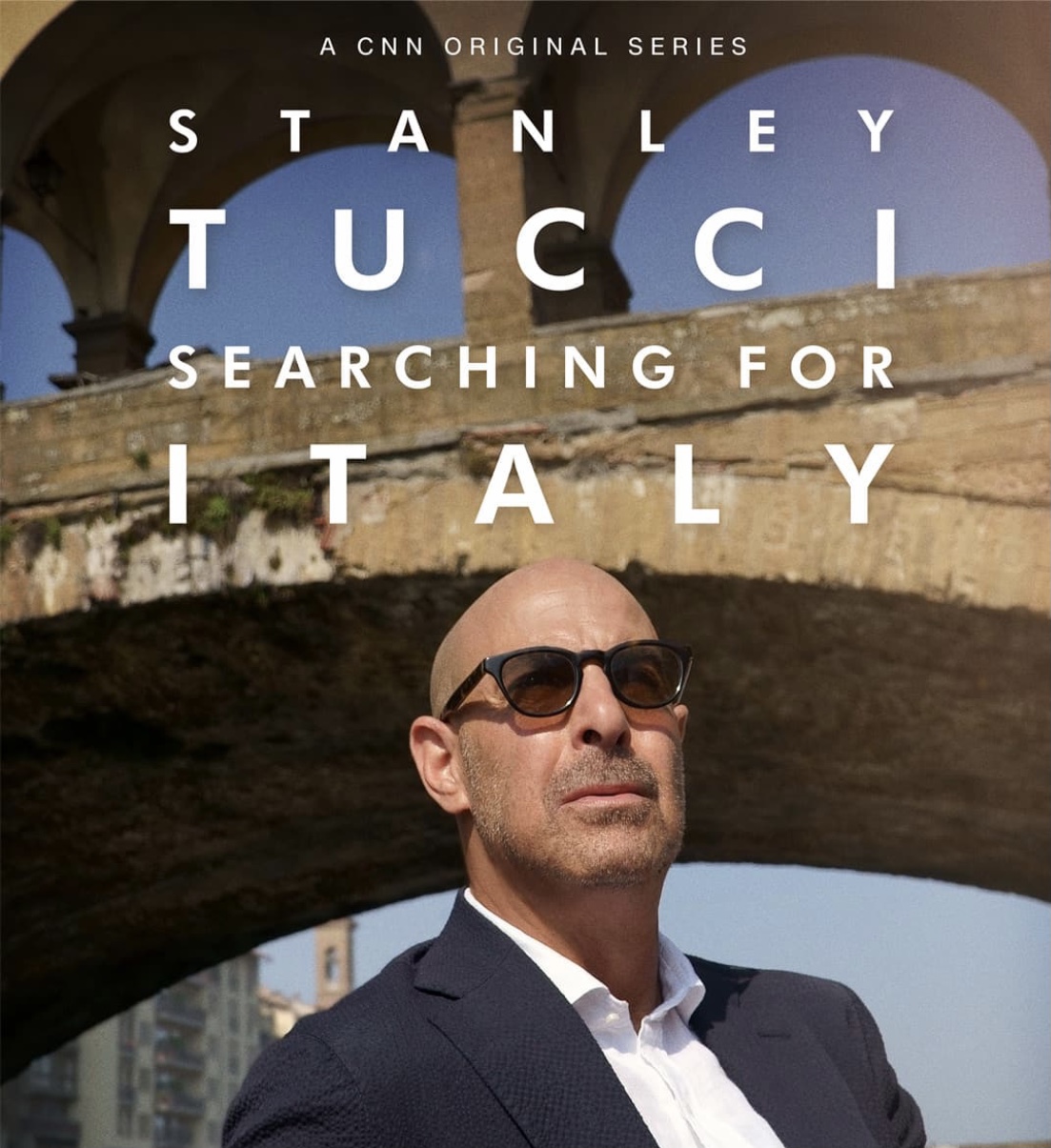
Stanley Tucci: Searching For Italy

I’ll admit I’m a little bit late to discovering Stanley Tucci: Searching For Italy, a six-part CNN Original Series focusing on travel and food, which had its premiere last February. Recently, it’s come to HBO Max and I immediately got hooked.

Stanley Tucci: Searching For Italy follows the Academy Award-nominated actor, who travels around Italy to explore the regional culture, cuisine and history of this boot-shaped southern European country with its lengthy Mediterranean Sea coastline that has left its powerful mark on Western culture and food. The series received two Primetime Emmy Award nominations, including one for Outstanding Hosted Nonfiction Series, and has been renewed for a second season.

In the first season, filmed both in 2019 and during the Covid-19 pandemic that hit Italy in 2020, Tucci explores Naples and the Amalfi Coast, Rome, Bologna, Milan, Tuscany, and Sicily. Each has a particular theme and all of them are well-written and produced as well as nicely paced. Tucci is stylish and entertaining, both as a storyteller and as a conversationalist – and we learn he’s quite comfortable performing in the kitchen, too. His parents are both of Italian descent, and had roots in Calabria. He spent part of his youth living in Florence, so it’s not surprising that the episode about Tuscany feels like a big family homecoming.


After watching all six episodes of Stanley Tucci: Searching For Italy over the past week, it’s easy to make comparisons to Anthony Bourdain’s Parts Unknown, which set the standard for fusing food and travel. However, as Tucci admitted in an interview with The Hollywood Reporter, “The show that we are doing is distinctly different than his: I am not nearly as adventurous as Tony was, not nearly. Or as brave. But what he did is open the doors to all of us who were interested in food, and travel, to explore in our own ways. … He was an extraordinary writer, a nice person, and a great explorer of the human condition through food.”

While not all of the culinary discoveries Tucci introduces us to are new – and many of them come back to traditional Italian cuisine that focuses on pasta and cheese – the way in which he presents them, filled with his warmth and charisma lighting up the screen, makes this series an enjoyable experience. In Naples, it’s the search for the freshest mozzarella and the best San Marzano tomatoes. In Bologna, in the Emilia-Romagna region of the country, it’s about exploring prosciutto de Parma. In Rome, it’s all about enjoying the creamy carbonara. In Sicily, it’s learning about the hospitality.

Each episode is peppered with equal parts cuisine and culture and how Italy’s colorful history ties them all together – and it’s all captured in living color. It’s what I found very charming and entertaining. Of course, what’s not to love about Italian cuisine as well as hearing the Italian language spoken so eloquently and passionately?

Stanley Tucci: Searching For Italy is a smart and endearing series that is revealing about the universal human condition – and how good food and conversation can unite us – and it made me yearn for more after watching each of the six episodes with great interest. May it whet your appetite, too.

Photos: Stanley Tucci: Searching For Italy CNN and HBO Max websites.


Tuesday, October 5, 2021

In America: Remember

Last Saturday on the National Mall in Washington, D.C., between 15th and 17th Streets NW, I witnessed a sea of white flags representing the largest participatory art project in a quarter of a century.

In America: Remember, artist Suzanne Brennan Firstenberg makes tangible the human toll that COVID-19 has taken on our country. The billboard off to one corner has a stark figure posted on it: 700,327. It represents the number of persons in the U.S. who have died of COVID-19. There’s a planted white flag for each of them. 

As I walked around the massive installation located near the Washington Monument – a memorial garden if you will – that went up on September 17 and concluded on Sunday,  I couldn’t help but notice many of them had personalized printed messages. Each represented a real person who died from COVID-19. It’s a reminder of the human cost of this still-ongoing pandemic – all the while as the death toll increases daily and as thousands of Americans continue to refuse to get the free and safe vaccination that could prevent them from becoming part of the death toll – from becoming a statistic.

In my research for writing this post, I learned that it took 150 landscapers three days to install America: Remember, which began with 670,032 flags and represented the largest public participatory art installation on the National Mall since the NAMES Project AIDS Memorial Quilt was shown there in full in 1996.

The white flags are spaced 10 inches apart and spread over 20 acres of grass in 60-foot grids. There are nearly four miles of grassy paths to walk along. 

As someone wrote about the installation: “It helps make tangible the sheer scale of loss that is otherwise unfathomable.”

On Saturday, I saw many people walking quietly about the installation, some taking photographs, a few stopping to read some of the many messages. While there were benches to sit and reflect on throughout, I noticed that a few chose to sit on the ground, perhaps to better connect with a lost friend or family member. 

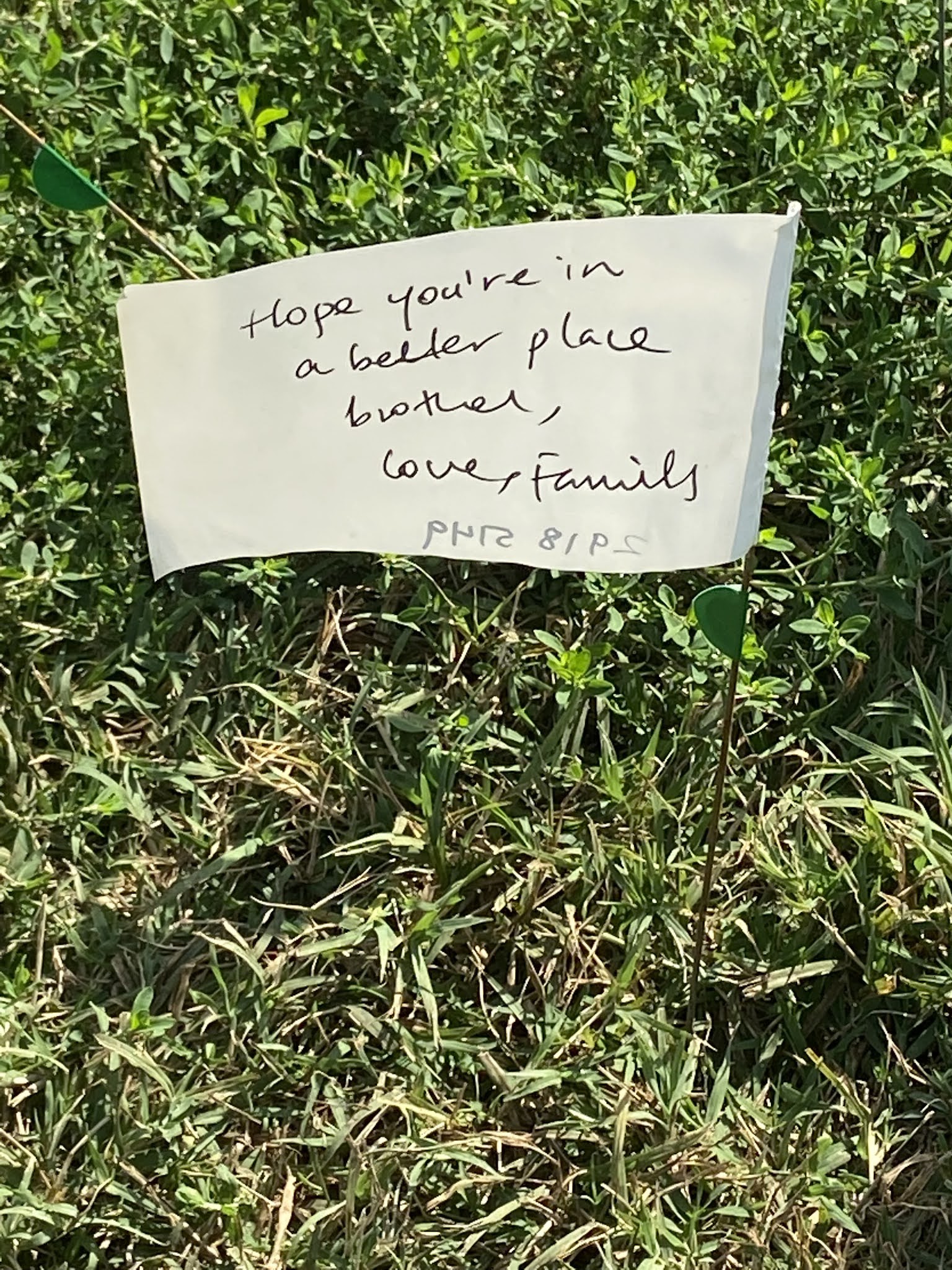
One of the messages I happened upon summed things simply: 

“Hope you’re in a better place brother. Love, Family”

In an interview for artnet.com, Firstenberg, 62, a social practice artist from Washington, D.C., explained what drove her to create In America: Remember.

“The National Mall is the greatest stage, and to have the opportunity to call attention to such a tragedy was something I felt I had to do. Words aren’t working any longer,” she said. 

“Words are falling on unlistening ears. It really is incumbent on visual artists to help translate and reflect back to society what is happening in the hope that things will improve, because art can effect positive change.”


Note: Because many across the country will be unable to visit this exhibition in person, the artist teamed with Esri, Inc. to present In America: Remember in the digital sphere concurrently at InAmericaFlags.org. At this website, people across the country will be able to view flags and join in honoring loved ones lost to COVID-19.

Photos: Michael Dickens © 2021.


Tuesday, September 28, 2021

Behind the writing of Christopher Clarey’s ‘The Master: The Long Run and Beautiful Game of Roger Federer’


The Master: The Long Run and Beautiful Game of Roger Federer is the story of Roger Federer’s life and the longevity of his brilliant career, told on both an intimate and grand scale by New York Times tennis correspondent extraordinaire Christopher Clarey – and it’s done in a way that no one else could possible tell it.

The process of writing the book ‘The Master’ that Clarey undertook is not unlike his job of being tennis correspondent for the New York Times. After all, Clarey leveraged his 30 years of covering global sports for the New York Times and International Herald Tribune, where he was chief sports correspondent and a longtime columnist. Clarey, who covered his first Grand Slam tournament in 1990 at Wimbledon, is one of the world’s leading authorities on tennis – an award-winning journalist who isn’t afraid to communicate honestly and critically. He’s traveled in and reported from more than 70 countries and six continents.

Clarey has covered Roger Federer since the beginning of his pro days, and witnessed the Swiss superstar’s first Grand Slam main draw match – on Court Suzanne-Lenglen at the French Open in 1999 – long before he became a tennis icon.

Throughout the book’s 421 pages (published last month in the U.S., Canada, the United Kingdom and the Netherlands by Twelve/Hachette Book Group, and subsequently elsewhere in the weeks following), Clarey follows Federer’s long, rich and rewarding career across the globe, from South Africa and South America to the Middle East and in Federer’s native Switzerland. He’s witnessed all of Federer’s 20 major titles at all four Grand Slam venues and been there for his biggest victories and most crushing defeats.

“I have followed Federer on six continents; interviewed him more than twenty times over twenty years for the New York Times and the International Herald Tribune. Our meetings have taken place everywhere from a private plane to a backcourt at Wimbledon to Times Square to Alpine restaurants in Switzerland to a suite at the Hôtel de Crillon in Paris with a ridiculously good view of the Place de la Concorde while his future wife, Mirka Vavrinec, tried on designer clothes.

“One habit that separates Federer from most other elite athletes I have encountered is that he will ask you first and not in a perfunctory manner: inquiring about your own journey to this particular place, your own perceptions of the tournament, the country, the people,” Clarey writes in ‘The Master.’

“‘The reason Roger is so interesting is because he’s so interested,’ Paul Annacone, his former coach, once told me.”

Clarey relied upon more than 20 exclusive interviews he’s enjoyed with the former World No. 1 Federer over the years to tell the story of one of the greatest tennis players and defining athletes of our time with keen insights from many who are closest to him. In ‘The Master,’Clarey conducted interviews specifically for the book with the like of Federer’s support team: his wife, Mirka; his childhood coach, the late Peter Carter; and his longtime fitness trainer and confidant Pierre Paganini, all who have been fundamental to Federer’s success.

Federer: From temperamental teen to elegant shot maker

We see and learn how Federer has changed over the years – from a temperamental teenager with the bleach-blond ponytailed hair who had difficulty losing to being put on a lofty pedestal thanks to his self-posted manner, elegant shotmaking and competitive instincts.

Over the decades, Federer has shared his gift of polished athleticism and made it look easy – gliding about Wimbledon’s Centre Court like a dapper and handsome Fred Astaire on a dance floor – even when it always wasn’t. After Federer learned to manage his temper and expectations – and became a Zen master on the tennis court – he became composed and took his game to a totally different level. His career took off and he began to win major titles. Now, there’s always the friendly smile and gentle demeanor that transcends Federer’s ability to easily communicate with fans and media in multiple languages of English, Swiss-German and French. After all, as Federer told Clarey, “I consider myself really like a regular guy with a fascinating life as a tennis player.”

Clarey writes of Federer: “‘We are sort of returning guests at most of the cities and tournaments, and we’ve also created a lot of friends around the world,’ he said. ‘It’s that home-away-from-home feeling. I’m able to reproduce that quite easily now, especially now with the kids. I want to keep reproducing that for them so they always feel comfortable everywhere we go.’”

The author continues: “Federer’s curiosity – be it polite or from the heart – sets the tone for a conversation rather than a strutted interview. It is disarming, although that does not seem to be his intent. What it creates, most of all, is an air of normalcy amid the extraordinary, and that is something Federer projects very intentionally. Federer can handle being on a pedestal (he has had hots of practice), but he often emphasizes that he is happier seeing eye-to-eye Hi smother, Lynette, might well have passed this on. When someone hears her surname or a shopkeeper sees it on her credit card and asks if she is related to ‘that’ Federer, she answers in the affirmative but then quickly shifts the focus by inquiring if they have children of their own.”

Federer: Mastering both himself and the game of tennis

As Clarey points out, Federer not only was able to master himself but also the American of tennis. It extended to Federer’s business career as well, where despite coming from a small but wealthy country, he built himself into the most financially successful tennis player the sport has ever seen. While Federer’s career earnings on the tennis court have exceeded $130 million, his off-court earnings have pushed his combined earnings power well over $1 billion, thanks to his many endorsements such as Rolex, Uniqlo, Credit Susie, Lindt, Mercedes Benz, Barilla and On. He has also accumulated more than $50 million for his foundation. His charity takes care of more than one million children in Africa. 

“Federer is widely perceived as a natural,” Clarey writes, “and yet he is a meticulous planner who has learned to embrace routine and self-discipline, plotting out his schedule well in advance and in considerable detail.

“‘I usually have an idea of the next one and a half years, and a very good idea about the next nine months,’ [Federer] said in Argentina. ‘I can tell you what I’ll be doing on Monday before Rotterdam’s or what I’m doing Saturday before Indian Wells. I mean, not hour by hour, but I pretty much talk it through day by day.’”

In ‘The Master,’ we also see how Federer’s longtime rivalries with his contemporaries, Rafael Nadal Novak Djokovic and Andy Roddick, have changed him, too.

As Clarey writes: “Though it is rare to see Federer sweat, there has been tremendous toil and ample self-doubt behind the scenes. He has played in pain for more than most of us realize. There has also been no shortage of bruising setbacks in the spotlight. One could easily argue that the two greatest matches in which he has played were the 2008 Wimbledon final against Rafael Nadal and the 2019 Wimbledon final against Novak Djokovic. Both ended in bitter defeats in tight fifth sets that extended past regulation. 

“He has been a big winner, racking up more than a hundred tour titles and twenty-three consecutive Grand Slam semifinals, but also a big loser.

“That has no doubted contributed to his Everyman appeal, helping to humanize him. To his credit, Federer has absorbed the blows, both public and private, and rebounded with the accent on positive energy and the long run.”

Clarey knew the time was right to write ‘The Master’

After achieving so much – being the first to win 20 Grand Slam singles titles, 103 titles overall and a record 237 weeks ranked No. 1 in the world – Federer, who just turned 40 last month, finds himself in an unusual if not poignant situation after more than two decades filled with hard work, according to Clarey. In early August, Federer announced he would be having a fourth surgery on his right knee that would not only for him to miss the US Open, but it would also shut down his 2021 season and keep him sidelined indefinitely. 

After maintaining his physical health for so long and being able to play well into his thirties, which had been a blessing, we learn that Federer is human after all. Inevitably, as Federer has shown in the years since winning his 20th major title at the 2018 Australian Open, the game is very grueling. “Your body is going to break down at some point,” Clarey said in a recent interview for the NPR radio program Hear & Now. 

Clarey knew the time was right to write a book about Federer after his heartbreaking, five-set 7-6 (5), 1-6, 7-6 (4), 4-6, 13-12 (3) loss to Djokovic in the 2019 Wimbledon Championships final and the way the season ended for him. “I sensed that the main body of work was done,” Clarey told me during a recent telephone conversation. 

When I asked him what, if anything, we should expect from Federer going forward, Clarey suggested that the Swiss maestro’s best days may be behind him. “I didn’t see him winning another Slam,” he said. “The pandemic has put a further delay on everything. I felt like this was the right time to work on a project like this.”

So, Clarey took leave and stepped aside from the pro tennis beat the New York Times the first half of 2021 to complete the writing of the book.

As Clarey explained to Hear & Now: “I feel like the book has a elegiac tone to it in places and valedictory tone to it as well.”

A footnote to ‘The Master’

Advance praise for ‘The Master’ has been plentiful. Among the plaudits, Hall of Famer and former World No. 1 player and 12-time Grand Slam singles champion Billie Jean King wrote:

 “Roger Federer is the most beautiful and balletic player I’ve ever seen. In this entertaining and deeply researched book, Christopher Clarey, the top tennis writer of today, tells the story of how Federer became one of our greatest champions and how much harder it was than he made it look.”

Also, another Hall of Fame great, Chris Evert, the former World No. 1 and 18-time Grand Slam singles champion, wrote:

 “An iconic master in his own field, Christopher Clarey is the perfect writer to wrap up the gift that is Roger Federer’s career. You’re not going to get a better look into his life, personality and character. Christopher got close but not too close to Roger to compromise his perspective on this great champion. He shows sides and layers of Roger through conversations and stories that we have never been privy to before. I have deep respect for Christopher’s fair and thoughtful journalism.”

Cover photos and photo of Christopher Clarey courtesy of Twelve/Hachette Book Group.

Tuesday, September 21, 2021

A sobering thought about Covid-19


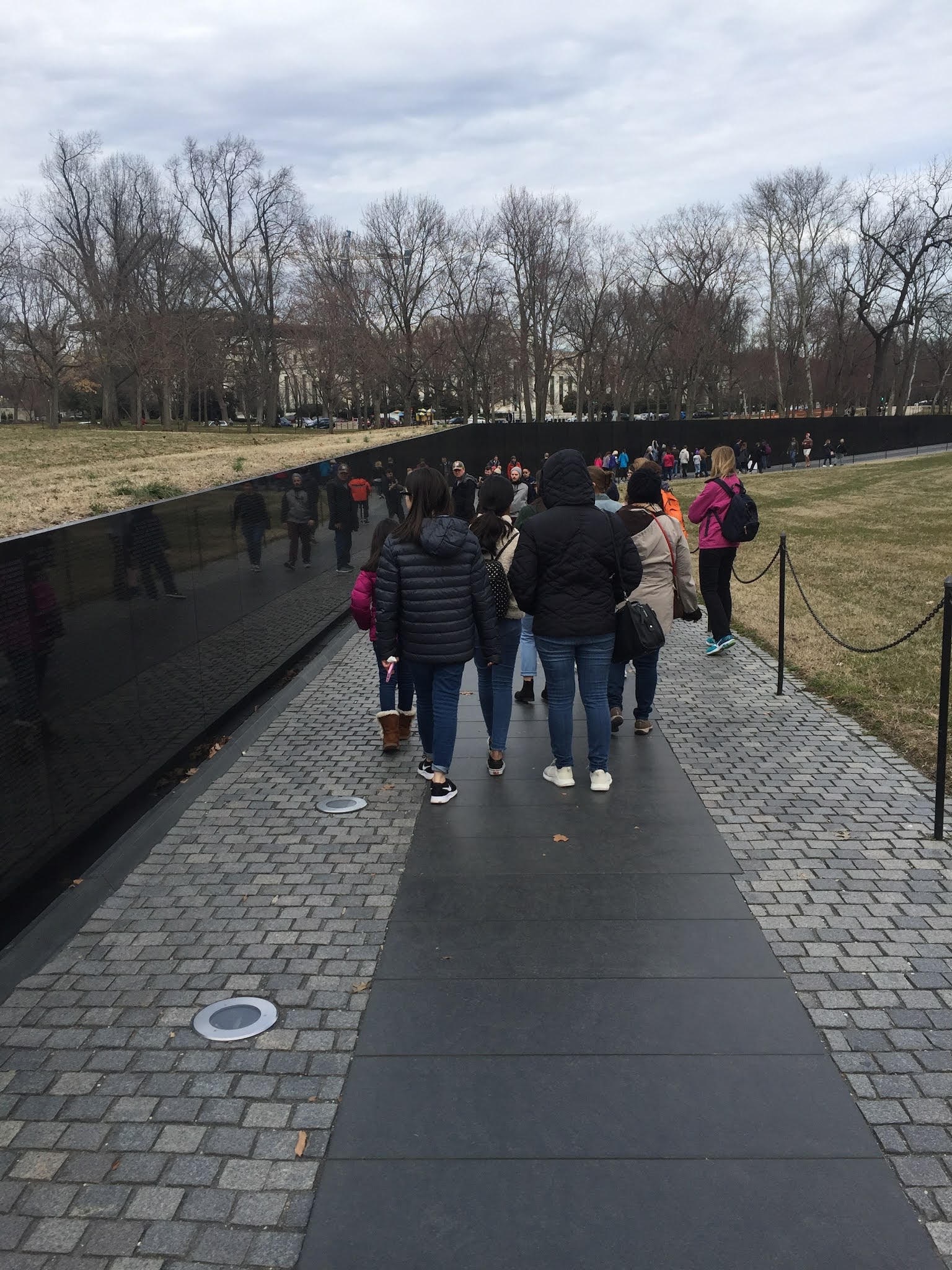
Vietnam Veterans Memorial / Washington, D.C. (Spring 2019)


I came across a very sobering thought last week about Covid-19, courtesy of a tweet I read that was written by California-based New York Times writer John Branch. He wrote:

“You know the Vietnam Memorial? 

“If you replicated the design for those Americans who have died of Covid-19, the wall of names would be about 11 times longer than that – or more than a mile long.

“And with 2,000 Americans dying a day, the wall would grow about 17 feet each night.”

Indeed, definitely something to thing about. 

Friends, the bottom line is simple: 

Get vaccinated.

Wear a mask. 

Don’t think twice. 

Do your part.

Be a good citizen. 


Photos of Vietnam Veterans Memorial: © Michael Dickens, 2019.


Tuesday, September 14, 2021

‘Born To Run’: Listening and learning after all these years

I happened upon one of my all-time favorite albums, Born To Run by Bruce Springsteen on Spotify yesterday afternoon. It was released in 1975 – 46 years ago – and besides the title track, it also featured seven other songs such as “Thunder Road,” “Teen Avenue Freeze-Out,” “Jungleland,” and a favorite of mine, the very underrated “Meeting Across the River.”

I think all of these songs – heck, the entire album, which has a running time of just 39 minutes and 22 seconds – have withstood the test of time very nicely. Each song is a lyrical masterpiece, full of poetic ebbs and street noir – none more so than the album’s centerpiece and final cut “Jungleland,” at nine minutes and 23 seconds a jazzed-up mini opera that includes one of saxophonist Clarence Clemons’ most recognizable solos. It begins with a beautiful and delicate 23-note violin solo by Suki Lahav accompanied by pianist Roy Bittan. The song is an elegiac tale, a tragic slice-of-life story, one of Springsteen’s best-penned songs. It tugs at our emotions.

“When Bruce Springsteen does those wordless wails, like at the end of ‘Jungleland,’ that’s the definition of rock and roll to me,” singer Melissa Etheridge once said. “He uses his whole body when he sings, and he puts out this enormous amount of force and emotion and passion.”

For those of my friends who weren’t born when this album came out, I say ‘Give it a good listen.’ Whether on vinyl, CD or via Spotify. It doesn’t matter. For those of you who are old enough to remember the hype when Born To Run was released – the Time and Newsweek and Rolling Stone magazine cover stores back in the day – you’ll now what I mean and remember what all the fuss was about.

After recently seeing Springsteen on Broadway at the intimate St. James Theatre on West 44th Street in New York City two weeks ago with my wife, which finished its run on Sept. 4, I can attest that “The Boss” at age 71 remains one hell of a fine singer and songwriter – an entertainer and humanitarian – and a wonderful storyteller, too. On that rainy night, he spun many tales about growing up along the New Jersey shore wanting to be rock-n-roll musician, touring with the E-Street Band, achieving fame, and it all seemed to center around the importance of family and friends.

For those of you who saw Springsteen perform a folksy solo rendition of “I’ll See You in My Dreams” during the 9/11 20th anniversary event at Ground Zero Saturday morning on TV – or in person – it’s the song that he performed at the conclusion of his Broadway shows each night before the house lights came up and the applause rang out. 

Indeed, very poignant and meaningful. 🎸

Born To Run LP photograph by Eric Meola.

Photo of Bruce Springsteen on Broadway by Michael Dickens.