Showing posts with label drama. Show all posts

Tuesday, March 26, 2019

On film: A fascination with Sir William Shakespeare


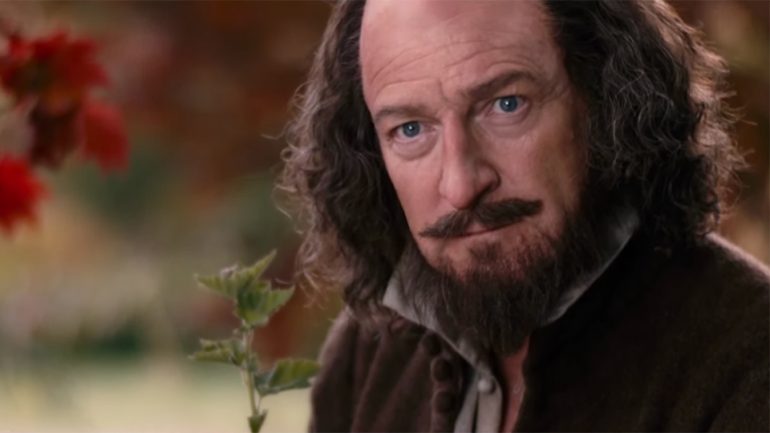
There’s no corner of the globe that went unexplored by the English poet, playwright and actor Sir William Shakespeare, in his lifetime. Yet, when all the world’s a stage for the person widely regarded as the greatest writer in the English language and the world’s greatest dramatist, what happens when your play ends? That’s a question the great British actor and Academy Award nominee Kenneth Branagh, who has been fascinated with the life of Shakespeare since his teens, attempts to answer.

With the upcoming Sony Classics theatrical release of “All is True,” which Branagh produced and directed as well as shared screenwriting credits with Ben Elton, he gets to play Shakespeare in all of the Bard’s multi-faceted and complex rendering. And, let’s be honest, Branagh is convincing as a middle-aged Shakespeare in the final years of his life. He was just 52 when he died in 1616.

“I’ve never let the truth get in the way of a good story,” Branagh as Shakespeare says, staring directly at the camera. However, as we learn, “If you’re honest with yourself and whatever you write, all is true.”

“All is True” is set after Shakespeare returns a distraught man to Stratford following the devastating 1613 fire that destroys the Globe Theatre during the first production of his “All is True” (“Life of Henry VIII”). At home with his family, wife Anne (Academy Award winner Judi Dench) and daughters Judith (Kathryn Wilder) and Susanna (Lydia Wilson), Branagh’s Shakespeare attempts to ease his grief, both from the fire and the death at age 11 of his only son, Hamnet (Sam Ellis), by planting a memorial garden. 

Through out the 101-minute film, which I saw a sneak preview of last Sunday in Washington, D.C., we see the many sides of Shakespeare as a human being: multi-faceted, complex, kind. He was an individual with great creative strength – after all he was a great and prolific writer – but we see him as a very flawed individual, too, as he deals with reconciliation and mortality. For all his proclivity – 39 plays, 154 sonnets, two long narrative poems and a few other verses – and for all of his lofty and noble wisdom in his writing, we witness Shakespeare’s struggles as a husband and father at home, trying to apply the same insights that made his writing so prolific in his own life.

As an aside, imagine the opportunity to play opposite those whom you respect. There’s the potential to be intimidating. Yet, Branagh, along with Dench and Academy Award nominee Ian McKellen, show us how acting works through nuance and with just the right tone of voice. “All is True” is a Shakespearean labor of love – filled with great dialogue and conversation between Branagh and Dench as well as the all-to-brief scene featuring Branagh and McKellen as the Earl of Southampton – and we get to see and enjoy arguably the greatest Shakespearean actors of our lifetime all in one film. Each shows us how acting works. 

“All is True” is an meant to be a gentle elegy about the end of Shakespeare’s life. Along with the early and buoyant years that “Shakespeare in Love” showed us, “All is True” serves as a worthy bookend. By the conclusion of the film, we realize that Shakespeare truly has lived a remarkable life.


Tuesday, February 13, 2018

In Between: Taking on gender politics without apology


On Sunday morning in Washington, D.C., my wife and I attended a sneak preview of In Between (Bar Bahar in Arabic), a bold and brassy Israeli drama written and directed by Palestinian filmmaker Maysaloun Hamoud about living Arab and female in Israel. The "in-your-face-but-not-in-your-face" film is set in freewheeling and secular Tel Aviv, where the fallout from Arab Spring has brought about a new underground of Palestinians who are enjoying never-imagined freedoms – they're caught up in a new social revolution, a new world order, if you will – yet, whose underground nightlife remains contemporary and ethnic.

In Between presents three very different women – a conservative, hijab-wearing Muslim university computer science student; a modern Muslim criminal lawyer who likes to party after hours; and a liberal, Christian underground scene DJ/bartender – who happen to share an apartment where they find themselves balancing their lives between "tradition and modernity, citizenship and culture, fealty and freedom." Each woman tries to shape her own destiny despite living in a conservative Arab society that's entrenched in patriarchy.

In In Between, there's a whole lot of young people who are thinking and behaving differently – a mixture of gay and straight culture – while breaking down sacred and sexual barriers. The film, which stars Palestinian actresses Mouna Hawa (as the beautiful extrovert Laila), Sana Jammelieh (as the artsy and closeted lesbian Salma) and Shaden Kanboura (as the somewhat näive but observant and studious Nour), is presented in Arabic and Hebrew dialogue with English subtitles and includes an exotic and pulsating electronica soundtrack. It is Hamoud's first feature-length film – she did it with Israeli funding – and it earned her a fatwa from her own people because of the frank and explicit subject matter it tackled: homosexuality, intoxication and drug use.

"I couldn't imagine this happening, but I am not surprised," said Hamoud, during a 2017 BBC Newsnight interview. "They didn't want to look in the mirror and see the ugly face that is put in front of them."

As we see during this non-rated 103-minute film, In Between also deals with a Jewish state that treats its Arab citizens with a sense of mistrust, which makes it even more of a challenge for Laila, Salma and Nour to be able to live free in a restricted society and defend their sense of independence from the familial values they no longer share.

Throughout In Between, suggests critic Susan Wloszczyna of RogerEbert.com, what is most intriguing is "how each woman is allowed to make mistakes and learn from them without any judgment on Hamoud's part." Another critic, Ella Taylor of NPR, writes that "Hamoud's narrative instincts can be broad, but she is rarely glib or coy. That she has chosen to focus squarely on internal tensions within the Arab community – the widening cultural and political gulf between the generations – is a mark of her courage, her bravado and her brutal honesty."

In his review of In Between, New York Times film critic A.O. Scott notes that the movie "is fatalistic about the local political situation, pessimistic about men and encouraged by the power of female solidarity. In other words, whether by serendipity or prophetic insight or some combination of the two, it's a perfect movie for the movement."

Adds Hamoud: "The thing that's really touched me is when women come and say 'you are inspiring for us'. I cannot ask for more than this."

In awarding In Between best debut feature film at the Haifa Film Festival, the jury described it as "a powerful creation about women fighting to shape their fate by coping with challenges, through friendship, courage, victory, and by breaking free of shackles, and the price they pay."

In an age of #MeToo, In Between takes on gender politics without apology. I highly recommend this award-winning film, which has received limited release in the U.S.

Photo: Courtesy of Film Movement. Videos: Courtesy of YouTube.


Tuesday, December 27, 2016

"Fences" on film: rarely is it ever silent

Fences / Starring Denzel Washington and Viola Davis
A holiday afternoon at the movies is always time well spent, and on the day after Christmas, my wife and I took in a matinee of "Fences," directed by and starring Denzel Washington and also starring Viola Davis. It is a tour-de-force adaptation of the Pulitzer Prize and Tony Award-winning play written by the late August Wilson.

Set in the late 1950s, "Fences" is the sixth in Wilson's ten-part "Pittsburgh Cycle." It's a family drama about a former Negro League baseball hero (played by Washington) whose personal bitterness over being slighted by the Major Leagues prevents his son from accepting a college football scholarship.

"Fences" is very much dialogue-driven and both Washington (whose character Troy is described by The New York Times as "a chop-busting raconteur") and Davis (as Troy's "plain-spoken counterpoint" wife, Rose) give powerhouse performances that are worthy of Academy Award consideration.

Fences / A play by August Wilson
After returning home from seeing "Fences," I wanted to find out more about the movie. Among the things I learned was that one of the key challenges for Washington as director was how to transform a play that takes place entirely in the front yard of "an ancient two-story brick house" in Pittsburgh, as Wilson described it, and make it come alive on film. Wilson is also credited with penning the screenplay. "The words are August's'; where we did them is different," Washington explained, in an interview with The New York Times. In the movie, there are interior scenes in the kitchen, living room and master bedroom, and some exterior scenes in the neighborhood streets.

"Beneath the bombast," wrote A.O. Scott in The New York Times, "'Fences' has an aching poetry." By turns, the film is both funny and provocative, and it is also inspiring and hurtful. Rarely is it ever silent. If it is possible to close your eyes and just listen to "Fences," you would be treated to a dramatic literary experience that is rarely matched.

In Washington's portrayal of the central character Troy, a sanitation worker, first embodied on the Broadway stage by James Earl Jones in 1985, Scott wrote: "There is plenty of brag and bluster in his speech, as well as flecks of profanity (editor's note: there's a lot of use of the N-word) and poetry. He tells tales and busts chops with unflagging energy, at times testing the patience of Rose, Bono and his other friends and relations. But mostly Troy, who makes no secret of his illiteracy, uses language as a tool of analysis, a way of explaining what's on his mind and figuring out the shape of the world he must inhabit."


Fortunately for movie-goers, "Fences" goes beyond being just a filmed reading. We are treated to Wilson's genius for dialogue and his examination of the African-American experience in America "from the standpoint of people intent on defying their exclusion from it," as Scott describes it.

For me, "Fences" was both a remarkable learning – and looking-glass – experience into what it must have been like being black in America in the 1950s, as well as an opportunity to study and appreciate both the brilliance of playwright Wilson and the quality of the acting performances given by Washington and Davis.

Photos: Courtesy of Google images. Video: Courtesy of YouTube.

Tuesday, July 15, 2014

The Roosevelts: An Intimate History


The Roosevelts: An Intimate History /
Ken Burns in conversation at San Francisco's Castro Theatre.

Why do we cry when we see a Ken Burns documentary? Perhaps, it's because the documentary filmmaker has a remarkable talent for telling stories through real people.

"History is sharing the process of discovery," said Burns, whose 1990 film The Civil War brought him to the forefront of documentary filmmaking in the United States. He is known for his style of using archival footage and photographs. "Preserving the past is one of the greatest things you can do for the future."

Burns, 60, has also directed films about other subjects familiar to Americans, including: Baseball (1994), Jazz (2001), The War (2007), The National Parks: America's Best Idea (2009), Prohibition (2011) and The Central Park Five (2012).

This fall, the Emmy Award-winning Burns returns with a new film that depicts the monumental saga of an exceptional American family whose impact is still felt across the nation.

The Roosevelts: An Intimate History, a new seven-part, 14-hour documentary directed by Burns and written by Geoffrey C. Ward, will debut nationwide on PBS on September 14. The film weaves together the stories of Theodore, Franklin and Eleanor Roosevelt, three members of one of the most prominent and influential American political families.

Recently, I had the chance to preview The Roosevelts: An Intimate History during an evening with Ken Burns at San Francisco's Castro Theatre, which was sponsored by KQED, in partnership with Kraw Law Group and Golden Gate National Parks Conservancy. Burns was in San Francisco not only to promote The Roosevelts in front of a captive and enthusiastic audience, but also to interview legendary San Francisco Giants baseball player Willie Mays for a future documentary he is currently working on about Jackie Robinson, who broke the color barrier in Major League Baseball in the 1947.

In The Roosevelts: An Intimate History, said Burns, for the first time we truly get to veer into the private lives of the most public of people. And, it's the first time their individuals stories have been interwoven into a single narrative.

Over 20,000 archived photos went into the making of The Roosevelts. We see Theodore, who was once a sickly boy, storm into Washington like an officer charging into battle. We learn of Franklin, struck down by illness, and how he pulls himself back up while at the same time lifting the U.S. out of the Great Depression and World War II. And, we see how Eleanor redefines the role of First Lady while inspiring millions of Americans. The documentary follows the Roosevelts for over a century, from the birth of Theodore in 1858 to Eleanor's death in 1962.

"You can't expect people like that to happen all the time," said historian David McCullough, who appears on camera throughout the documentary. Adds fellow historian Doris Kearns Goodwin, who also appears on screen in The Roosevelts: "It's an extraordinary story. The drama is unmatched in our history."

According to Burns, the story of the Roosevelts raises many questions, such as: "What is the role of government in society?" and "What is heroism?" While it may be impossible to sum up in a sentence or two what Burns learned from working on The Roosevelts, one thing he said he took away from his work is this: FDR had an extraordinary ability to communicate.

The only thing we have to fear ... is fear itself.

"History is a rising road," said Burns. "Human nature is always the same. There at times has been incivility, but what's interesting is what's the same."

To learn more: The Roosevelts: An Intimate History

Photograph: Michael Dickens ©2014.

Tuesday, May 21, 2013

A celebration of words: Sharing the stage to read and listen to stories and ideas


I read from Calvin Trillin's The Tummy Trilogy
during the fifth annual WriterCoach Connection's
Read-and-Write-a-thon at Longfellow Middle School.

Last Saturday morning, I participated in the fifth annual WriterCoach Connection Read-and-Write-a-thon at Longfellow Middle School Library in Berkeley.

I had never participated in a read-a-thon and, honestly, didn't really know what to expect. Would I be nervous? Would I be confident? Would my voice project adequately? Would the audience warm to my literary selection?

During the 75 minutes I spent at the WriterCoach Connection Read-and-Write-a-thon, which began my activity-filled Saturday (and, later, would include stops at two busy grocery stores, plus an evening birthday/bowling party on the other side of the Bay), I was both humbled and amazed. There was much generosity from the dozen-or-so supporters in the library at the time I read, who focused on my every spoken word for the 15 minutes in which I commanded their attentiveness.

For those who were inspired and dropped in at the Longfellow Middle School Library-cum-literary café between 8 a.m. and 6 p.m., they were greeted with a comfortable and inviting setting as well as a nice selection of good, healthy eats in which to enjoy an assortment of non-stop poetry (lots of Emily Dickinson), prose (Henry David Thoreau and David Halberstam), children's literature (Dr. Seuss) and fiction (Téa Obreht and Flann O'Brien, among many) ~ even a reading of Abraham Lincoln's famous speech "The Gettysburg Address." The Read-and-Write-a-Thon was spread over 10 consecutive hours as an ever-changing cast of writing coaches and students shared center stage (actually, it was a comfy sofa) to read and listen to stories and ideas that give life and light to our world.

When it was my turn to read at 9 a.m., I calmly walked up to the front of the spacious reading room, immediately made eye contact with the audience, and enthusiastically read about food and travel from The Tummy Trilogy by the American humorist Calvin Trillin, who through his books American Fried; Alice, Let's Eat; and Third Helpings, established himself as, in Craig Claiborne's phrase, "the Walt Whitman of American eats."

In the opening chapter from American Fried, "The Traveling Man's Burden," I read aloud Trillin's written words and tried to inject some of his wry humor with just the right amount of wit, sarcasm, and the occasional pause for dramatic effect:

"The best restaurants in the world are, of course, in Kansas City. (pause) Not all of them; (pause) only the top four or five."

The opening paragraph drew nice laughter from the audience. Immediately, I realized I had made a good literary choice, and the polite-but-hearty applause I received at the end of my reading made me feel good inside.  I flashed a big smile as I returned to the table my wife and I shared, and enjoyed some fresh strawberries and cheddar cheese. Afterwards, I learned that Trillin had been a past donor to the WCC Read-and-Write-a-thon.

Indeed, my first read-a-thon experience was a positive one.

That night, on the WCC website, there was high praise to go along with an impressive list of donors who contributed to the Read-and-Write-a-thon. "Everyone who attended agreed that this was the best Read-and-Write-a-thon ever! In addition to inspired 15-minute individual readings, highlights included a large group of student readings, a spirited game of team Literary Jeopardy, and a moving group reading of "The Laramie Project."

This year, I have been volunteering with the WriterCoach Connection (WCC) -- a program of the non-profit Community Alliance for Learning -- that helps students become more competent and confident writers. WCC does this by matching middle- and high-school kids with community volunteers -- like me -- for one-on-one coaching during their English classes.

The WCC now has more than 600 volunteer coaches, from all cultures and backgrounds -- parents, grandparents, working and retired people, and recent college graduates -- working in 10 San Francisco Bay Area public schools. I have been a volunteer at Longfellow Middle School in Berkeley, where this year we've already held more than 2,200 individual coaching sessions.

My goal as a writing coach is simple and straight-forward, yet heartfelt: To help strengthen a student's writing skills and help them develop their ideas. And, through the use of positive encouragement and showing care, I believe I am making a difference in these students.

Some of my students have been easy to connect with while others have been shy and reserve in their demeanor. They include boys and girls, Hispanics, Asians, Native Americans, blacks and whites -- a microcosm of Berkeley's population. Sometimes, I sense discouragement when I sit down with a student. However, I try to convey hope and enthusiasm and, I always ask: "What can I help you with today?"

Volunteering as a writer coach has been a uniquely rewarding experience for me. I've enjoyed seeing my students become more critical thinkers and confident writers, and there's the satisfaction of giving them a quiet and positive space in their busy school day to thrive in. Of course, too, there's witnessing the gratitude of dedicated teachers whom we serve. It's an experience I look forward to repeating next school year.

As the current school term winds down, I sense that my students are becoming more confident in their abilities not to mention more competent in their writing and thinking skills.

After all, inside every student there is a writer.