Tuesday, October 30, 2012

Together, we're (absolutely) GIANT!


The thrill of it all /
Giants catcher Buster Posey runs out to greet pitcher Sergio Romo
after Tigers slugger Miguel Cabrera struck out looking for the final
out of the 2012 World Series.

The San Francisco Giants are baseball's world champions.

It's been a tremendous month to be a baseball fan in the San Francisco Bay Area. Actually, it's been a tremendous season to be a Giants fan.

On Sunday, for the second time in three years, the Giants won the World Series. This time, they swept the Detroit Tigers in four games. And, they won twice by shutouts.

Unbelievable.

AT&T Park /
The best ballpark environment
in the major leagues.
The Giants showed the baseball world that championships can be won with tremendous pitching and solid, reliable defense. Also, they won with a "small ball" attitude that capitalized on the consistency of base hits and sacrifice fly outs instead of relying on big sluggers to hit lots of home runs into San Francisco Bay. Although, to their credit, Pablo Sandoval, known to Giants fans by his beloved nickname "Panda",  hit three homers ~ none into the bay ~ in the Giants' 8-3 victory in Game 1 of the World Series at AT&T Park. And, it helped, too, that the Giants had a merry band of misfits on this year's team ~ Hunter Pence and Sergio Romo come to mind ~ who played together as a unit and bought into a "team-first" concept preached by their adroit manager, Bruce Bochy, that so many teams lacked this season.

My view from Section 332
during Game 1 of the
NL Division Series.
Throughout the season, AT&T Park was the place to be and to be seen. It gained a wonderful reputation as the best ballpark environment in baseball. To be certain, the Giants played winning baseball on the field, and throughout the stands, fans delighted in wearing white and orange Panda hats, waving their "Gamer Babes" signs, having their photos taken on the cable car in the outfield arcade and eating their garlic fries, too. Some Franciscan evenings were just perfect ~ we all remember Matt Cain's perfect game gem against Houston on a mid-week June evening, don't we? And, after each Giants victory, as the faithful departed the ballpark and spilled out onto the Embarcadero, fans were serenaded by Tony Bennett's very appropriate anthem to the City by the Bay, "I Left My Heart in San  Francisco."

Very San Francisco, indeed.

And, it should be noted, the Giants had a big following on Twitter, too, including the divine MLB Jesus, who tweeted after the final out: "God bless my World Champion San Francisco Giants."


The headline in Monday's
San Francisco Chronicle
says it all.
Among the many enjoyable things for me about following the Giants throughout the day-to-day, month-to-month rhythm of the 2012 season was listening to their wonderful broadcasters ~ Jon Miller and Dave Flemming on radio and Duane Kuiper and Mike Krukow on TV. During the postseason, when local TV rights yielded to national TV broadcasts, the Giants radio booth accommodated all four of its own broadcasters, what I call a "four-headed" booth.

Each game, the innings were divided up in orderly fashion among the three play-by-play announcers, Miller, Kuiper and Flemming. And Krukow, who pitched for the Giants on the 1989 World Series team that lost to the Oakland A's, provided astute analysis and insight for the entirety of each game. It was a pleasure to tune in to "Miller & Flemm and Kruk & Kuip" with the TV sound muted. It worked, there was rhythm and excitement to each broadcast, and it added to my enjoyment of watching each exciting playoff and World Series game with our familiar voices of the game.

They delivered the message.

So, too, it should be noted that newspapers and the internet ~ even Twitter ~ were good sources for reading about the Giants throughout the season. Whether it was opening up the morning San Francisco Chronicle or going online to read Andrew Baggarly's columns and blogs via CSNBayArea.com, there were so many wonderful stories chronicled throughout this championship season.

Of the many wonderful things that were expressed by the Giants' broadcasters, one thing I'll remember and take away from this World Series victory was shared by Mike Krukow:

"The game of baseball is a beautiful game ~ it's an every man's game ~ and those who play it best are the ones standing tall at the end, planting the flag, and winning it all."

From the heart /
Hunter Pence rallies his
teammates in the dugout.
The Giants played the game of baseball best this year. It says so in the standings. And, in the post season, they finished with a flourish of seven consecutive victories. On a frigid and rainy Sunday evening in Detroit, they won it all and celebrated on the field and in a Champagne-filled locker room, too.

Now, it's time for the Giants players and management to celebrate and reflect on their marvelous accomplishment. And, it's time for Giants fans to enjoy the revelry and the ticker-tape victory parade along Market Street Wednesday.

Together, we're (absolutely) GIANT!
The San  Francisco Giants / 2012 World Series Champions.

Photographs of AT&T Park facade and inside the ballpark by Michael Dickens, copyright 2012. Other images courtesy of various sources via Facebook.

Tuesday, October 23, 2012

Always in style, always smiling, too!


The Jack Purcell sneaker/ Always in style, always smiling, too!

The original Jack Purcell sneakers were known for their great, classic look and timeless style. Designed with comfort in mind and worn with casual attire, they were easily identifiable by their signature "smile" across the toe. Today, they are still known for these same, great qualities. And, they're more colorful, too.

Great design never goes out of style.

While perusing the San Francisco designer shoe store DSW, near Union Square, on a recent Sunday afternoon, I couldn't help but notice the navy blue Jack Purcell shoes that were on display. Seeing them brought back fond memories of my childhood.

My parents bought me my first pair of Jack Purcell sneakers in the middle-to-late 1960s while I was growing up in southern California. Back then, the only colors manufactured were in basic black and white. I loved them equally. Jack Purcells were popular as athletic footwear along with Converse's Chuck Taylor All-Stars in an era before Adidas and, later, Nike became the athletic footwear of choice for generations of Americans. 

The namesake of the stylish Jack Purcell footwear is John Edward "Jack" Purcell, who was a Canadian world champion badminton player. It was during his athletic career that Purcell (1903-1991) designed a canvas and rubber badminton sneaker for the B.F. Goodrich Company of Canada in 1935. The idea behind his shoe design was to create a sneaker that could provide more protection and support on badminton courts. 

Fast forward and Converse now owns the trademark rights to Jack Purcell sneakers, and their appearance and variety of bright and vivid colors are similar to the Chuck Taylor All-Stars. While both Jack Purcells and Chuck Taylor All-Stars are now known more for their vintage fashion appeal than for their athletic use, there is still a "wow" factor to them. And, in recent years, their colorful, unisex appeal has become quite noticeable, especially among teens and young, college-aged adults. Yet, I truly believe all ages can pull off the look. Which is why I still love to wear Jack Purcell sneakers.

While I don't remember how many pairs of Jack Purcell sneakers I've worn in my lifetime, I maintain an appreciation for their style ~ even if they are a lot more expensive than I remember them being as a kid. They look equally cool worn with khakis or blue jeans. And, now that they come in navy blue ~ my favorite color ~ I just might be tempted to purchase my first new pair of Jack Purcell sneakers in ages.

After all, great design never goes out of style.

Photograph of Jack Purcell sneakers by Michael Dickens, copyright 2012. All rights reserved.

Tuesday, October 16, 2012

What's in a song?: "God Bless the Child"


Billie Holiday / God Bless This Child

Recently, I heard the timeless classic "God Bless the Child" while I was listening to Eclectic 24, KCRW.com's all-music channel. And, it got me to think: "What's in a song?"

On May 9, 1941, the American jazz singer Billie Holiday recorded "God Bless the Child," a song she co-wrote with pianist Arthur Herzog Jr. in 1939. Holiday's version of the song, her most popular, would later be covered by many notable singers, including Ella Fitzgerald, Tony Bennett and Stevie Wonder. It earned a Grammy Hall of Fame Award in 1976, and it was also included in the 1993 movie 'Shindler's List'. "God Bless the Child" was recognized in a list of Songs of the Century, by the Recording Industry Association of America and the National Endowment for the Arts. 

So, what's in a song like "God Bless the Child"?

In Holiday's autobiography Lady Sings the Blues, she suggested that an argument she had with her mother, Sadie, over money led to the creation of the song "God Bless the Child." It was during this argument with her mother, who was desperate to find money to open a quaint after-hours joint, that Billie Holiday (1915-1959) said the line "God bless the child that's got her own."

"God Bless the Child" is a fairly simple melody that's written in the style of an old-time spiritual. According to the jazz historian Chris Tyle, "Billie’s lyrics tell the story of how everyone is your friend when you have money but that 'empty pockets don’t ever make the grade.' Others, including family, may have it but won’t help you out when you need it."

In his 1990 book Jazz Singing, the author Will Friedwald, writing about the song, labeled it as "sacred and profane" as it references the Bible while indicating that religion seems to have no effect in making people treat each other better.

The lyrics to "God Bless the Child" refer to an unspecified Biblical verse:

"Them that's got shall get, them that don't shall lose, so the Bible says, and it still is news. ..." This likely refers to Matthew 25:29 (* - "For unto every one that hath shall be given, and he shall have abundance: but from him that hath not shall be taken away even that which he hath.") or Luke 8:18 (* - "Take heed therefore how ye hear: for whosoever hath, to him shall be given; and whosoever hath not, from him shall be taken even that which he seemeth to have.")
* - King James Bible Version

Today, "God Bless the Child" remains an enduring masterpiece.

I welcome your thoughts about what's in this song, its lyrics, its relationship to the Bible, and its effect upon you.


God Bless the Child
Lyrics by Billie Holliday and Arthur Herzog Jr. 
(1939)

Them that's got shall get
Them that's not shall lose
So the Bible said and it still is news
Mama may have, Papa may have
But God bless the child that's got his own
That's got his own

Yes, the strong gets more
While the weak ones fade
Empty pockets don't ever make the grade
Mama may have, Papa may have
But God bless the child that's got his own
That's got his own

Money, you've got lots of friends
Crowding round the door
When you're gone, spending ends
They don't come no more
Rich relations give
Crust of bread and such
You can help yourself
But don't take too much
Mama may have, Papa may have
But God bless the child that's got his own
That's got his own

Mama may have, Papa may have
But God bless the child that's got his own
That's got his own
He just worry 'bout nothin'
Cause he's got his own


Tuesday, October 9, 2012

No place better to be on a Sunday afternoon than at Hardly Strictly Bluegrass Festival


Glen Hansard performing on the Rooster Stage Sunday afternoon
at the 2012 Hardly Strictly Bluegrass Festival in
San Francisco's Golden Gate Park.

The Hardly Strictly Bluegrass Festival returned to San Francisco's Golden Gate Park last weekend with its usual stellar lineup of talent: Elvis Costello, Emmylou Harris, Ralph Stanley, Steve Earle, Patti Smith, Buddy Miller, the Civil Wars, Glen Hansard and the Del McCoury Band, to name just a few of the 88 acts who played over three days. Hardly Strictly Bluegrass has become one of the premier music festivals in the country.

There was no place in The City better to be on this beautiful, autumn Sunday afternoon.

This year's Hardly Strictly Bluegrass Festival held special meaning to the hundreds of thousands who attended the 12th annual free festival spread out over six different stages across the western half of Golden Gate Park. There was a little something for everyone to celebrate: bluegrass, country, rockabilly, blues, folk, pop, rock and jazz. As San Francisco Chronicle senior pop music critic Joel Selvin wrote, there was "a broad range of acts that somehow manage to coalesce into a music identity that is uniquely HSB."

Glen Hansard
It was the first festival since the passing of founder Warren Hellman, 77, the Bay Area billionaire investment banker and benefactor ~ himself a spirited amateur banjo player ~ who funded HSB as a gift to the city of San Francisco and left an endowment to ensure of its existence for many years to come. The Speedway Meadow, site of the Banjo Stage where Costello, Stanley and Harris played to tremendous crowds, was renamed Hellman Hollow to honor Hellman's memory.

On Saturday, there was a special tribute to the festival's "founding fathers" ~ Hellman, Earl Scruggs and Doc Watson ~ all passed away since last year's HSB. The Preservation Hall Jazz Band played a New Orleans funeral on the Banjo Stage to open the tribute. By late Sunday afternoon, Harris closed the festival as she has every year since its beginning in 2001.

I would have loved being at Hardly Strictly Bluegrass for all three days of this year's festival. However, prior commitments to see the University of California women's volleyball match in Berkeley on Friday and the San Francisco Giants NLDS playoff game against Cincinnati across town at AT&T Park on Saturday limited me to just attending Sunday afternoon.

Nick Lowe
Still, my afternoon at Hardly Strictly Bluegrass was worthwhile and the nice weather and setting provided the right ambiance to enjoy a picnic lunch with my wife. We enjoyed a few hours of great music on the grounds of the Rooster Stage in Marx Meadow with several thousand like-minded enthusiasts, who like us were sprawled out on the grassy meadow with their blankets and picnic baskets.

First, we saw the Irish singer/songwriter Glen Hansard perform several tunes from his 2012 album "Rhythm and Repose." Best known for his work with Swell Season and the Frames, Hansard's hour-long set included "Love Don't Leave Me Waiting" from "Rhythm and Repose" and he finished with an inspiring version of The Band's "Don't Do it" in tribute to the late Levon Helm, who was that group's inspirational leader.

Then, after a short recess, next up was the British singer/songwriter Nick Lowe, whose graceful and lyrical crooning style is steeped in classic American pop and blues. Once labeled "the Jesus of Cool" for his pioneering pub-rock style of the 1970s and '80s, today Lowe's style has been described as "boutique pop" with "far gentler textures." Lowe's solo set ~ just him and his acoustic guitar ~ included songs from his current album "The Old Magic" as well as many of his earlier hits, notably "Cruel to be Kind."

Close-knit circle and dapperly attired / The Del McCoury Band
performing late Sunday afternoon on the Star Stage
at the Hardly Strictly Bluegrass Festival.

Afterward, as we reached the Star Stage on our way towards the western edge to exit the festival grounds, we paused for a few minutes to listen to and appreciate the dapperly dressed Del McCoury Band as they performed traditional bluegrass music. On stage in close-knit semicircle, there were bluegrass fiddles, banjos, guitars and mandolins ~ and so much more. There were voices, too. It was sweet, heavenly music to our ears.

Indeed, we had come to the right place on this beautiful, autumn Sunday afternoon.

Photographs by Michael Dickens, copyright 2012. All rights reserved.

Tuesday, October 2, 2012

A taste for modernism: The relationship of a painter, his canvas and the outside world


Henri Matisse / Woman With a Vail
(Oil on canvas, 1927)

"The essence of painting is the expression of certain relationships between the painter and the outside world, and a picture is an intimate association of these relationships with the limited surface that contains them."

~ José Victoriano González-Pérez, better known as Juan Gris, early 20th century Spanish painter and sculptor.


Last Friday night, I had the pleasure of visiting "A Taste For Modernism," an exhibit of more than 60 paintings, drawings and sculptures from the William S. Paley Collection at the Museum of Modern Art in New York that is currently on display at the deYoung Fine Arts Museum in San Francisco's Golden Gate Park through December 30, 2012.

The CBS media titan, who was a patron of the New York City arts scene and a devoted philanthropist, amassed an impressive collection of modern art during his lifetime (1901-1990) that dotted the walls of his tony Fifth Avenue mansion. It included paintings, sculptures and drawings from the late 19th century to the early 1970s.


Paul Cézanne / Milk Can and Apples
(Oil and canvas, 1879-80)

The "A Taste For Modernism" exhibit of avant-garde masters of the French Post-Impressionism and Modernism period included artwork by Matisse, Picasso, Degas, Cézanne, Gauguin and Toulouse-Lautrec.

Among the featured works in the exhibit were Gauguin's The Seed of the Areoi (1892), which is an important female nude from Gauguin's first trip to Tahiti; Cézanne's Milk Can and Apples (1879-80); Degas' pastel Two Dancers (1905); Picasso's Boy Leading a Horse (1905-06); and Matisse's masterpiece Woman With a Veil (1927).

In his review about "A Taste For Modernism," San Francisco Chronicle art critic Kenneth Baker wrote that it "really is more about one collector's quite sophisticated taste in art than a capsule survey of a period or tendency." I agree with Baker's assessment. However, this exhibit made a good first impression on me ~ Matisse and Picasso always draw my attention ~ and, on this particular chilly autumn evening, it was time well spent.

For further information:
http://deyoung.famsf.org/deyoung/exhibitions/william-s-paley-collection-taste-modernism

Photographs of the paintings "A Woman With a Veil" and "Milk Can and Apples" by Michael Dickens, copyright 2012. All rights reserved.


Tuesday, September 25, 2012

There's something special about building communities through good food and good conversation, too


Eat Real Festival / Good food complimented by good conversation. 

The British novelist Virginia Woolf wrote in her 1929 novel, A Room of One's Own: "One cannot think well, love well, sleep well if one has not dined well." She mused that the human frame being what it is ~ consisting of a heart, body and brain ~ a good dinner is of great importance to us all. And, it is best complimented by good conversation, too.

Indeed, last week was a very good one to be a foodie in the San Francisco Bay Area. First, I had the pleasure of attending a fascinating City Arts & Lectures event featuring New York Times food writer Mark Bittman at the Herbst Theatre in San Francisco. Then, during the weekend, I visited the annual Eat Real Festival at Jack London Square in Oakland and delighted in many delectable edibles that were seasonal, local and sustainable. Both events left my body and mind feeling happy and well nourished.

Mark Bittman
As the lead food writer for The New York Times Magazine, Mark Bittman shares his love of food through personal storytelling, teaching fundamental cooking techniques and essential lessons. He also covers food policy, cooking and eating as an Opinion columnist for The New York Times. He is the author of Food Matters, which explored the crucial connections among food, health and the environment. Many of my friends might remember him for writing "The Minimalist," a weekly column that ran for 13 years in The New York Times, which was part recipes and a lot of commonsense advice about food technique and taste.

Among the many interesting comments that Bittman made during his hour-long, cultural studies conversation with Jessica Battilana, a senior editor at Tasting Table, was this: "We have to take responsibility for what we eat. But we also need to demand accountability for what is produced for us to eat."

Mark Bittman / Sharing a conversation about food
at San Francisco's City Arts & Lectures.

Bittman supports the sustainability food movement as well as the principle of giving consumers the right to know what is in our food. Also, he advocates that we should care about the welfare of the animals which farms raise for our consumption of beef, pork and poultry. And, he stressed, we as consumers should make a conscientious effort to buy and eat quality food that is locally grown and sourced.

However, admits Bittman, "We need to grow, plan and distribute this food in a better manner." He believes we should be more aware of the carbon footprint being left by the food we buy and consume in our daily lives, whether we choose to be carnivores or vegetarians ~ even vegans.

Mark Bittman signs a copy of
his current book How to Cook
 Everything: The Basics
While Bittman has built a nation-wide community of like-minded enthusiasts through his writing for The New York Times, his books (Bittman's latest is How to Cook Everything: The Basics, which I bought and had signed) and his television appearances on The Cooking Channel, PBS and NBC's Today, his own personal taste in food leans toward keeping things simple and basic. Whether dining at home or going out, Bittman forgoes labor-intensive dishes like lasagna ~ he hasn't cooked it in 20 years ~ in favor of simplicity, like a delicious bowl of miso soup or Asian noodles. He eschews fine dining and is more at ease eating out at any number of New York City's hidden nook, Japanese-cuisine restaurants he's discovered over the years.

A discovery of another kind is the Eat Real Festival, an annual event that draws thousands of like-minded foodies from around the Bay Area to the Oakland waterfront at Jack London Square. Eat Real has been described by some as "part street food festival, part country fair and part block party." According to its website, what this social adventure has been created for ~ its raison d'être ~ is to inspire festival goers to enjoy "tasty, healthy, good food." Around the grounds, there was live music, cooking lectures and demonstrations, and green spaces to spread out a blanket and turn this culinary experience into a picnic, too.

Eat real, eat well / Standing in line for seasonal, local, sustainable
cuisine from Tru Gourmet Dim Sum at the Eat Real Festival.

The S+S Gastro Grub menu
promoted its local partnerships.
In just a couple of hours on Saturday, I enjoyed a delicious sampling Brown Cow ("Cream on the top") Greek honey yogurt; a freshly steamed BBQ pork bun and hot chicken pot sticker from Tru Gourmet Dim Sum; a freshly grilled and very tender Macau-style Niman Ranch pork bun from S+S Gastro Grub; a Vietnamese Bánh Mi, one of the best street foods in the world, which is a sandwich served on a baguette with pickled organic carrots and organic daikon, tomatoes, cucumbers, jalapenos, cilantro, mayo and soy sauce from Little Green Cyclo; and a slice of wood-fired artisan pepperoni pizza served with enthusiasm from an 800-degree Italian Valoriani oven that's been described as "reminiscent of a large blacksmith's forge" at the soon-to-open Forge pizzeria. Finally, for dessert, I treated myself to a Mexican chocolate popsicle (other eclectic flavors included pluot Thai basil and sweet corn) from Lick Pops that hit the spot on this clear, sunny afternoon.

The Eat Real Festival / A family-friendly
atmosphere with good food, great weather
and wonderful conversation, too.
Everything I sampled at this year's Eat Real Festival was simply amazing, not to mention affordable, too. All portions were $5 or less. I arrived with a good appetite and departed feeling both satisfied and smiling.

There's no love more sincerer than the love of food, wrote the Irish poet George Bernard Shaw. And, as Mark Bittman and the Eat Real Festival confirmed for me last week, there's something very special about building communities through food. Bon appetit!

All photographs by Michael Dickens. Copyright 2012, all rights reserved.

Tuesday, September 18, 2012

Love thou the rose, yet leave it on its stem


"Love thou the rose, yet leave it on its stem."
~ Edward Robert Bulwer Lytton, 19th century English poet and statesman, from A Night in Italy.


A rose is a rose is a rose ...

Being a caretaker and photographer of nine rose bushes that shine brilliantly in our backyard garden, my appreciation for roses has grown exponentially over the past 13 years we have resided in the foothills above Oakland in the San Francisco Bay Area. Roses have become an everyday part of my life.

In photographing our roses and sharing them with my friends via my Facebook page, I have gained a new appreciation for their colorful beauty and their fragrance, too. It's always about how lovely a rose smells when left on its stem.

As it happened, earlier this month while on holiday in Portland, Oregon, we spent one morning visiting the International Rose Test Garden in the City of Roses. Founded in 1917, it is the oldest official, continuously operated public rose test garden in the United States.

While the primary purpose of the International Rose Test Garden is to serve as a testing ground for new rose varieties, in the beginning, hybridists sent roses from around the world to the Portland garden for testing and to keep them safe from the destruction of the bombing that was taking place in Europe during World War I.

On the day of our visit, the sun shone brightly in the Portland sky overhead. The vista looking out from the hills where the International Rose Test Garden and its companion gardens reside was very inviting to us. Walking through the various gardens gave us an up-close view of many different hybrids of roses and a chance to study their color, form, foliage and fragrance. And, simply to admire all of the beautiful nature surrounding us.

A beautiful summer day at the Portland Rose Gardens.

Operated by the Parks and Recreation Department, Portland's Rose Gardens are open in the spring, summer and fall seasons and closed in winter from December 23 to March 12. Admission is free and photographing of the hundreds of beautiful roses is highly encouraged.

Photographs by Michael Dickens, copyright 2012. All rights reserved.

Tuesday, September 11, 2012

In remembrance of the day that forever changed our lives and our world


In remembrance of September 11, 2001, a day that forever changed our lives and our world, here's a simple thought to share with each of you:

"The living owe it those who can no longer speak to tell their story for them."

~ Czesław Miłosz (1911-2004), Polish poet, prose writer and translator of Lithuanian origin, and Nobel Laureate, who became an American citizen.

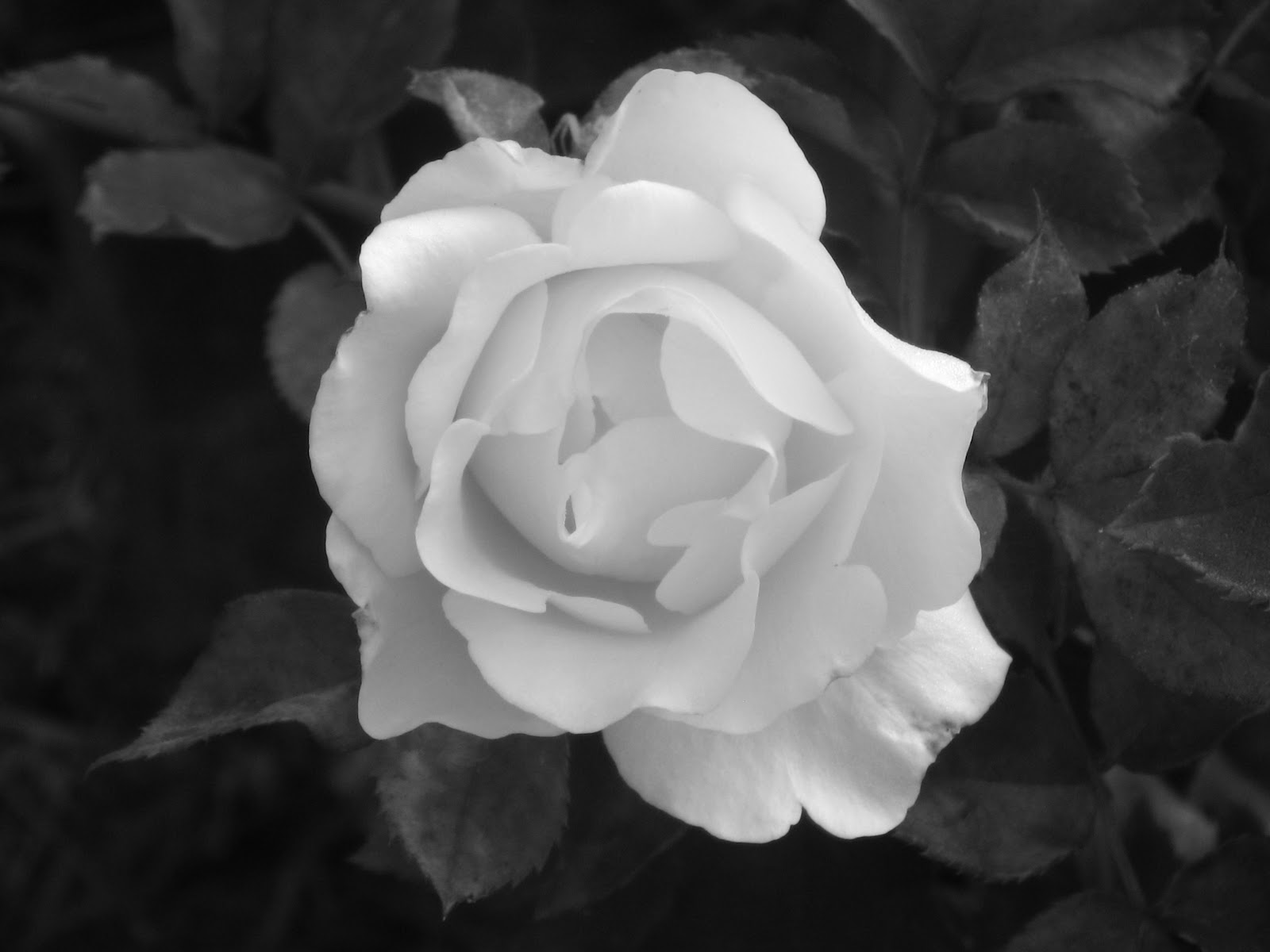
Photograph of white rose by Michael Dickens, taken on September 11, 2012. Copyright 2012. All rights reserved.

Tuesday, August 28, 2012

Summer is: enjoying songs in the key of life

Summer is about enjoying leisurely activity. Although the season may be winding down ~ the Labor Day holiday that signals an unofficial end to summer in the U.S. is this weekend ~ there are still plenty of sunny days and balmy evenings until autumn officially arrives. What better way to celebrate than by spinning some enjoyable tunes.

Whether you're looking to create a mood or, simply, be in the mood, here's a multicultural (think U.S., England, Scotland, Denmark, Sweden) playlist of some of my favorite music I've been exploring this summer that's worth a good listen. Hopefully, these songs not only appeal to your inner ear and hungry mind, they'll make you smile, too.

Happy listening!


Ray Charles / Oh, What a Beautiful Morning!


Ben Howard / Promise


Mark Ronson and Sean Lennon / Sail on Sailor


Grizzy Bear / Yet Again


Lianne La Havas / Is Your Love Big Enough?


Raphael Saadiq / Radio


Agnes Obel / Just So


Koop / I See A Different You


Pink Martini / City of Night


Belle & Sebastian / Another Sunny Day

Tuesday, August 21, 2012

A music study break: Laura Marling and thoughts about her song "What He Wrote"


Laura Marling / I Speak Because I Can

One of many things I enjoy contributing to my Facebook Timeline is something I call a "music study break". It might either be a song that I've recently heard while listening to the "Morning Becomes Eclectic" program via KCRW.com (Monday-Friday 9 a.m.-noon PT; GMT -7 hours) or, perhaps, a song that's recently come up in the shuffle mode on my iPod. 


Recently, I woke up wondering what to share for my "music study break" that day and the young, English folk singer/songwriter Laura Marling (age 22) immediately came to mind. And, I thought: What a wonderfully powerful alto voice she's been blessed with, and Marling has the gifted ability to pen intelligently defiant songs about feminine independence filled with gravitas. Earlier this summer, Marling shared in what was described as a religious communion of music when she performed a concert in San Francisco's Gothic-style Grace Cathedral.

As it happens, I have an autographed copy of Marling's 2010 Mercury Prize-winning album 'I Speak Because I Can' downloaded on my iPod that I've been exploring. It's an album filled with songs whose themes are centered around responsibility, particularly the responsibility of womanhood. I came across one particular song, "What He Wrote" that's both poignant in its tone, thought provoking in its lyrics, and it brings out the clarity in her voice.


After sharing "What He Wrote" on my Timeline, I decided to peruse the lyrics and see what I could glean from them. One of my first thoughts while listening to this song was: Is Marling sharing a poetic confession with God? After all, she connects authentically with her listeners in an elegant and emotional manner. And, Marling writes with keen wisdom beyond her years.

As it turned out, Marling explained in an interview, "What He Wrote" was inspired by letters from a wife to her husband in the Second World War. And, according to Marling, it reflected a time in her own life when she was still looking for her identity as a young woman.

In writing about the album which "What He Wrote" appears on, 'I Speak Because I Can', one critic suggested that Marling "uses folk as an archetypal form to get at the essential realities of love, sex, heartbreak, and death. Sometimes she does it with heart-stopping quietness, her voice dropping to conversational tones." So, in a sense, my immediate thoughts about a woman sharing a confession with God weren't too off base as the essential realities of Marling's songs aren't unlike some of the very same themes that are expressed in The Bible or, perhaps, The Quran. 

Laura Marling / She uses folk as an archetypal form to get
at the essential realities of love, sex, heartbreak and death.

Here's what the U.K.'s New Music Express described of "What He Wrote": "Inspired by wartime love letters that Laura read in a newspaper, ‘What He Wrote’ seems to detail the forbidden love of writing to a man other than your husband – she appeals to the Greek goddess Hera, goddess of women and marriage, for forgiveness for speaking to this man when she’s 'spoken for.' The whole song, just vocals and guitar, trembles in its waltz rhythm, but the most effecting line has to be the unqualified frankness of, 'I miss his smell.'"

In her review for the London-based newspaper The Telegraph, critic Helen Brown said of Marling: "Her songs are simple yet complex, weird but quotidian like hedgerows – twisted, full of thorns, fruit, life and death." Writing about "What He Wrote," Brown says: "She gazes back into Greek mythology for female companionship, addressing the marriage goddess Hera and conjuring the spirit of Odysseus’ patient wife Penelope." 

Laura Marling speaks because she can ~ and, through her inspiring music, she delivers a lot of poignant and expressive thoughts worth our time and pleasing to our ears.

What He Wrote
By Laura Marling

Forgive me Hera,
I cannot stay.
He cut out my tongue,
There is nothing to save.

Love me?
Oh Lord, he threw me away,
He laughed at my sins, in his arms I must
Stay.

He wrote, I'm broke.
Please send for me.
But I'm broken, too,
And spoken for.
Do not tempt me.

Her skin is white, and I'm light as the
Sun,
So holy light shines, on the things you have done.

So I asked him,
How he became this man?
How did he learn,
To hold fruit in his hands?

And where is the lamb, that gave you your
Name?
He had to leave, though I begged Him to
Stay.

Left me alone, when I needed the
Light.
Fell to my knees, and I wept for my
Life!

If he had of stayed, you might
Understand.
If he had of stayed, you never would've
Taken my hand.

He wrote,
I'm alone.
Please send for me.
But I'm broken, too,
And spoken for.
Do not tempt me.

And where is the lamb, that gave Him your
Name?
He had to flee, though I begged him to
Stay.

Begged him to stay, in my cold wooden
Grip.
Begged him to stay, by the light of this
Ship.

Me fighting him,
Fighting light,
Fighting dawn.
The waves came,
And stole him,
And took him to war.

He wrote,
I'm broke.
Please send for me.
But I'm broken, too,
And I am spoken for.
Do not tempt me.

Forgive me, Hera, I cannot stay.
He cut out my tongue, there is nothing to
Save.
Love me or loathe, he threw me away.
He laughed at my sins, in his arms I must
Stay.

We write.
And that's alright.
But I miss his smell.

And we speak,
When spoken to.
That suits me well.
That suits us well.
That suits me well.