 |
| Hidden Figures: In conversation with the Library of Congress. |
Author Margot Lee Shetterly might not be a household name, but through her book, Hidden Figures: The Story of the African-American Women Who Helped Win the Space Race, and the Academy Award-winning film Hidden Figures that was inspired by it, we've learned about a group of NASA black female professional mathematicians – "human computers" – who helped propel the United States to victory in the space race. Who knew?
"Why haven't I heard this story before?" is a familiar question the Hampton, Va. native, University of Virginia graduate Shetterly hears, more than a year and half after her book was published and turned into a big screen biographical drama starring Taraji P. Henson, Octavia Spencer, and Janelle Monáe. Both the book (published by William Morrow/HarperCollins) and the film (distributed by 20th Century Fox) highlight the remarkable stories of pioneering black women mathematicians at NASA whose calculations fueled great achievements for the U.S. space program as it was competing for supremacy against Russia during the Cold War. These pioneers included: Katherine Goble Johnson, a mathematician who calculated flight trajectories for Project Mercury; Dorothy Vaughan, a NASA supervisor; and Mary Jackson, a NASA engineer.
These women weren't household names like NASA astronauts John Glenn and Alan Shepard. Yet, they accomplished great things and led extraordinary lives in eras of limited opportunity for women. They broke barriers before gender, race, science and politics became a rallying cry for females.
 |
| Hidden Figures author Margot Lee Shetterly. |
"Of course, the factors making their narrative so compelling to modern audiences are the same that conspired to keep the story under wraps for so long: racial segregation, gender bias and the arcane, sensitive nature of the work being done at NASA kept these women in the national blindspot," Shetterly wrote in the March/April issue of the Library of Congress Magazine.
Last week, Shetterly and American film producer Donna Gigliotti, who developed Hidden Figures into an Academy Award-winning movie, appeared at the Library of Congress in Washington, D.C. as part of the Library's Women's History Month, in an hour-long forum, "Hidden Figures: Courage, Command, and Human Computers." As both spoke in conversation with Marie Arana, the Literary Advisor of the Library of Congress, black and white images of Johnson, Vaughan and Jackson were projected onto the stage celebrating these real-life hidden figures.
"The truth is Margot was really onto something with her book that I could feel, that I knew it," said Gigliotti. "It was about American women not getting their due, African-American women not getting their due. It was about space, a confluence of things. I never doubted it wouldn't be successful."
Asked to describe how she researched Hidden Figures, Shetterly said, "The chain of knowledge was so interesting. One fact led to another. The first interview was with Katherine Johnson. She mentioned a number of people in that interview, such as Dorothy Vaughan. She mentioned Mary Jackson, who I did know because she worked with my father in the early part of his career.
"Every time I got a clue, I would just have to go off kind of like an archeologist and excavate the information. The information was really there, but it had never been collated into one place."
Shetterly said that the National Archives and the NASA History Office were particularly useful in her research as well as the interviews she conducted with principal hidden figures, such as Johnson, Vaughan and Jackson, and their children.
"There was so much information," said Shetterly. "Spending so much time with the math and the science and the engineering and with the reports was useful and it was like being in a time machine. I went back to 1943. Sometimes, it was about airplanes – because they were working with airplanes before space ships – other times it was about civil rights legislation that opened up public schools and public accommodations. Sometimes, it was about breakthroughs made by women during World War II. I got an incredible history lesson in doing this research. These people came back to life."
According to Shetterly, wrestling the information into a narrative was the hardest thing for her to accomplish. "It was important that the people led the story. It was always a human story and not just historical facts," she said.
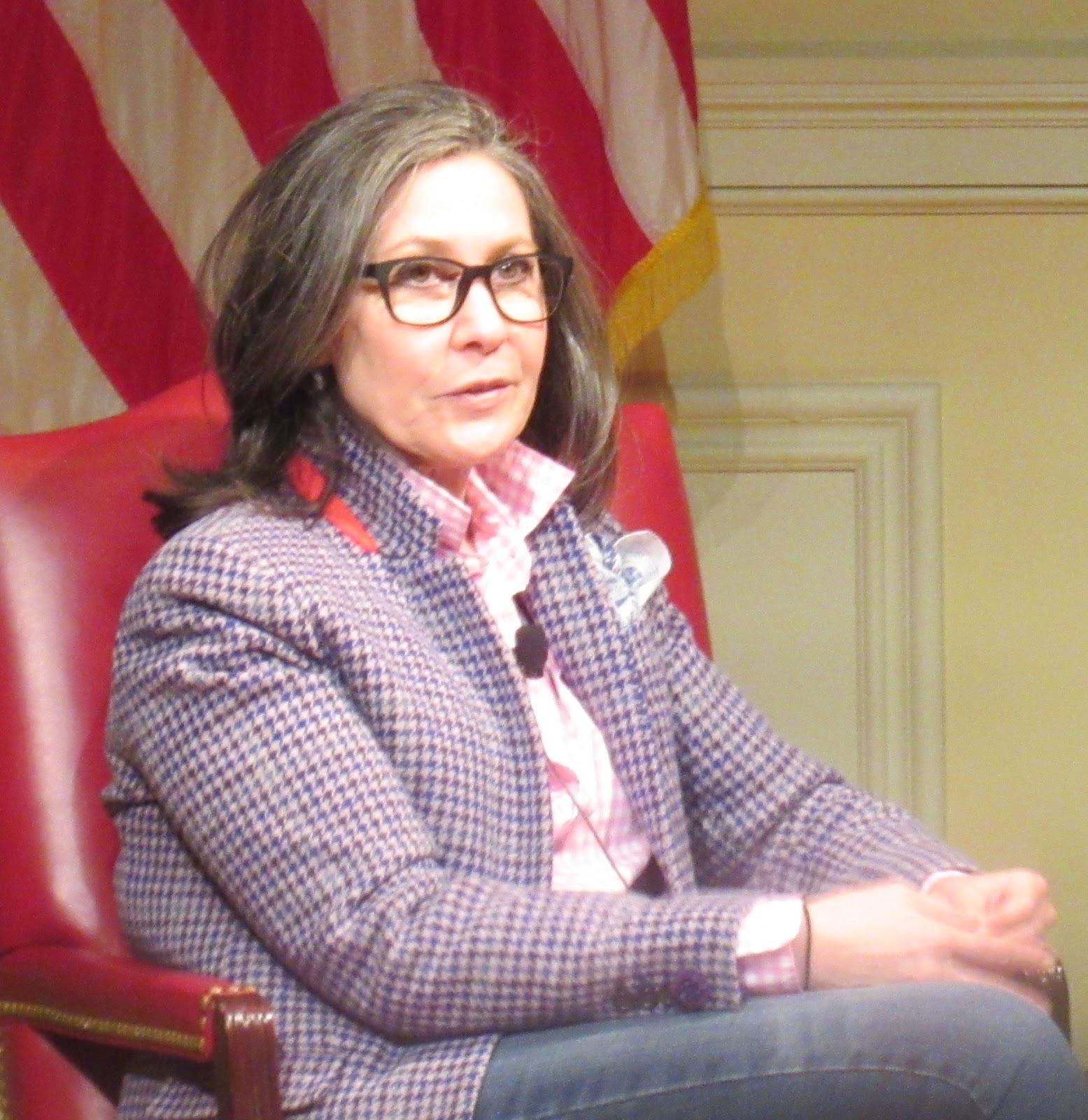 |
| Hidden Figures producer Donna Gigliotti |
Asked to describe how she researched Hidden Figures, Shetterly said, "The chain of knowledge was so interesting. One fact led to another. The first interview was with Katherine Johnson. She mentioned a number of people in that interview, such as Dorothy Vaughan. She mentioned Mary Jackson, who I did know because she worked with my father in the early part of his career.
"Every time I got a clue, I would just have to go off kind of like an archeologist and excavate the information. The information was really there, but it had never been collated into one place."
Shetterly said that the National Archives and the NASA History Office were particularly useful in her research as well as the interviews she conducted with principal hidden figures, such as Johnson, Vaughan and Jackson, and their children.
"There was so much information," said Shetterly. "Spending so much time with the math and the science and the engineering and with the reports was useful and it was like being in a time machine. I went back to 1943. Sometimes, it was about airplanes – because they were working with airplanes before space ships – other times it was about civil rights legislation that opened up public schools and public accommodations. Sometimes, it was about breakthroughs made by women during World War II. I got an incredible history lesson in doing this research. These people came back to life."
According to Shetterly, wrestling the information into a narrative was the hardest thing for her to accomplish. "It was important that the people led the story. It was always a human story and not just historical facts," she said.
 |
| Donna Gigliotti and Margot Lee Shetterly. |
"When writers, historians and storytellers strive to present a more expansive – and truer – view of our shared past," said Shetterly, "we open the door to a more inclusive and equitable vision of our shared future."
Photos: All photos by Michael Dickens, © 2018.

